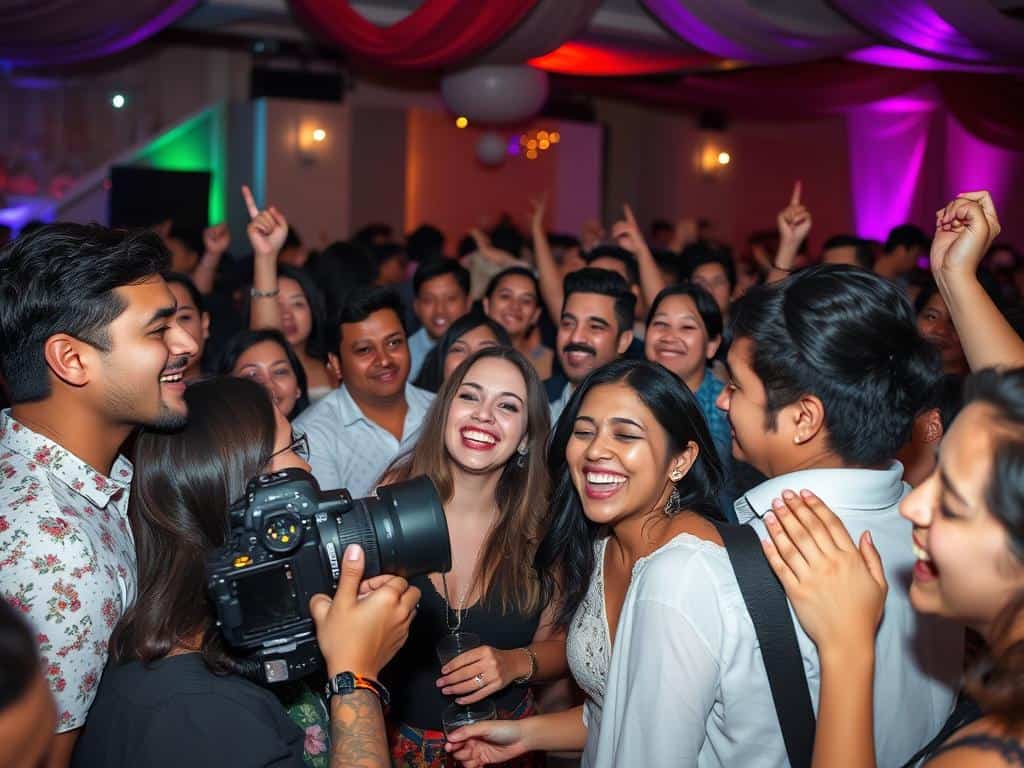
Did you know 95% of clients like digital images better than prints for event photos? This shows how important it is for photographers to change their ways to meet today’s digital world. Event photography is more than just taking pictures. It’s about capturing the feelings and mood of big events like weddings, business meetings, or music festivals.
In this article, I’ll share tips and insights to help both new and experienced photographers shine in this field. By mastering event photography, you can make lasting memories for your clients. Knowing the basics of event photography can make your work better for everyone involved.
Key Takeaways
- Event photography focuses on capturing emotions and atmosphere.
- 95% of clients prefer digital over physical prints.
- A wide-angle lens is ideal for group shots while a telephoto lens excels for candid moments.
- Preparation and experience are key for successful event photography.
- Quality event photography can greatly help sponsors’ visibility and marketing goals.
Understanding Event Photography
Event photography is about capturing the essence of gatherings. It’s about documenting moments and feelings at various events. This art form creates stunning images that share stories, connect people, and highlight unforgettable moments.
Definition and Scope of Event Photography
Event photography covers a wide range of events. This includes corporate meetings, weddings, family gatherings, community events, concerts, and sports. About 50% of the demand is for corporate events, while 30% is for private events like birthdays and reunions.
Community events make up 10% of the industry. The rest is split between concert and theatre photography, and sports photography. Each type requires its own techniques and equipment. This shows why event photography is so important.
The Importance of Event Photography
Event photography is key to keeping memories alive and boosting marketing. It lets people relive and share their experiences, boosting social media. High-quality photos also attract more attendees and sponsors.
This investment leaves a lasting impression, encouraging people to come back. In my experience, event photography’s impact goes far beyond the moment it’s captured.
Essential Equipment for Event Photography
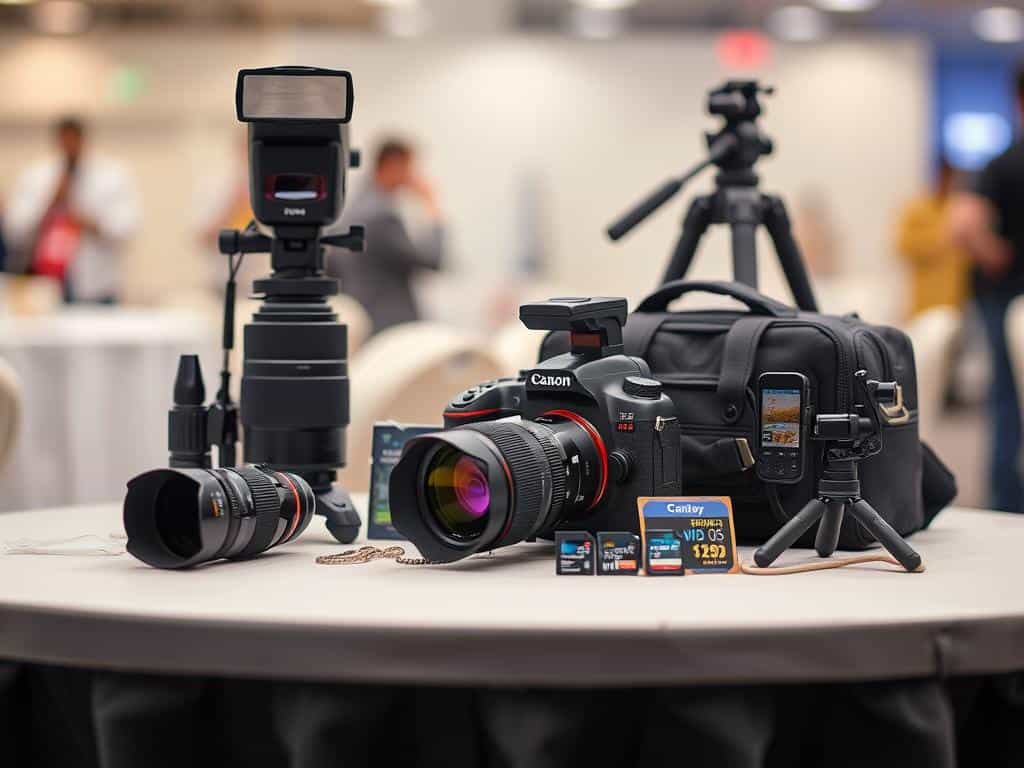
To capture stunning moments at any event, the right equipment is key. Knowing the essential camera gear helps improve my skills. It ensures I’m ready for any situation in event photography. Let’s explore the critical parts of my photography kit.
Camera and Lenses
Reliable camera bodies are vital for top-notch photos at any event. I use two camera bodies for 99% coverage. A DSLR or mirrorless camera with a full-frame sensor is best for low-light shots.
A versatile zoom lens in the 24-70mm range is great for wide shots. A 70-200mm lens is perfect for headshots and mid-distance shots. For sports, a lens with a 200mm minimum focal length is essential.
Lighting Equipment
Lighting is key, even more so in low-light indoor settings. An external flash boosts my ability to take bright photos. External battery packs cut down flash recycling time from 4-6 seconds to 2 seconds.
Continuous lighting systems offer better visibility and adjustable light settings. About 60% of event photographers use them.
Other Essential Gear
Having extra memory cards and fully charged batteries is important. SD cards are the most used, making up 70% of the market. I also use modular camera bag inserts to keep my gear organized.
A tripod helps with long-exposure shots, and a quality tripod head improves stability. A secure, wheelie camera bag makes moving around easier.
Event Photography: Tips and Techniques for Quality Shots
Capturing memorable moments at events needs skill, strategy, and a keen eye. Knowing the best event photography techniques can greatly improve image quality. Clear communication with event organizers helps me meet their expectations, ensuring I capture key moments.
Planning and Communication
I create a detailed shot list before the event to avoid missing important moments. This is key for effective planning. I also discuss the event’s timeline with organizers and prepare for any challenges that might come up.
Candid vs. Posed Photography
Both candid and posed shots tell the event’s story. Posed photos are important for formal records, while candid shots show real interactions and emotions. Finding a balance between these styles helps me capture the event’s atmosphere.
Composition and Angle Considerations
Using strong composition techniques makes my photos more appealing. The rule of thirds helps me frame shots well, focusing on the main subjects. Exploring different angles adds depth to my work. Keeping an eye on the crowd helps me catch moments worth capturing.
Conclusion
Mastering event photography is an art that combines technical skills with creative storytelling. It’s important to know what this field is all about. By getting to know my equipment and improving my skills, I can capture special moments at events.
The right camera and lenses are key. Understanding composition, like the rule of thirds, makes my photos better. This helps bring out the beauty in my work.
When I go to events, I prepare well and communicate clearly. This makes up about 70%-80% of my success. It helps me stay calm and focus on capturing the essence of the event.
I aim to capture important moments and unexpected interactions. These moments tell the story of the day. I work fast to deliver high-quality photos, which makes clients happy and helps me get more work.
In short, mastering event photography helps me grow as an artist. It lets me meet client needs and create lasting memories. It’s not just about taking pictures; it’s about making the experience unforgettable for everyone involved.
