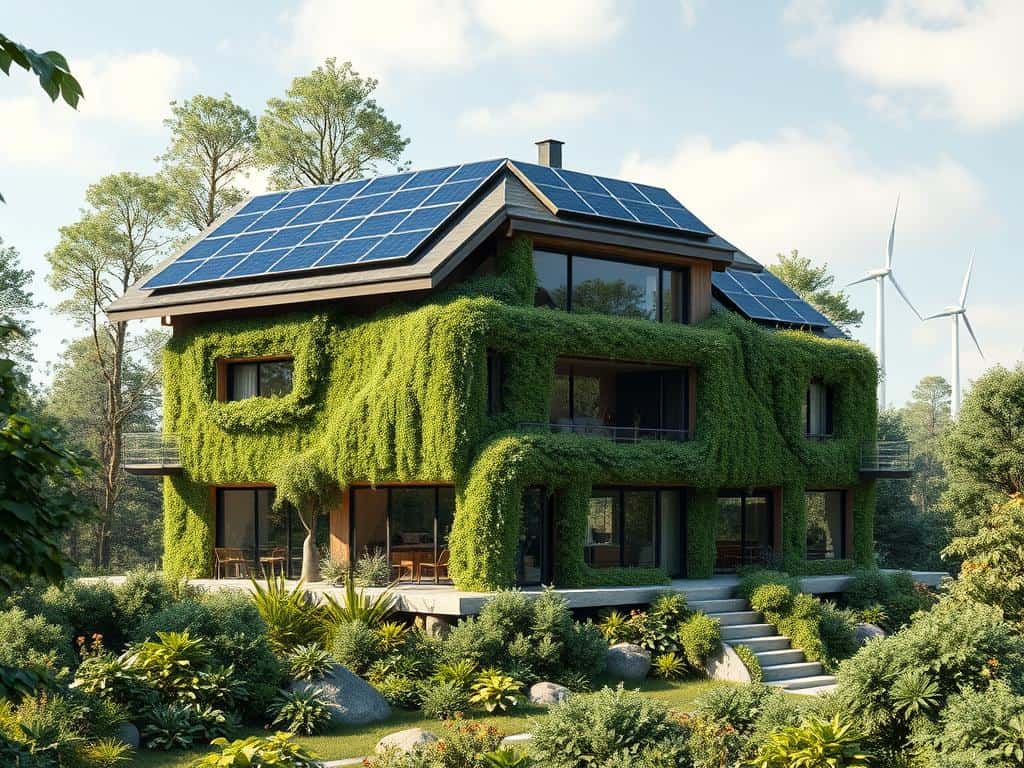
Did you know that about 90% of a product’s environmental impact is decided in its design phase? This fact shows how important eco-friendly design is for sustainable architecture and green building. As we deal with big climate issues, the need for sustainability grows. Using green design not only helps the planet but also makes your projects more valuable.
By choosing a more mindful design approach, I know my work will help future generations. It will also meet today’s needs for eco-friendly products.
Using eco-friendly strategies in building isn’t just a trend. It’s a key change in how we see building practices. These strategies offer benefits that go beyond just the project itself. They help with sustainability on a bigger scale.
Key Takeaways
- Understanding the importance of the design phase in minimizing environmental impacts.
- Sustainable architecture can significantly enhance property values and attract eco-conscious consumers.
- Incorporating eco-friendly design can lead to extensive reductions in greenhouse gas emissions.
- Utilizing sustainable materials can lower carbon footprints during construction projects.
- Prioritizing sustainable practices increases competitiveness in the modern market.
Understanding Eco-Friendly Design and Its Importance
In today’s world, using eco-friendly design in building is key. It aims to create sustainable spaces that harm the environment less. This means using renewable materials, energy-saving systems, and cutting down on waste during building.
This approach is vital in making our buildings better for the future.
What is Eco-Friendly Design?
Eco-friendly design is about making buildings that use less energy and harm the environment less. It focuses on using resources wisely and reducing waste during building. Architects and designers who follow these principles help create a greener future.
The Role of Sustainable Projects in Architecture
Sustainable projects lead the way in modern architecture. The Energy Policy Act of 2005 requires federal buildings to be more energy-efficient. By 2030, they must use only clean energy.
These goals show how urgent it is to use eco-friendly design. The construction industry, which is big, needs to cut down on its carbon emissions.
Benefits of Integrating Eco-Friendly Design
Switching to eco-friendly design has many advantages. A study found that sustainable buildings save money and use less water. They also produce less waste.
Using eco-friendly design can cut operational costs by up to 30%. This makes businesses more profitable and helps the planet. As people want more sustainable products, companies that go green will do better in the market.
Practical Tips to Incorporate Eco-Friendly Design
Adding eco-friendly design to our projects needs careful thought and practical advice. By using sustainable building methods, we can help the environment and our communities. Here are some key strategies to follow.
Choosing Sustainable Building Materials
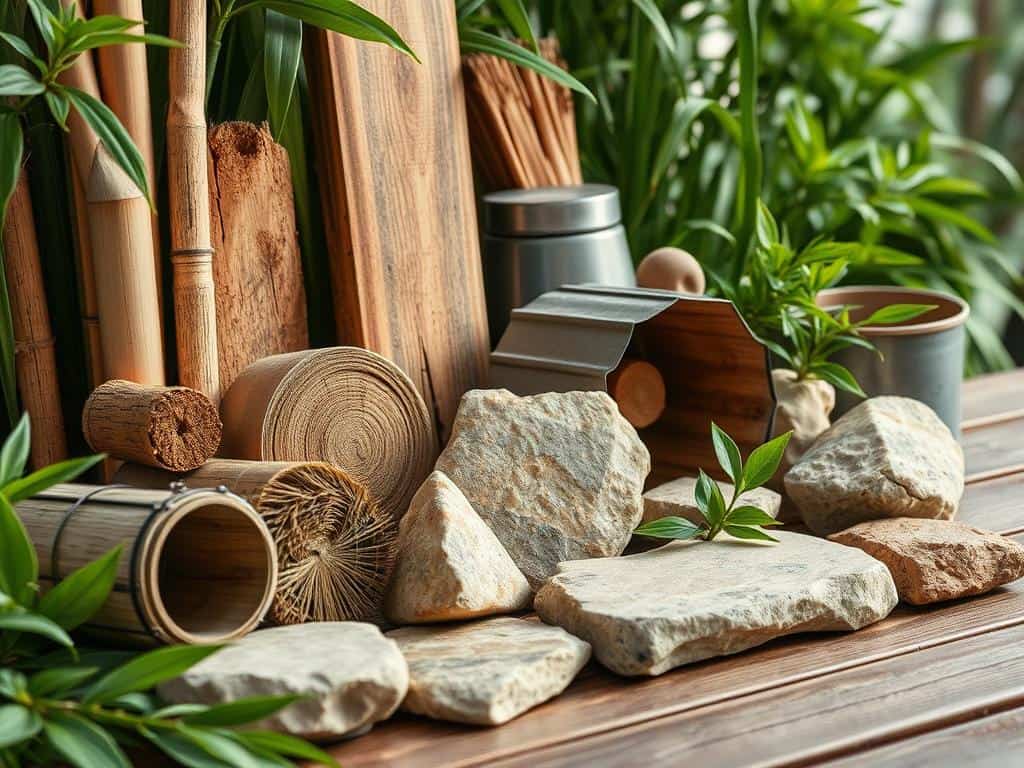
Choosing the right building materials is key to reducing a project’s environmental impact. Bamboo, reclaimed wood, and recycled metal are great choices. They are durable, insulate well, and are good for the planet. Using these materials helps make buildings more energy-efficient, keeping them cozy and saving energy.
Alternative Energy Solutions for Your Projects
Adding solar panels and wind turbines boosts energy efficiency. They cut down on electricity costs and use less non-renewable energy. By using these alternatives, we can make projects that are better for the environment and tackle climate change.
Improving Indoor Environmental Quality
It’s important to make indoor spaces healthy for people. Using low-VOC paints, natural floors, and good ventilation improves air quality. This focus on green materials and building methods makes spaces healthier. It benefits our communities and strengthens our connection to nature.
Conclusion
We are at a critical moment in the evolution of our construction and architecture fields. The push for change comes from our worries about climate change and the limited resources we have. By choosing sustainable practices, we’re not just meeting rules. We’re also making a long-term investment in our planet’s health.
Looking at places like the Bullitt Center in Seattle and the Pixel Building in Melbourne shows us a shift. These buildings set high standards for sustainability. They use solar panels, collect rainwater, and have green roofs. These steps not only help the environment but also make buildings more energy-efficient and comfortable.
Technologies for keeping buildings cool and well-ventilated are also improving. They help us create healthier spaces. The use of generative AI in design is exciting. It lets us explore new ideas and solve problems before we start building.
By using AI, we can make buildings more sustainable and efficient. This is our chance to build structures that support our global goals for sustainability. It’s a commitment to a better future for all of us.
