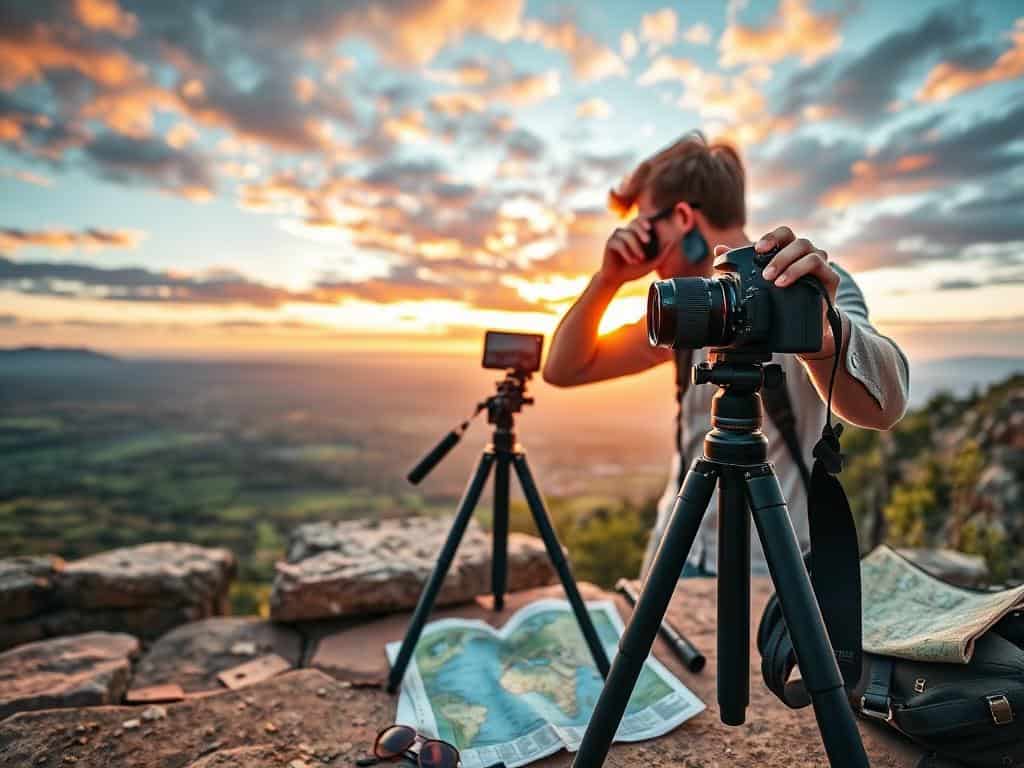
Did you know that about 80% of travelers use their smartphones to document their trips? This shows how easy and accessible travel photography has become. You don’t need fancy equipment to take amazing photos on vacation.
I’ve learned that a few simple tips can make a big difference. Whether you have a DSLR or a smartphone, knowing the basics of scenic photography can change your photos. It can also inspire others to see the world.
Key Takeaways
- Applying the Rule of Thirds can significantly enhance your composition.
- Shooting with a large aperture creates stunning bokeh effects preferred by portrait photographers.
- Stable hands or surfaces reduce motion blur, improving photo clarity.
- Golden hours boost colors up to 50% warmer than midday light.
- Manually adjusting white balance can enhance color accuracy substantially.
- Engaging with locals can result in better candid photo opportunities.
- Understanding your camera settings boosts confidence and skills while shooting.
Understanding the Basics of Travel Photography
Travel photography is more than just taking pictures. It’s about understanding where you are and what you want to show. The first step is to know what you want to capture. This way, your photos can tell a story and connect with others.
Define Your Intentions Before You Snap
Knowing what you want to show helps you focus. You might aim to capture beautiful landscapes, lively streets, or cultural moments. This focus makes your photos meaningful and tells a story.
Make a Shot List for Your Trip
Having a shot list is key. Before you travel, write down the scenes and subjects you want to capture. This ensures you get a variety of photos, from famous spots to everyday life. A good list helps you bring back a collection of photos that truly show the places you’ve seen.
Techniques to Capture Stunning Travel Photos
Capturing stunning travel photos is a mix of techniques and creativity. Using natural light is key to making memorable images. The Golden Hour offers soft, flattering light that makes photos stand out.
This light creates an atmosphere that draws the viewer in. It’s perfect for capturing unique travel moments.
Utilize Natural Light Effectively
Natural light is essential in travel photography. Shooting in the early morning or late afternoon gives softer shadows and vibrant colors. These times are best for capturing high-quality photos.
On the other hand, harsh midday light can cause glare. It’s important to plan around lighting conditions to avoid this.
Experiment with Different Perspectives
Changing my perspective can lead to unique travel images. Instead of shooting from eye level, I like to get low or climb high for aerial views. This approach often reveals new compositions that add depth to my photos.
Know Your Camera Settings
Understanding my camera settings is vital for stunning travel photos. Adjusting the aperture helps focus on the subject. Knowing how light direction affects photos allows me to create depth and texture.
Capture the Ordinary and the Extraordinary
Traveling shows me both ordinary and extraordinary scenes. I aim to capture the essence of everyday life and highlight unique cultural elements. Including familiar objects in my shots adds a sense of scale.
Whether it’s a bustling market or a serene landscape, each moment has a story to tell. I’m eager to share these stories through my photos.
Conclusion
Travel photography is a world full of basics and tips that can make our vacation photos stand out. With over 200,000 landmarks to explore, each trip offers chances to capture amazing scenes. It’s interesting that 1.4 billion tourists yearly make photography a key part of their travels.
Through my travels, I’ve found that being creative is all about intention and practice. About 70% of travelers improve their photography skills on the go. This approach not only creates unique images but also deepens our connection to the places we visit.
Golden hour is my favorite time to take photos. It’s when the light is perfect, making every image special. Travel photography is more than just taking pictures; it’s a way to grow and share experiences. Each photo I take brings back memories and connects cultures and environments.
