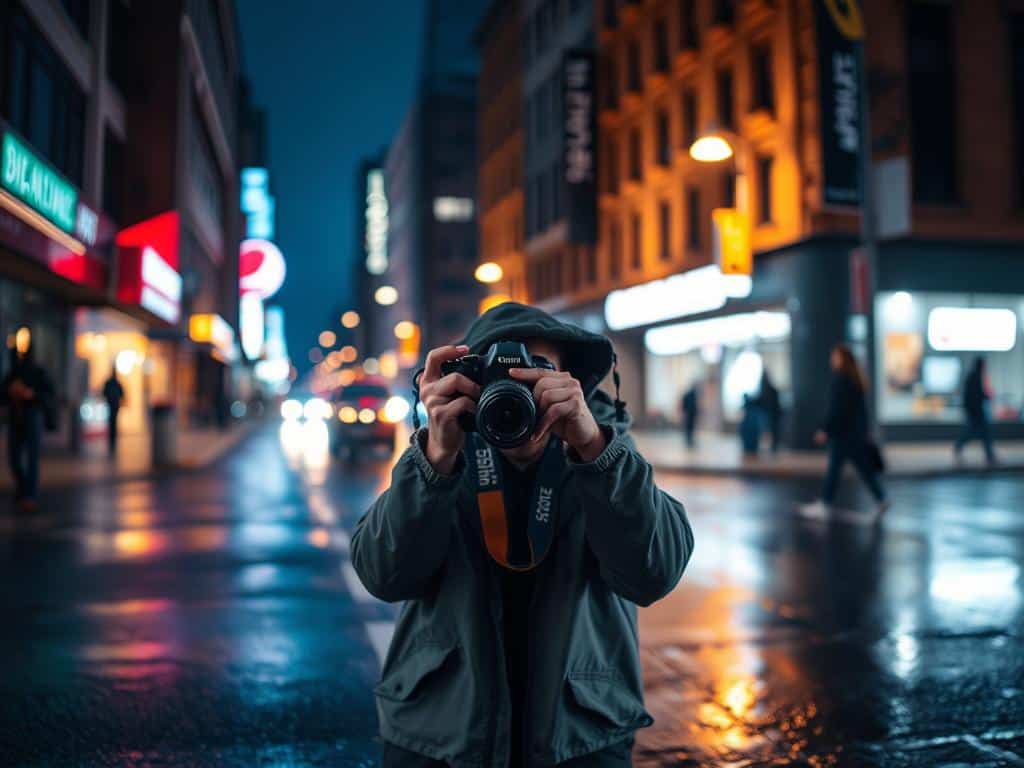
Did you know a Canon EOS R6 with an RF 24mm F1.8 MACRO IS STM lens can take clear photos in just 0.3 seconds? This shows how powerful today’s cameras are in low light. They let anyone take amazing night shots, even in very dark places. But, taking photos in low light can be tough. You need to know how to adjust your camera and use the light you have.
In this article, I’ll share key techniques and tips for low light photography. Whether you’re new or have been doing it for a while, knowing how to change your camera’s settings is important. By the end, you’ll be more confident in taking beautiful photos, no matter the light.
Key Takeaways
- Mastering aperture settings can dramatically improve your low light photography.
- Higher ISO settings increase light sensitivity but may introduce noise into images.
- Understanding shutter speed is key to preventing motion blur in night shots.
- Practicing in various dark environments helps build confidence and skill.
- Using continuous shooting mode enhances the chances of capturing sharp moments.
Understanding Low Light Photography Techniques
Mastering low light photography takes understanding aperture, ISO, and shutter speed. Each setting is key to getting the right exposure. This is vital for capturing stunning images in tough lighting.
Knowing how to balance these settings can really improve your photography. It’s all about getting the right mix for amazing photos.
The Importance of Aperture Settings
Aperture settings control how much light gets into the camera. Wider apertures, like f/1.8 and f/2.8, let in more light. This is super important in dim places.
Choosing larger apertures also means more of your subject will be in focus. This makes your subject pop against a soft background. It’s a key part of low light photography.
How ISO Affects Light Sensitivity
ISO is another important setting that affects how sensitive your camera is to light. For low light, ISOs from 1600 to 6400 are common. Higher ISOs help capture clearer images in the dark.
But, be careful because high ISOs can add noise. I sometimes push the ISO for interesting effects, but I watch out for graininess.
The Role of Shutter Speed
Shutter speed controls how long the camera’s shutter is open. For low light, I aim for speeds of 1/100 or faster. This helps avoid blurry images.
Slower speeds can create cool long-exposure effects. But, they can also make your camera shake. Finding the right shutter speed and using stabilizing techniques is key for sharp images.
Tips for Shooting in Low Light
Mastering night photography takes understanding key techniques. Taking the right steps can greatly improve image quality in low light. Here are some effective strategies to enhance your low light photography experience.
Using Wider Apertures for Stunning Results
Using wider apertures, like f/1.4, f/1.8, or f/2.8, is key for stunning results in low light. A fast lens lets more light into the camera, improving exposure. This creates a beautiful depth of field, making my night photos stand out.
Reducing Camera Shake
Camera shake is a big challenge in low light. Blurred images often come from slow shutter speeds. To fight this, I use tripods or my camera’s stabilizing features.
For exposures over 1 second, a tripod is a must for sharp images. Handheld shooting might work 50% of the time. So, stabilizing efforts greatly improve photo quality.
Finding Creative Lighting Solutions
Exploring creative lighting solutions can make ordinary scenes pop. Streetlights, for example, can add depth and interest. Using external lights, like flashlights, can improve focus accuracy in dark places.
Customizing white balance is also important. It helps get accurate colors, avoiding unwanted color casts in varied lighting.
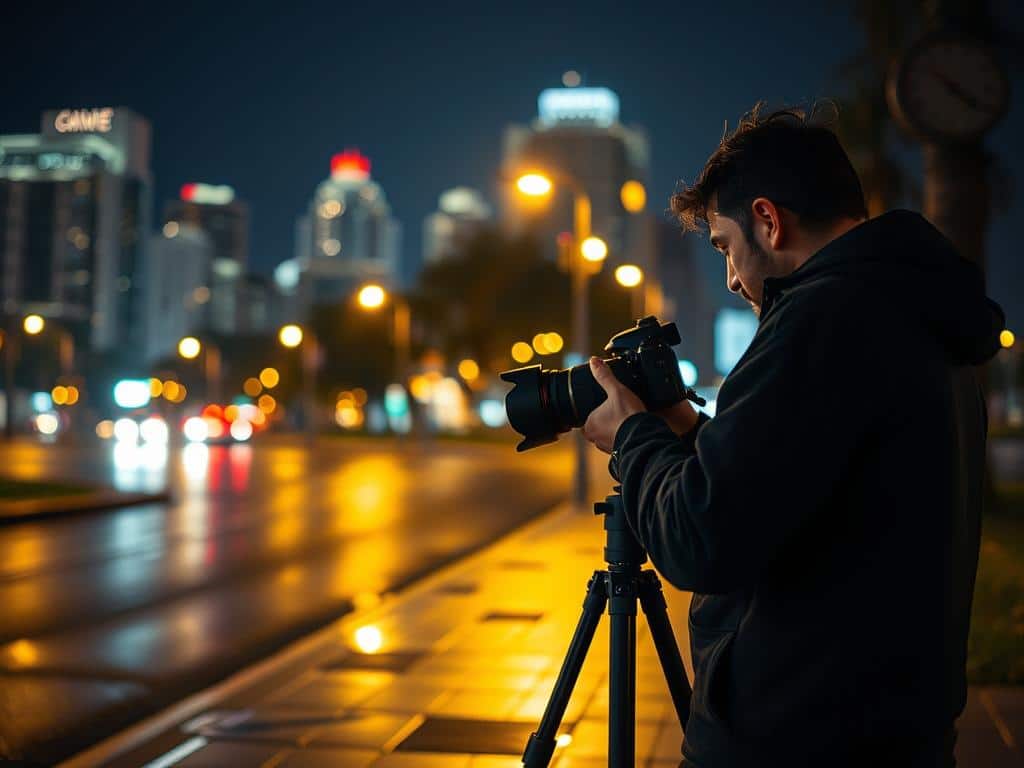
Shooting in Low Light: Advanced Techniques
Low light photography can be tough, but with advanced techniques, you can get amazing results. One key method is playing with white balance. By adjusting these settings, you can improve the colors in your photos. For example, using the Tungsten setting can make streetlights look warm and inviting, adding depth to your photos.
Experimenting with White Balance
Changing the white balance can completely change how your photos look. In dim light, default settings might make colors seem dull. But with Fluorescent or Daylight settings, you can fix color casts and make your photos richer. This is super helpful in cities, where lights change how we see colors.
As I play with these settings, my photos have become more emotional and true to life. It’s all about capturing the right mood.
Making Use of Burst Mode
Burst mode is another must-have technique, perfect for fast-moving subjects in the dark. It lets you take lots of photos fast, upping your chances of getting a clear shot. This is key when using slow shutter speeds.
With burst mode, you can catch every moment. It adds movement and energy to your photos, making them more dynamic.
Conclusion
Mastering low light photography is key to taking amazing photos in tough spots. Knowing about aperture, ISO, and shutter speed helps a lot. These elements are vital for those stunning night shots everyone wants.
Practicing is essential to get better at photography. Using tips, trying out ISO and shutter speed, and learning advanced tricks can make a big difference. For example, using ISO 640 can make images sharp and clear, even in low light.
Exploring low light areas is exciting and challenging. By trying different settings and understanding our equipment, we can find our own style. Let’s dive into the darkness and make something amazing with our new skills.
