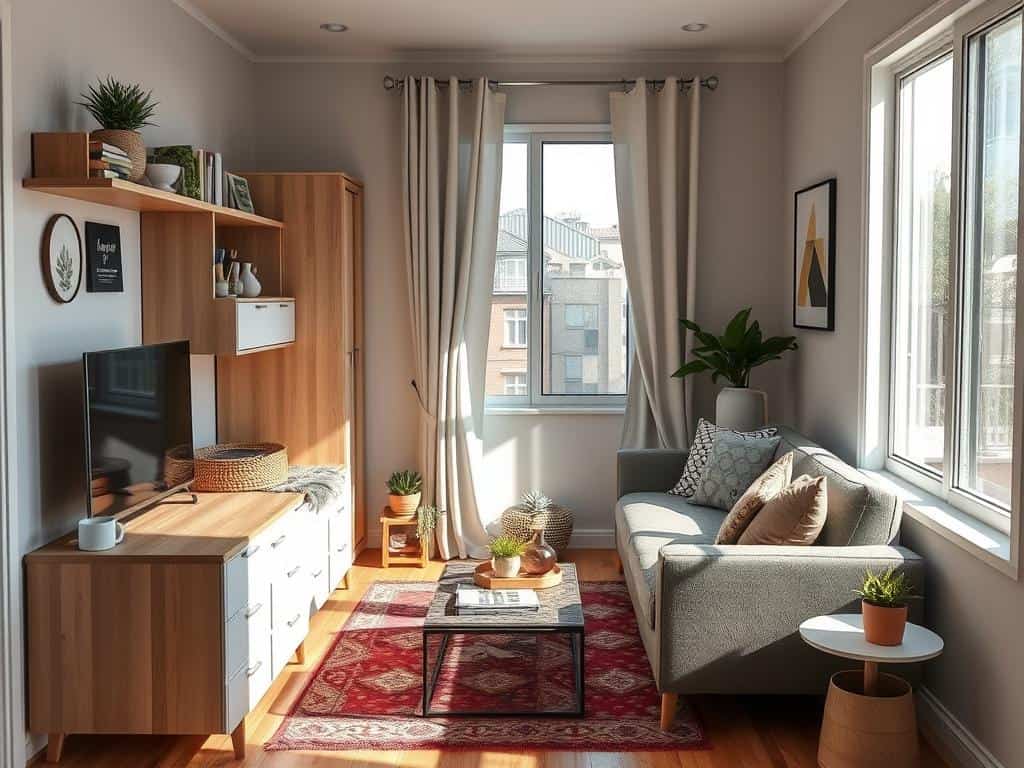
Did you know that the average size of studio apartments in cities is about 450 square feet? This small space makes space planning very important. It helps create a place that is both useful and welcoming.
With 73% of people in small spaces choosing furniture that does more than one thing, it’s clear that smart small room design can turn tight spots into stylish spots. The key to interior layout is to use every inch wisely. This way, you can have both style and function in your space.
In this article, I’ll share my best tips for space planning. These tips will help you make small spaces feel bigger, without spending a lot on renovations. You’ll learn how to declutter, set up different areas, and even make your space feel brighter.
Key Takeaways
- Understanding space planning is key to maximizing small room functionality.
- Multifunctional furniture is a priority for many living in compact spaces.
- Vertical storage solutions can effectively increase usable space.
- Natural light can visually expand spaces and improve overall ambiance.
- Using light colors in decor creates an airier, larger-feeling environment.
Understanding the Basics of Space Planning
Space planning is key for designing small rooms well. It helps make spaces feel open and easy to move around in. It also meets the different needs of these areas without mess or confusion.
Importance of Scale in Small Spaces
Scale is very important in small rooms. I choose furniture that’s small to medium in size. This makes the room feel cozy and useful, not cramped.
Big furniture can make a room feel tight. By picking furniture that fits the room’s size, I make the space more welcoming and practical.
Defining Functionality and Zones
In small rooms, it’s important to know what each area is for. This is even more true when a room does more than one thing. For example, area rugs can mark off different zones.
By planning these zones well, I help the room flow better. This makes the space more enjoyable and easier to use.
Effective Space Planning Techniques for Small Rooms
Effective space planning in small rooms can truly transform the atmosphere and usability of a space. When working with limited square footage, I focus on several fundamental techniques that maximize efficiency without sacrificing comfort. Here are some practical strategies that can make a significant difference.
Utilizing Vertical Space
One of the most valuable techniques I employ is utilizing vertical space. Tall shelving units or cabinets effectively draw the eye upward, creating an illusion of height in the room. By installing shelves well above eye level, I can maximize storage options without encroaching on precious floor space. This approach enhances not just organization but also the overall functionality of the room.
Incorporating Multifunctional Furniture
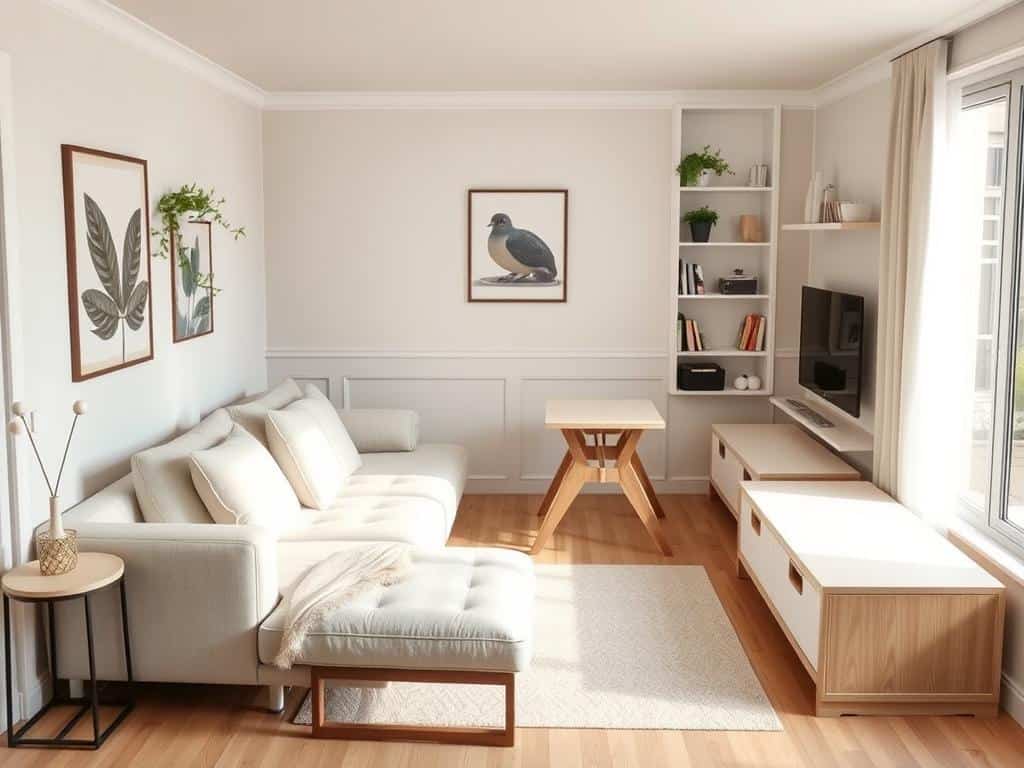
Integrating multifunctional furniture is equally essential in effective space planning. Pieces like ottomans that double as storage solutions or Murphy beds that transform from sleeping areas into workspaces help in optimizing the available square footage. Choosing furniture with multiple uses allows me to maintain a clean and open feel while providing all the necessary functions a small family needs.
Employing Light Colors and Reflective Materials
The use of light colors and reflective materials in the decor can significantly enhance the ambiance of small spaces. Light colors tend to reflect more light, making the area appear larger and more inviting. Incorporating reflective surfaces, such as glossy paint or mirrors, contributes to this airy effect, amplifying natural light and improving the overall perception of the space. I find that these design choices are critical to achieving an open and spacious feel in any small room.
Conclusion
Effective space planning is key for making the most of small spaces. This article has shared tips to turn compact areas into both functional and beautiful spots. By focusing on scale, using furniture that does more than one thing, and making the most of vertical space, anyone can improve their small rooms.
Using these strategies can make living areas more practical and enjoyable. Studies show that well-designed workspaces boost productivity and happiness. By choosing wisely, we can greatly enhance our living spaces.
I urge you to try out these space planning ideas. They’re not just about looks; they’re essential for better functionality, efficiency, and happiness. By applying these tips, you can optimize your small spaces and create a home that truly reflects your life.
