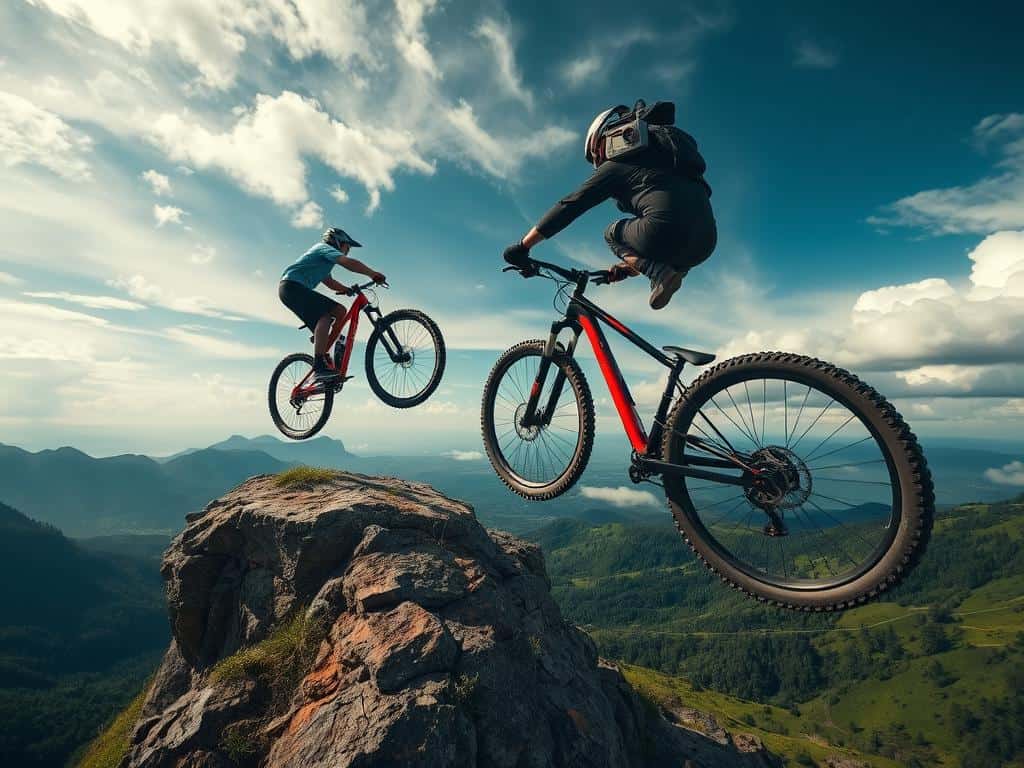
Did you know that action cameras like the GoPro face big challenges compared to DSLRs? They are small and tough but can’t match the quality of expensive DSLRs. This makes it hard to get great photos, but with the right tips, you can make every moment special.
Let’s dive into how to get the most out of your action camera. Whether you’re climbing mountains, surfing, or just capturing your daily adventures, knowing your camera well is key. I’ll show you how to use your camera’s settings and master photography techniques. Get ready to improve your adventure photography skills!
Key Takeaways
- Action cameras have notable hardware limitations compared to DSLRs, impacting photo quality.
- Utilizing RAW format can significantly enhance image quality and editing flexibility.
- The choice of Field of View (FOV) can greatly affect perspective and image composition.
- Manual settings, like those available in Protune, offer greater control over photo attributes.
- Using burst mode is essential for capturing fast-paced action effectively.
- Incorporating a tripod or mount can drastically reduce camera shake for clearer images.
- Lighting conditions, particular during the golden hour, significantly enhance image quality.
Understanding Your Action Camera
Learning about action cameras is key to improving my photography. It’s important to know their limits compared to DSLRs. I also need to understand their unique features and how to use camera settings for the best results.
Limitations of Action Cameras Compared to DSLRs
Action cameras, like GoPro models, are made for being small and tough. But, they have some big downsides. They have smaller sensors and lenses than DSLRs, leading to lower image quality and less dynamic range. Knowing these limits helps me set the right expectations for my photos.
Key Features of Action Cameras
Despite their flaws, action cameras have some big pluses. They’re super easy to carry around, making them perfect for spontaneous adventures. They can also handle water, letting me film in many places, including underwater. Plus, they’re built to last, great for capturing action in rough conditions.
Getting Familiar with Camera Settings
Mastering camera settings is essential for great action photos. I need to understand the exposure triangle—shutter speed, aperture, and ISO—to get the shot right. Knowing about Protune and FOV options gives me the creative freedom to make amazing images. Using these settings makes my photos better and my shooting experience more enjoyable.
Mastering Action Camera Photography Techniques
To improve my action camera photos, I focus on key techniques. Understanding the exposure triangle, using Protune, and picking the right field of view are essential. These steps help me get amazing shots.
Exploring the Exposure Triangle: Shutter Speed, Aperture, ISO
Getting the exposure right is key for great photos. I start by adjusting the shutter speed. For fast action, I use 1/500th of a second or faster. For slower subjects, I go down to 1/60th of a second.
This method blurs the background and keeps the subject sharp. It adds a cool dynamic to the photo.
Aperture settings also play a big role. For action shots, I choose wide apertures like f/2.8 or f/4. This makes the subject pop against a blurred background. On the other hand, narrower apertures like f/8 to f/11 keep more of the scene in focus. This adds context to the photo.
Utilizing Protune for Enhanced Control
Protune gives me manual control over settings. I can adjust ISO, white balance, and sharpness. This lets me fine-tune my photos for better quality.
With Protune, my camera records at a higher bitrate. This means more detail and better editing options. It’s great for customizing shots based on the scene and action.
Choosing the Right Field of View (FOV)
Choosing the right field of view is important for my photos. I use Wide, Linear, Medium, and Narrow to frame my shots. A Wide FOV is great for landscapes, while a Narrow FOV focuses on the subject.
Using the right FOV helps me capture the scene effectively. It makes my photos more impactful.
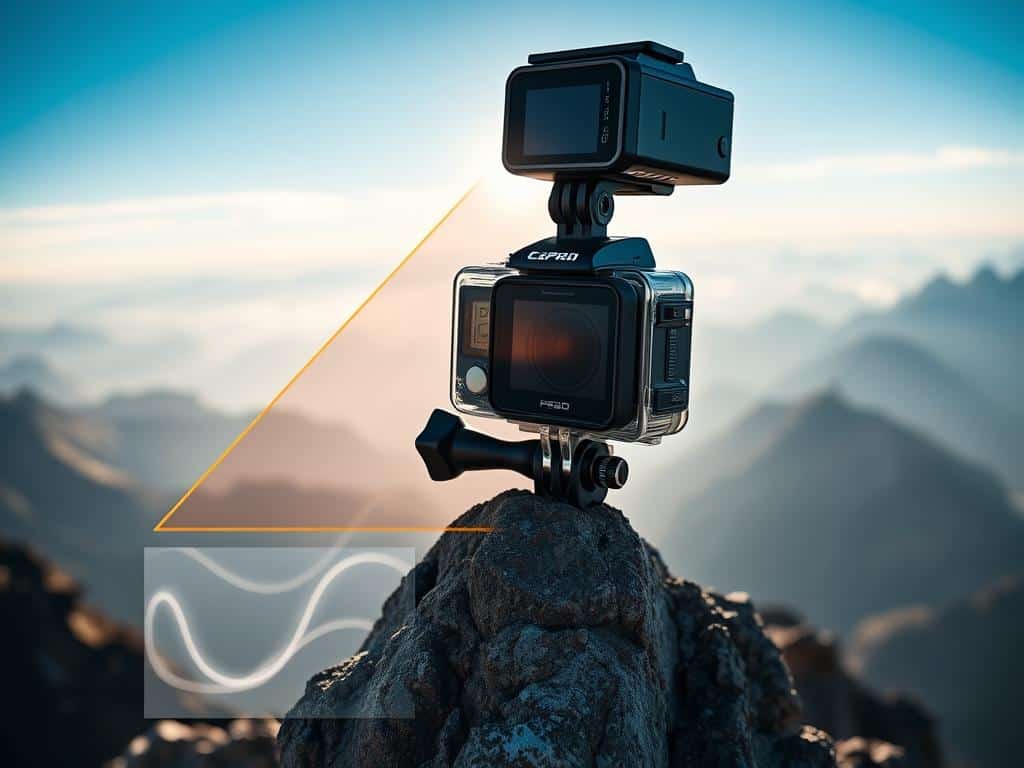
Action Camera Photography: Tips for Perfect Shots
To improve my action camera photos, I use several key techniques. Knowing my camera’s strengths and weaknesses helps me get great shots in different situations.
Benefits of Shooting in RAW
Shooting in RAW is a big plus, like with GoPro. It keeps more detail, making editing easier and better. I can tweak things like contrast and white balance later, making my photos look sharp and polished.
Utilizing Burst Mode for Action Shots
For quick moments, I turn to burst mode. It lets me take lots of photos fast, helping me pick the best one. Burst mode is key for capturing fast-moving subjects.
Using a Tripod or Mount for Stability
Stability is key, even in tough conditions. I use a tripod or mount to keep the camera steady. This is vital for clear photos, whether on a helmet or a tripod.
Understanding Ideal Lighting Conditions
Lighting is critical in photography. I shoot during the golden hour for the best light. This time, just after sunrise or before sunset, gives soft, flattering light.
Conclusion
Mastering action camera photography is about knowing the tech and how to use it. These cameras are small and easy to carry, making it simple to capture adventure photos. Modern models, like GoPro, offer great image quality and features like RAW format and advanced stabilization.
Using tips like burst mode and a tripod can make a big difference. Action cameras are also waterproof, letting me take photos underwater. This adds to the excitement of capturing moments during my adventures.
These cameras are affordable and versatile, making them a great choice for extreme conditions. As I learn more about action camera photography, my skills improve. This leads to amazing photos that capture the essence of my travels.
