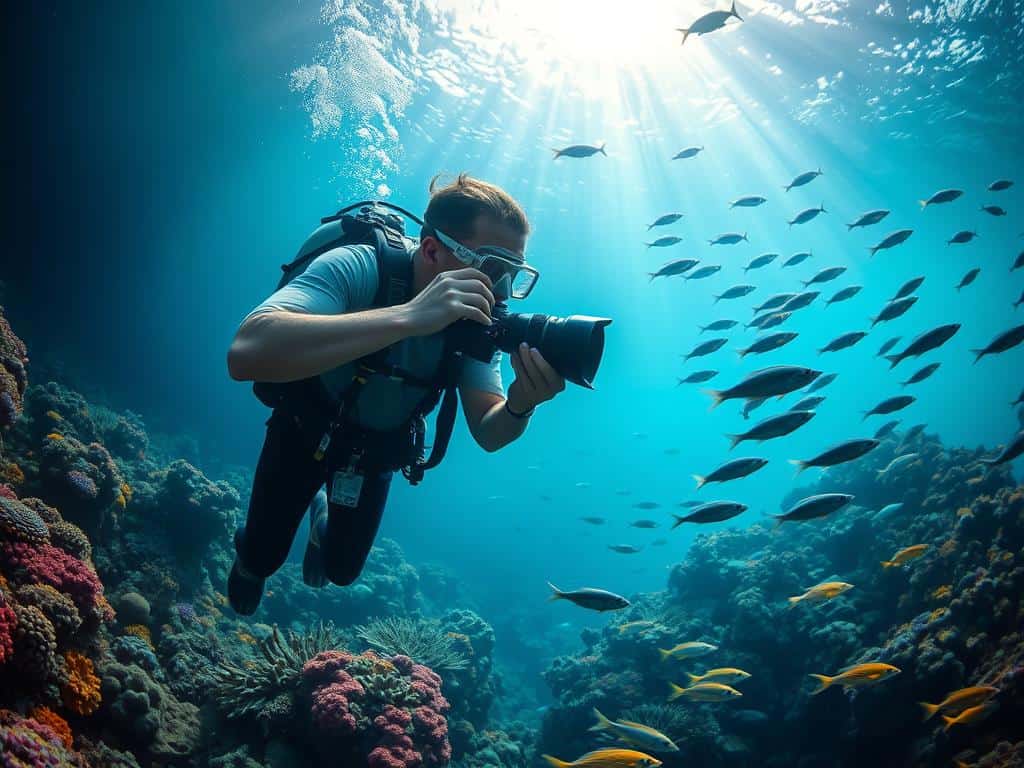
Did you know that at just 10 meters deep, warm colors like red and yellow start to disappear from underwater photos? This creates a world of mostly green and blue. Capturing vibrant images underwater is a big challenge. But, with the right tips, you can turn your underwater shots into stunning works of art.
This guide will show you how to master underwater photography. You’ll learn key techniques to create amazing aquatic images. Get ready to dive into the world of underwater photography and take breathtaking photos.
Learning how light works underwater and choosing the right gear are key. I’ll share tips that have helped me improve my underwater photos. Whether you’re new or looking to get better, I aim to help you take stunning underwater photos. Let’s begin!
Key Takeaways
- Understanding light absorption is key, as warm colors fade quickly underwater.
- Being close to your subjects improves composition and clarity.
- The right equipment makes a big difference in your photos.
- Always prioritize safety when diving and taking photos underwater.
- Post-processing techniques are important for the final look.
Getting Started with Underwater Photography
Starting underwater photography is both exciting and tough. It requires understanding light, color, and the right gear. I learned that getting ready and improving your skills are key to capturing amazing underwater shots.
Understanding the Basics of Light and Color
Underwater, light and color are very different from above. Sunlight fades fast, making reds and yellows disappear quickly. This leaves us with cool tones, mainly blue.
To fix this, using external strobes can bring back vibrant colors. Natural light works well in shallower waters, making images pop.
Choosing the Right Equipment for Underwater Photography
Choosing the right camera gear is important for quality and comfort. I found that deciding between compact and interchangeable lens cameras is key. Compact cameras are easy to carry and affordable, perfect for beginners.
For more advanced needs, brands like Ikelite and Nauticam offer top-notch options. Knowing the difference between diving and surf housings is also important. It helps avoid flooding and keeps your gear safe.
Safety Tips for Diving and Photography
Keeping safe while underwater is a must. Before diving, it’s important to learn safe diving and know the marine world. It’s also key to protect the underwater environment.
After each dive, it’s important to check and maintain your gear. This helps prevent problems and ensures safe diving for your next adventure.
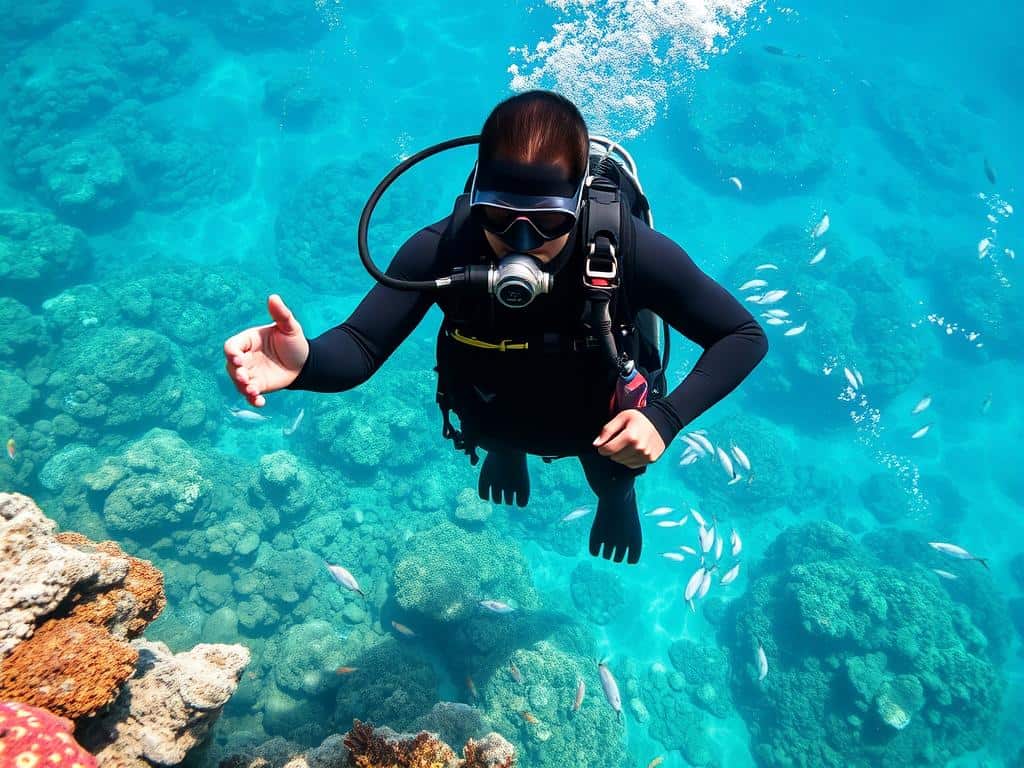
Techniques to Capture Stunning Underwater Shots
Capturing stunning underwater images requires mastering certain techniques. These include controlling buoyancy, understanding composition, and setting up camera settings. Using these strategies can greatly improve your photos.
Mastering Buoyancy Control and Movement
Getting good at buoyancy control is key for clear underwater photos. About 70% of photos are blurry because of poor buoyancy. By mastering buoyancy, I can avoid sediment and backscatter, making my photos better.
Controlling my breathing helps me stay buoyant. This lets me take photos from different angles and positions.
Getting Close to Your Subject for Better Composition
Getting close to your subject is a great way to improve your photos. Studies show that getting closer can increase social media engagement by 60%. Using the rule of thirds can make photos more appealing by 30%.
Being patient is important. Spending time getting used to the underwater environment can increase your chances of getting a great shot by 50%.
Utilizing Natural and Artificial Light Effectively
Lighting is very important in underwater photography. Using natural light can make photos 40% better, mainly in shallow water. When natural light is not enough, strobes or flashes can make coral colors 50% more vibrant.
Adjusting white balance is also key, improving color accuracy by 35%. This ensures that photos show the true beauty of the underwater world.
Camera Settings: Exposure, Aperture, and ISO Explained
Knowing how to set your camera is essential. Using higher ISO settings in low light can improve exposure by nearly 50%. Adjusting aperture settings affects depth of field and focus, which are important for capturing underwater scenes.
Conclusion
Starting my underwater photography journey opened a world of discovery and creativity. I learned key techniques like understanding light and color, choosing the right gear, and using effective composition. This guide helped me improve my skills, making every dive a chance to express my art.
Looking back, I see how underwater photography impacts us. It’s not just for fun but also helps in conservation. Our photos aid in scientific studies and inspire people to care for our oceans. It’s important to be respectful of the underwater world as we capture its beauty.
In the end, underwater photography is about dedication and passion. With each dive, I grow as a photographer and a diver. I aim to capture stunning images while being mindful of our ocean’s health. This way, I can create and protect the underwater world I love.
