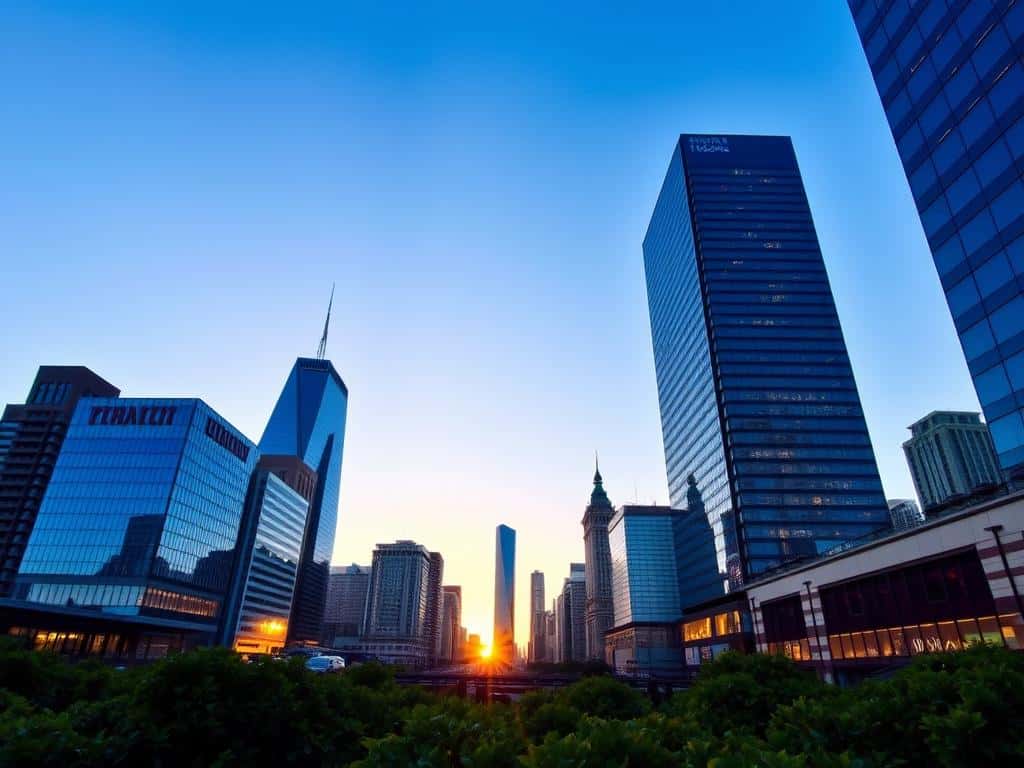
Did you know that about 50% of architectural photos are of famous buildings? The other half shows everyday designs. This field covers everything from huge skyscrapers to cute garden sheds. It’s both varied and fulfilling.
Whether you’re new to photography or looking to get better, learning architectural photography is key. It combines art and technical skills.
In this guide, I’ll share tips and techniques to improve your building photography. We’ll explore light, composition, and equipment. My goal is to inspire you to take amazing photos that tell the stories of these structures. Let’s explore architectural photography and learn to capture stunning buildings.
Key Takeaways
- Architectural photography includes a wide range of subjects, from commercial buildings to everyday structures.
- Lighting plays a critical role; natural light is often preferred over artificial sources.
- A sturdy tripod can improve image quality and enhance composition.
- Experimenting with perspectives can lead to more dynamic and interesting shots.
- Wide-angle lenses are recommended for capturing expansive architectural views.
Understanding Architectural Photography
Architectural photography is complex and deeply artistic. It focuses on capturing buildings and structures, both inside and out. The goal is to show their beauty, function, and setting.
Definition and Scope of Architectural Photography
Architectural photography covers many areas, like homes, hotels, and resorts. Each photo aims to showcase the architecture’s beauty and design. Adding people to the scene helps show how the space is used.
Importance of Lighting in Architectural Photography
Lighting is vital in architectural photography. It greatly affects the image quality. While midday is common, sunset and twilight are often better for their soft light. Knowing how to use light and edit photos is key to creating stunning images.
Key Differences Between Architectural Photography and Other Genres
Architectural photography is unique, needing special skills. It involves using perspective control to show entire spaces. Unlike other genres, it often includes pre-shoot walkthroughs with architects. Good communication is essential to meet both the photographer’s and architect’s vision.
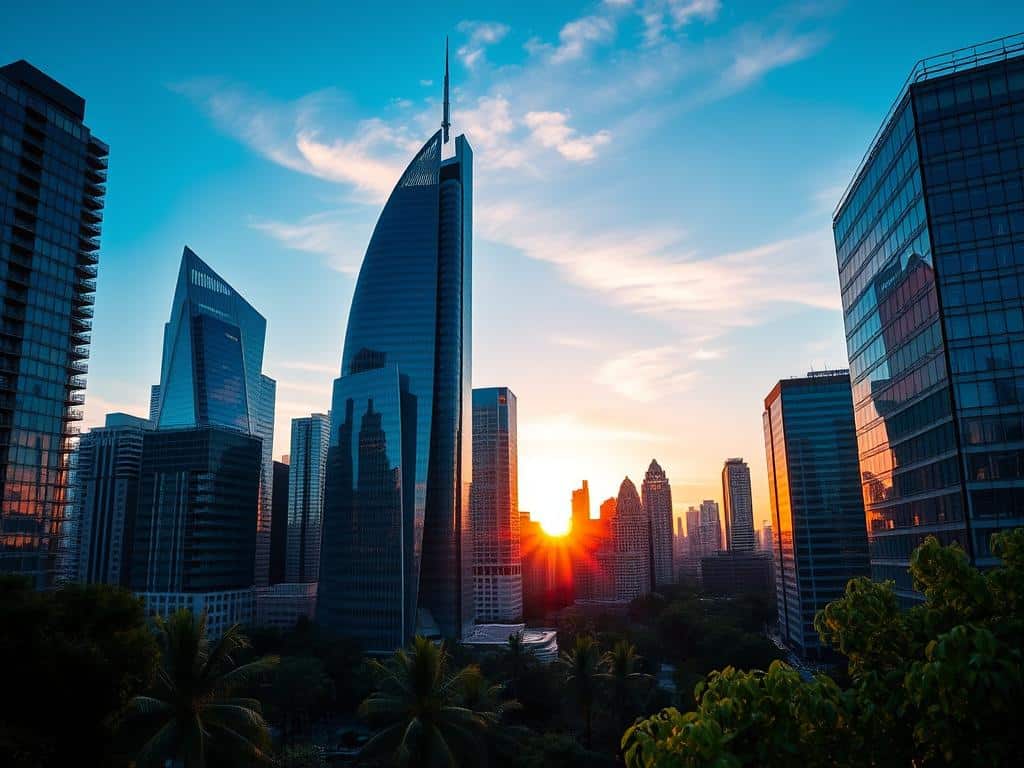
Essential Gear for Architectural Photography
Capturing stunning architectural images needs more than skill and creativity. It requires the right photography gear. The right cameras and lenses can greatly improve your photos.
A high-resolution DSLR or mirrorless camera with a full-frame sensor is key. It offers exceptional detail. Wide-angle and tilt-shift lenses help manage perspective and distortions in tall buildings.
Recommended Cameras and Lenses
Choosing cameras for architectural photography means looking at lens compatibility. The Canon 6D is a great choice, producing images sharp enough for large prints. It pairs well with a Canon 50mm 1.4 lens for quick detail shots.
Wide-angle lenses are essential for capturing entire structures. Tilt-shift lenses correct perspective effects, giving a true view of the architecture.
Importance of a Sturdy Tripod
A sturdy tripod is a must for architectural photography. It supports long exposure times, removing moving subjects in busy scenes. Many find it improves stability and sharpness, even in low light.
This tool is key for capturing every detail and line in the building with precision.
Essential Accessories for Capturing Stunning Shots
Quality accessories can elevate your architectural shoot. I use rechargeable batteries, like Eneloop, to save money and ensure long battery life. A portable USB charger, like the Jackery, adds extra security for battery life.
Color correction tools, like the X-rite Colorchecker, help achieve accurate hues. Bubble levels keep horizons straight, and polarizing filters manage reflections. These tools ensure stunning shots every time.
Conclusion
Mastering architectural photography is more than just using a camera. It’s about knowing how to show off the beauty of buildings. This art has grown a lot, from the late 19th century to now. I mix old and new ways to show off buildings’ beauty and history.
I focus on light and choose the right gear, like wide-angle lenses and strong tripods. This helps me take amazing photos that show off buildings’ design and history.
Using tricks like leading lines and depth makes my photos tell a story. I also use special lenses to fix distortions and try different ways to take photos. This makes my work stand out.
