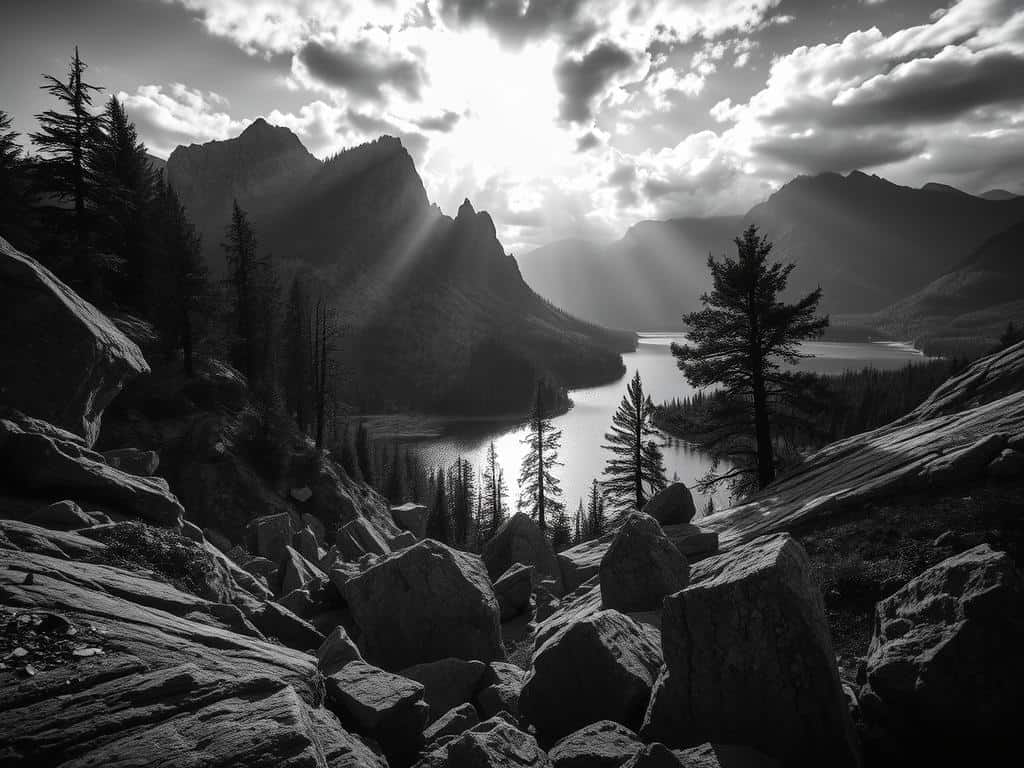
Did you know black and white photos can make viewers more engaged by up to 30%? This shows how powerful monochrome photography is. It grabs attention and stirs emotions. Let’s explore the history, techniques, and impact of black and white photography on your creative journey.
Black and white photos are not just classic; they also make us focus on composition, light, and texture. Learning to take amazing monochrome images changes how we see the world. With the right skills, you can create stunning stories that touch your audience’s hearts.
Key Takeaways
- Black and white photography increases viewer engagement by up to 30%.
- Understanding light and shadow is key for impactful images.
- Texture in monochrome images can make scenes seem deeper by about 40%.
- High-contrast images help viewers remember details better.
- Backgrounds greatly affect the mood of your black and white photos.
Introduction to Black and White Photography
Black and white photography is a world of artistic choices that express deep emotions and make striking statements. It conveys messages in ways color photography can’t. Knowing its history adds to my appreciation of its charm and versatility.
The History and Evolution of Black and White Photography
Black and white photography started in 1826 and has evolved over nearly two centuries. For 35 years, it was the only type of photography until 1861, when the first permanent color image was made. Pioneers in this field created iconic images that shaped the art.
Monochrome images highlight the emotional depth of subjects. They show how artistic choices can set the mood and tone of a photo.
Why Choose Black and White Over Color?
Black and white photography focuses on textures, patterns, and contrasts, without distractions from colors. It evokes strong emotions and enhances the story of a scene. Shooting in monochrome gives a timeless, nostalgic feel.
It strips away unnecessary elements, focusing on light, shadow, and form. This makes subjects appear more serious and impactful, improving their visual story.
Techniques for Capturing Stunning Black and White Photos
Capturing stunning black and white images is a mix of creativity and technical skills. I use different techniques to highlight my subjects’ essence. Understanding light and shadow is key to creating impactful images, even without color.
Understanding Light and Shadow in Monochrome Photography
Light is essential in monochrome photography. It shapes the mood and depth of images. I play with hard light for strong contrasts and soft light for softer tones.
Observing light direction and quality is vital for compelling images.
Framing and Composition for Black and White Images
Composition is key in monochrome images. I aim for simplicity to focus on the subject. Negative space highlights the main point, creating a striking effect.
Proper framing turns ordinary scenes into captivating stories.
Using Contrast to Enhance Your Black and White Photos
Contrast is vital for the visual impact of my black and white photos. High contrast is dramatic, while low contrast is softer. Balancing these creates focus and draws attention.
Mastering contrast guides the viewer’s eye, deepening their connection to the image.
Tips for Post-Processing Your Black and White Images
Editing black and white images is an art that requires careful tone and contrast manipulation. I edit RAW images to keep detail and range. Using Lightroom or Canon’s Digital Photo Professional, I fine-tune shadows, highlights, and mid-tones.
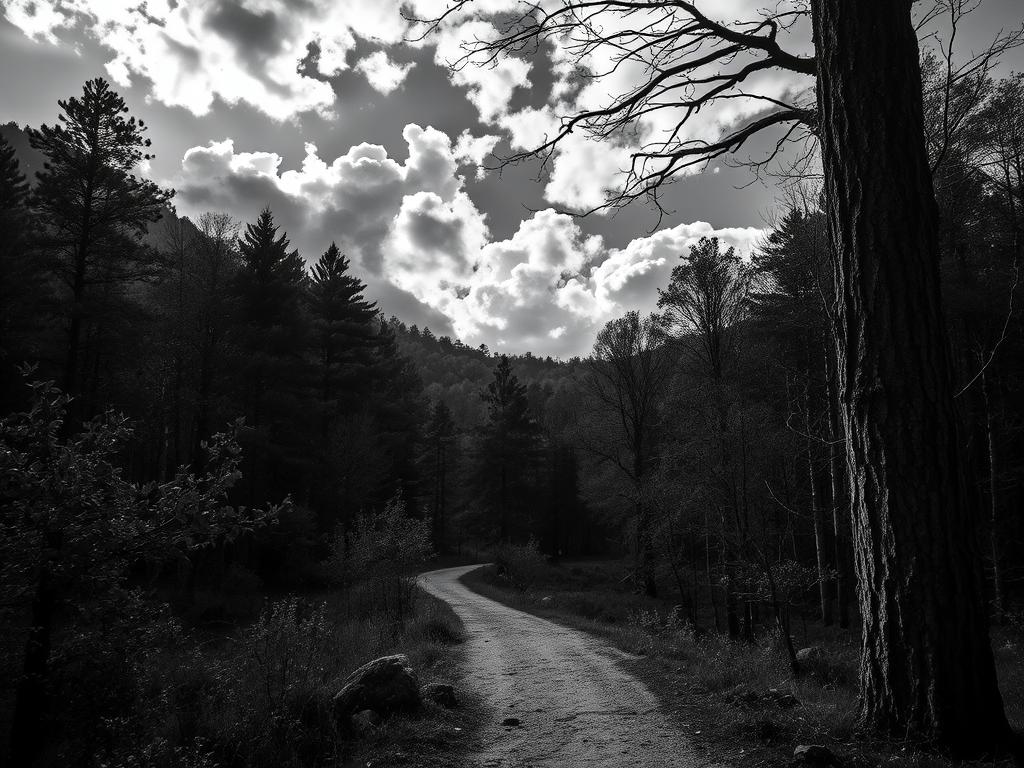
Conclusion
Mastering black and white photography is more than just learning techniques. It’s about exploring composition, light, and emotion. Even though the exact improvement from color to black and white varies, many photographers find it aligns better with their vision. This motivates me to keep improving my skills.
Color can sometimes hide a subject’s true essence. Studies show colors can make up 60-70% of an image’s impact. This makes me think about when to use black and white to reveal the subject’s beauty. Through black and white, I’ve learned to capture emotions and moods in my photos.
Black and white photography lets me share more than just visuals. It helps me understand how people feel when they see my images. Artists like Pablo Picasso have shown that subjects can be more powerful without color. In the end, this art form helps me create lasting and relatable images, turning simple moments into deep stories.
