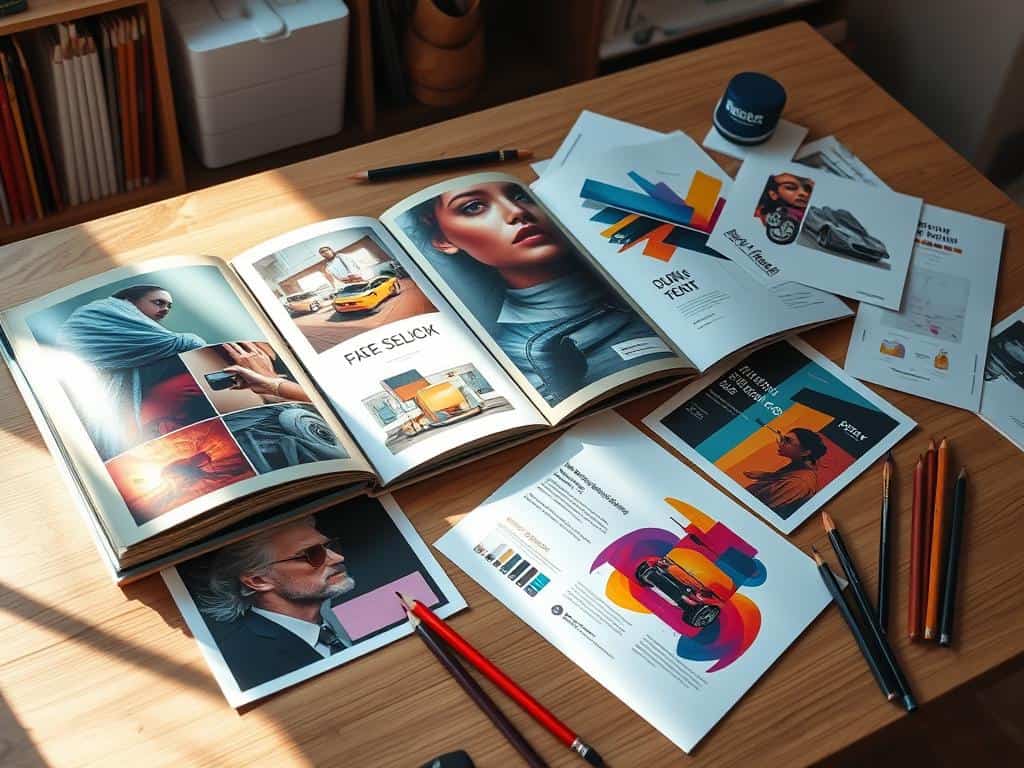
Did you know over 70% of employers look at a strong portfolio when hiring in graphic design? As a graphic designer, I see my graphic design portfolio as more than just my best work. It’s a key tool that can help shape my design career. With 85% of graphic designers using online portfolios, having a professional and eye-catching platform is key.
This article will show you how to make a graphic design portfolio that stands out. It should show off your unique style and skills. It should also grab the attention of clients and employers.
Key Takeaways
- A strong graphic design portfolio is key for hiring decisions.
- Online portfolios are preferred for their ease of access.
- Diverse projects in portfolios lead to higher engagement rates.
- Updating your portfolio regularly is vital for showing off recent work.
- Customized templates can boost client inquiries.
- Including case studies can increase client interest and understanding.
Importance of a Strong Graphic Design Portfolio
A strong graphic design portfolio is key to a designer’s success. It lets me show off my best work and highlight my unique skills. In a competitive field, a well-made portfolio helps me stand out, aiming for jobs at top companies like Apple, Google, and Meta.
Showcasing Your Best Work
Employers like to see candidates’ strongest projects. Research shows 75% of design employers value showing work well, boosting my chances of getting noticed. I focus on quality, aiming for three to five detailed case studies that speak to clients.
Creating a Lasting Impression
A good graphic design portfolio leaves a lasting impression. Over 90% of hiring managers say a professional look shows confidence in my skills. Making a strong first impression is key, as employers usually spend less than 10 minutes on portfolios. A memorable first impression can make them remember my unique style.
Documenting Your Creative Journey
Sharing my creative journey shows my growth as a designer. Employers like portfolios that share the creative process and context. This openness can lead to companies reaching out to me, not the other way around. Adding personal or experimental projects adds depth and can boost employer interest by up to 40%.
How to Create a Stellar Graphic Design Portfolio
Creating a standout graphic design portfolio takes careful thought. I start by choosing the right platform and template. This ensures my work looks great and is easy to find. Squarespace and WordPress are top choices for designers who want to impress.
Selecting the Right Platform and Template
I look for platforms that are easy to use, work well on mobile, and offer design freedom. Sites like Behance and Dribbble are great for getting noticed. It’s also key to pick a template that shows off my style without overshadowing my work.
Curating Your Best Work
Choosing the right projects to showcase is important. Showing a variety of work can attract more clients. I pick pieces that show off my skills and versatility. This way, I tell a story of my expertise through my work.
Writing Compelling Case Studies
Adding case studies to my portfolio gives it depth. Employers like to see the story behind each project. I share the goals, challenges, and results of each project. This builds trust and shows my design journey.
Updating Your Portfolio Regularly
Keeping my portfolio up to date is vital. Fresh content can grab the attention of employers and clients. I add new projects and remove old ones to keep my portfolio current. With more people viewing portfolios on mobile, making sure it’s mobile-friendly is key.
Conclusion
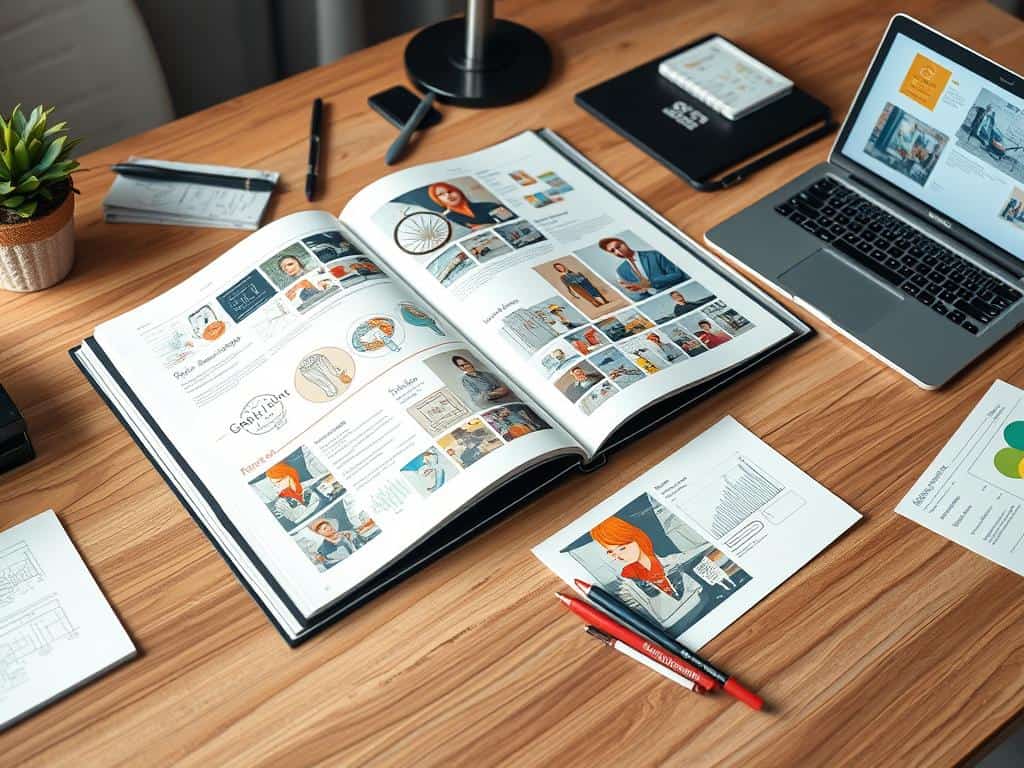
Creating a top-notch graphic design portfolio is a journey that’s key to my career. It’s about showing my best work, making a lasting impression, and tracking my growth. This way, I can draw in new chances and clients.
It’s smart to include 8 to 12 projects in my portfolio. This variety shows I’m versatile and serious about my work. Keeping my portfolio fresh every 3 to 6 months keeps me on track with my goals.
Adding personal projects is a must. They show my creativity and hard work. About 80% of successful designers use them to connect with clients on an emotional level. Also, sharing my design process through case studies makes my portfolio more engaging. Portfolios with these are 60% more likely to attract clients.
It’s also important to make my portfolio mobile-friendly. Most visitors use their phones to check out websites. By making my portfolio easy to navigate, I can showcase my work better. This is key in the competitive graphic design world.
Putting time and effort into my portfolio will really help me succeed. It will also help me connect with clients in different industries.
