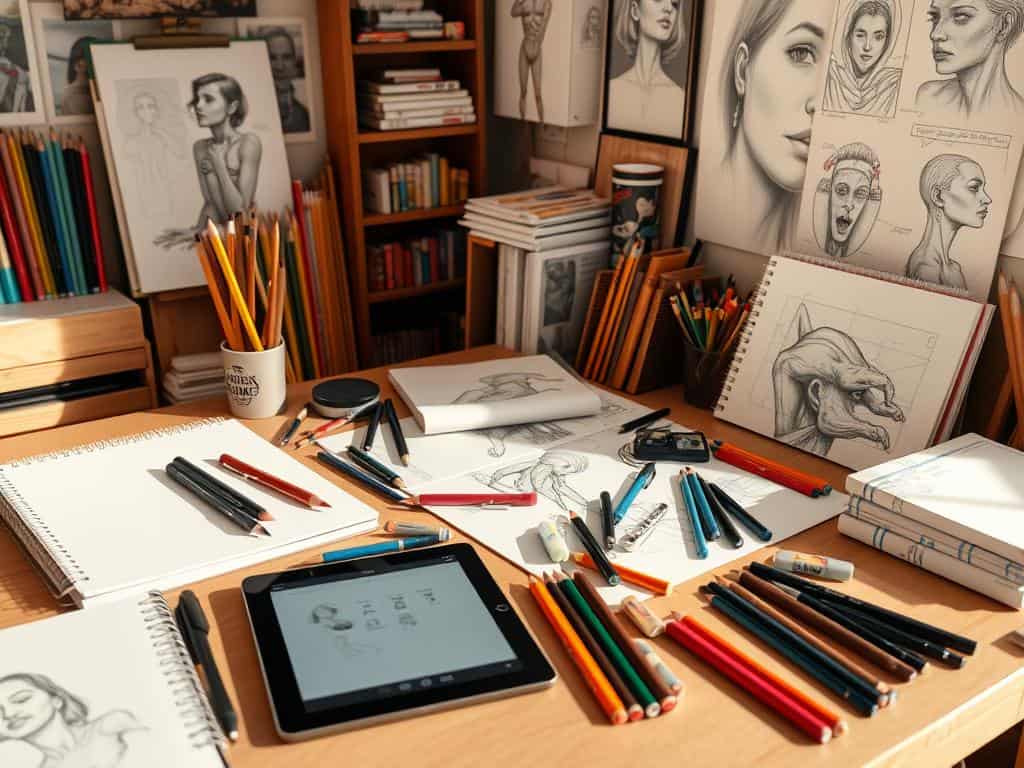
Did you know over 70% of artists today use online platforms to improve? This is a big change from just 20 years ago. With so much information available, finding the right tools can be both exciting and overwhelming.
Whether you’re new to art or have been doing it for years, the right supplies are key. Knowing about different drawing pencils and papers can make a big difference. It’s all about using quality materials and learning the right techniques.
Key Takeaways
- Over 70% of artists use online resources to enhance their skills.
- Using various grades of drawing pencils allows for a wide spectrum of artistic expression.
- Quality drawing paper, such as acid-free options, helps your work last longer.
- Video tutorials, averaging around 20 minutes, offer quick and effective learning.
- Daily practice in an active sketchbook is like a professional athlete’s training.
- Different types of erasers can improve your mark-making and erasure skills.
- Electric sharpeners vary in quality and efficiency, affecting your drawing experience.
Building a Strong Foundation with Quality Drawing Resources
Starting with drawing basics is key to good art. Learning about composition, color, perspective, and anatomy is vital. Even 10-15 minutes of practice daily can make a big difference.
Just like musicians practice scales, focusing on these basics is essential. It prepares you for more complex art.
Understanding the Importance of Drawing Fundamentals
Drawing basics are the foundation of great art. Books like “Drawing on the Right Side of the Brain” and “Color and Light” are great resources. They help deepen your understanding of these basics.
Exploring different subjects, like landscapes or portraits, makes you a more versatile artist. Websites like Proko and Ctrl+Paint offer valuable knowledge. Studying reference images also helps improve your skills.
Quality Drawing Materials Are Key
Good drawing materials make learning more enjoyable. Essential art supplies let you experiment and explore. For instance, holding your pencil differently can lead to smoother lines.
Having a routine and participating in art challenges can boost your creativity. With the right tools, you can refine your skills and express your unique artistic voice.
Digital and Traditional Drawing Resources
Artists today have many options for drawing, both digital and traditional. Each has its own benefits, fitting different skills and tastes.
Exploring Digital Art Tools
Digital art tools are key for many artists now. Graphic tablets like the Wacom Intuos Pro offer precision and shortcuts for better work. Adobe Photoshop and Illustrator let artists edit and try new things easily.
Scanning sketches at high resolutions keeps details when moving to digital. Hybrid graphic tablets mix the feel of traditional drawing with digital editing, making artists happy.

Leveraging Traditional Resources
Traditional drawing tools are also vital for learning. Pencils, erasers, and paper are essential for mastering drawing. Starting with basic tools can improve learning.
Traditional resources are easy to use anywhere, without needing electricity. Many pros value traditional skills, keeping sketchbooks as a key part of their art.
Conclusion
My journey in improving my artistic skills is all about using the right tools. I’ve tried digital tools like Adobe Creative Cloud and traditional supplies like pencils and sketchbooks. Each one brings something special to my art.
Using both digital and traditional tools makes my art more interesting. It helps me see art from different angles. This mix of tools also makes my creative process richer.
Artistic growth is like learning to think inferentially. It takes time and practice. Drawing and making inferences help me grow as an artist.
Trying new things and learning from others is key. Drawing prompts and new techniques keep my art fresh. They show me the value of always learning and growing.
Exploring different styles keeps me inspired. The world of drawing tools is huge and full of possibilities. I’m excited to see where my art will take me next.
