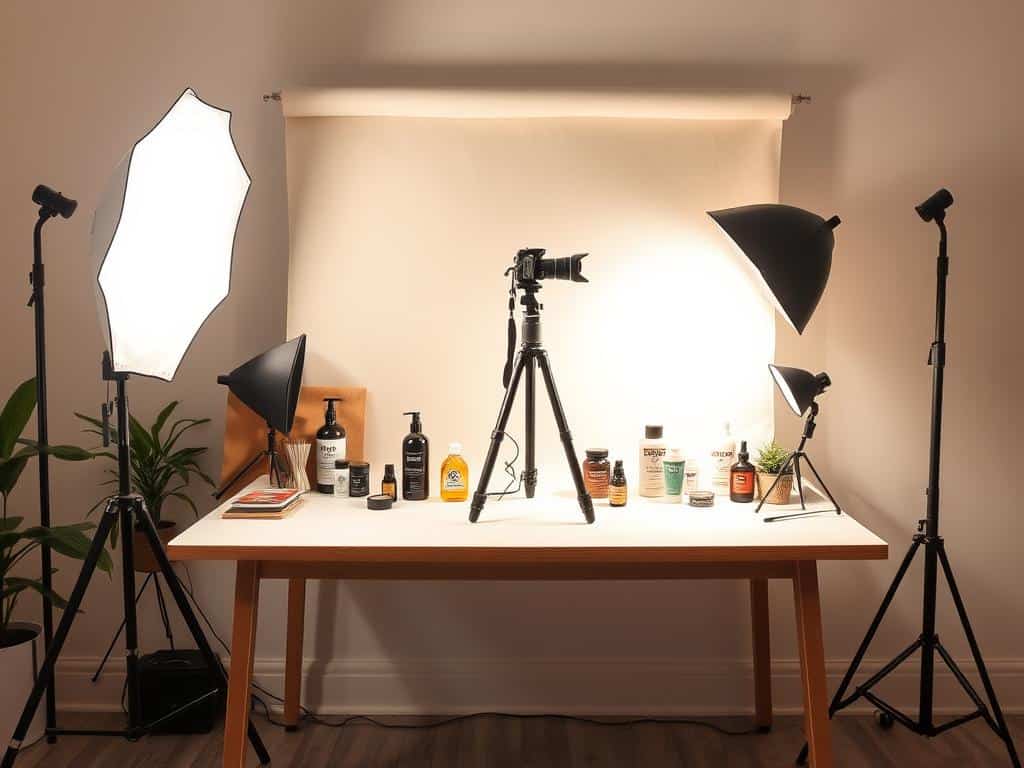
Did you know that 93% of consumers consider visual appearance to be the key deciding factor in purchasing decisions? In today’s competitive online marketplace, presenting products in the best light is not just a luxury; it is essential. High-quality product photography can significantly increase customer confidence and attract more sales to your e-commerce business. While hiring a professional photographer may seem ideal, many small businesses might find it out of reach financially.
Thankfully, with a few DIY techniques and affordable equipment, I can create professional-looking images from the comfort of my home. This guide will arm you with straightforward methods to achieve stunning product photography without exceeding a modest budget. It allows your products to truly shine and catch the eye of potentail buyers.
Key Takeaways
- High-quality images are key for online sales; 67% of consumers say image quality significantly affects their purchasing decisions.
- DIY product photography can be achieved with setups costing under $50, making it accessible for anyone.
- Utilizing natural light effectively can enhance product appearance while lowering costs.
- Experimentation with different lighting positions can lead to softer, more appealing images.
- Creating consistent visual styles in product photography can boost brand recognition and sales.
Essential Equipment for Product Photography
Creating stunning product images needs the right tools. The right gear can make a big difference. Let’s look at the must-haves for top-notch photos from home.
Camera Choices for Beginners and Pros
Choosing the right camera is key. You can use a DSLR or a top-notch smartphone. For detailed shots, a 100mm macro lens is great for small items like jewelry.
A 24-70mm zoom lens is versatile for different products. It works for wide and close-up shots. Beginners might like a 60mm macro lens for medium-sized items. Pick the camera that fits your style for better results.
The Importance of a Tripod
A good tripod is a must for steady shots. Choose one that holds your camera well. It helps get sharp, clear images, even in long exposures.
Using a tripod also lets you try new angles and shots. It’s a game-changer for your photos.
Setting Up a Background
A clean, white background makes your product photos look professional. Use white poster boards or paper to keep focus on the item. Bounce cards help reflect light for better images.
A lightbox is perfect for small items. It makes setup easy. Keeping your backgrounds consistent builds trust with customers, boosting sales and your brand.
Lighting Techniques for Stunning Product Photography
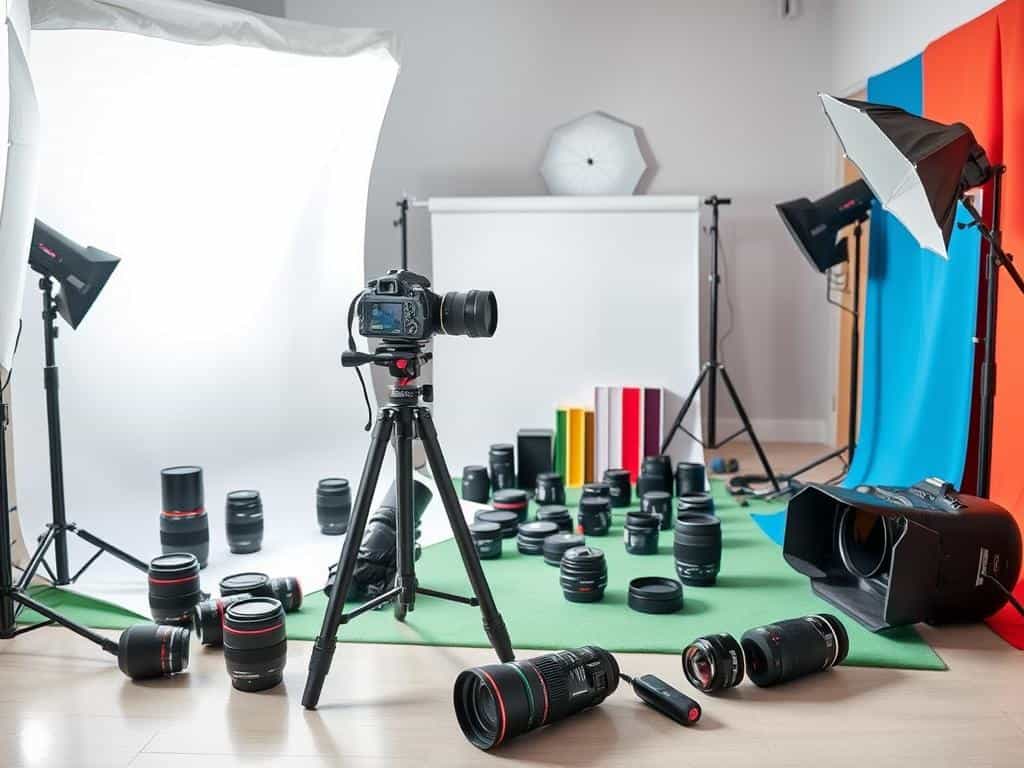
Lighting is key in making product photos stand out. I switch between natural and artificial light to match the product’s mood and details.
Natural Light vs. Artificial Light
Natural light is perfect for peak hours, giving a soft glow that makes products look great. Overcast days are also good, as they soften the light and reduce shadows. But, artificial light has its perks too. Continuous lights let me see shadows as I shoot, which is vital for photos and videos.
Using Softboxes and Reflectors
Softboxes with continuous lights are essential in my setup. They help control light direction, making it smooth. I also use reflectors to fill in shadows, showing off the product’s details. For beginners, a softbox and reflector combo is a great start for quality photos.
Experimenting with Lighting Positions
Playing with lighting positions is important in my work. Positioning the key light at a 45-degree angle adds depth. Backlighting creates a halo effect, which is stunning on transparent products. I take many test shots to get the shadows and highlights just right.
Conclusion
It’s possible to take professional product photos at home and save money. Using the right tools and techniques helps a lot. I can turn simple items into eye-catching images that grab customers’ attention.
Improving my product photography skills makes a big difference. Up to 90% of online shoppers look at photos first. To meet Amazon’s standards, my photos should show products in at least 85% of the frame.
Brands like ASOS show how important different angles and zooms are. They help lower return rates and make customers happier. This makes my online store more appealing and boosts sales.
Also, lifestyle product photography creates a strong emotional connection. By focusing on quality, I can show products in a more realistic way. This not only improves my online look but also makes my brand more relatable. It leads to more customer engagement and sales.
