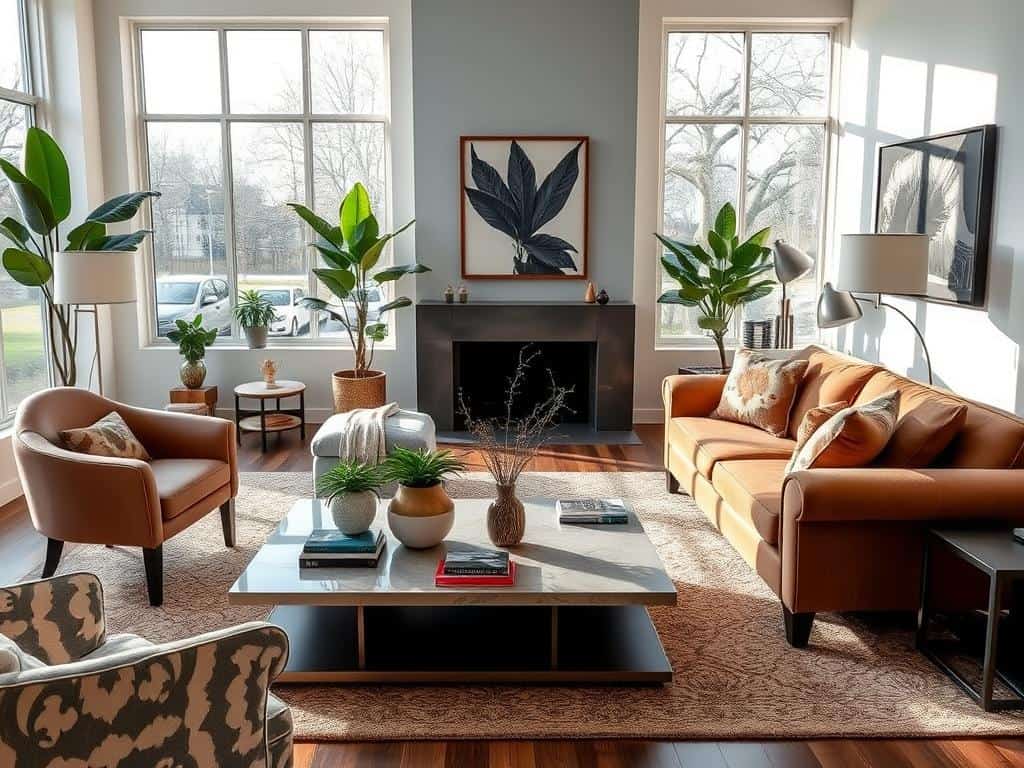
Did you know interior designers suggest 75 cm of space around furniture? This rule makes rooms more comfortable and functional. When I think about furniture layout, I realize it greatly affects both style and use. It’s important to consider each room’s unique features, our personal tastes, and our lifestyle.
Tools like Homestyler and RoomSketcher let me try out designs virtually. This way, I can see how furniture will fit before I move anything. By focusing on the best space planning and creative room setups, I make my living spaces welcoming and useful.
Key Takeaways
- Understanding space requirements enhances functionality and comfort in interior design.
- Open floor plans provide excellent returns on investment for home improvements.
- Pre-planned furniture arrangements save time and energy during moving.
- Virtual tools enable quick visualizations of different furniture layouts.
- Balanced room arrangements prevent uneven designs and improve overall aesthetics.
- Effective lighting design can significantly enhance space utilization.
Understanding the Importance of Furniture Layout
A well-planned furniture layout makes any room better. It boosts functionality and comfort, making spaces both beautiful and useful. By thinking about how each piece fits together, I create spaces for talking and relaxing. This makes every room a warm welcome for visitors.
The Impact on Functionality and Comfort
Good furniture layout puts function and comfort first. Living rooms, for example, should be set up for chatting. I make sure there’s enough room to move around, keeping things looking good and feeling cozy.
Creating a Welcoming Atmosphere
The way furniture is arranged makes a room feel welcoming. I focus on a central point in each room to make it look and work better. This setup encourages people to gather and makes even small rooms feel bigger.
Maximizing Space Efficiency
It’s key to use space wisely, even in small areas. I choose furniture that does more than one thing and vary sizes for interest. Big furniture can make a room feel tight, while too small can look unfinished. Measuring carefully helps me fit everything just right, making small spaces feel bigger.
Tips for Arranging Furniture in Different Rooms
Arranging furniture is different for each room. Each space has its own challenges and chances to make a space work well. Here are tips for various areas of your home.
Living Room Arrangement for Comfort and Conversation
For a great living room, focus on comfort and talking. Place seats so people can easily talk, leaving about 18 inches between the coffee table and seats. This makes it easy to get to things while keeping it cozy.
Use the 2/3 rule to keep furniture from taking up too much space. This makes the room feel open.
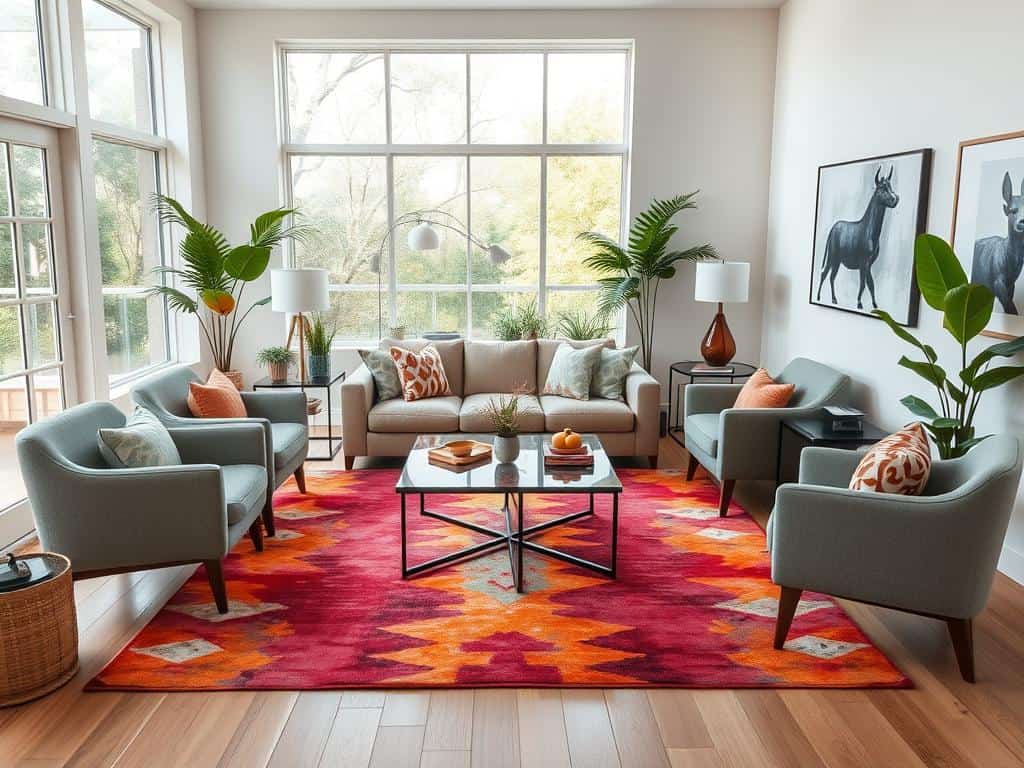
Symmetrical layouts add balance, which is good for rooms of all shapes and sizes. Floating furniture layouts are also popular for their view. In long, narrow rooms, put the sofa against one wall and the TV on the other. This makes the most of the space.
Make sure there’s enough room to walk between furniture, about 2 to 3 feet. This keeps paths clear for moving around.
Optimizing Kitchen and Dining Room Layouts
The kitchen layout is key for cooking and hosting. An open layout helps people move easily between cooking and eating areas. This is important for when you have guests.
In dining rooms, make the dining table the main focus. This creates a welcoming space for meals and guests. It’s perfect for family dinners and parties.
Creating a Peaceful Bedroom Retreat
In bedrooms, the focus is on calm. Place the bed to get natural light and leave enough room to move. Use soft colors and textures to relax.
Leave space for bedside tables. They’re not just useful but also make the bed look balanced.
Good furniture arrangement makes any room feel right. It’s all about balance between function and comfort.
Effective Strategies for Your Furniture Layout
Using smart furniture layout strategies can make any room feel better. It’s all about planning the space well. This makes the room look good and work well.
Knowing how to arrange furniture is key. It helps with traffic flow and makes the room feel welcoming. Good lighting also plays a big role in making a room feel right.
Mapping Your Space for Better Planning
First, I make a map of my living area. Graph paper or online tools help me see how things will fit. This way, I know my furniture will work well together.
Studies show that having a plan makes moving easier. It helps homeowners feel more at ease.
Considering Traffic Flow
It’s important to keep paths clear. I make sure there’s enough room between furniture. This makes moving around easy and comfortable.
Good traffic flow means people want to stay in the room. It makes the space feel welcoming and lively.
Highlighting Focal Points
Focal points, like art or fireplaces, tie the room together. I arrange seating to make these points the center of attention. This makes the room feel more alive.
By doing this, I improve how the room feels. It becomes a place where people enjoy being together.
Utilizing Lighting for Enhanced Ambiance
Lighting is key in my furniture layout. I use different lights to make the room bright and inviting. This makes the room feel more open and functional.
Good lighting can make a room up to 40% more useful. By using lights wisely, I make my living space feel welcoming and comfortable.
Conclusion
As we wrap up our look at furniture layout, it’s clear that a well-thought-out arrangement can make any room better. By using key interior design rules, like placing big furniture first and making sure there’s room to move, I can make spaces that are both useful and look good. The right furniture layout is key to good space planning, making my home both beautiful and practical.
By mixing symmetrical and asymmetrical designs, I can please different tastes, drawing in buyers and guests. Also, focusing on key areas and using Feng Shui helps create a peaceful, positive space. Trying out different layouts and styles makes my space not just look better but also feel more comfortable and satisfying.
In short, creating a well-planned furniture layout is a journey to make my home a reflection of me that also meets my needs. There’s no single way to do it, and I suggest that homeowners see their spaces as a canvas for creativity and change. By using the strategies we’ve talked about, my home will be more than just a place to live—it will feel like home.
