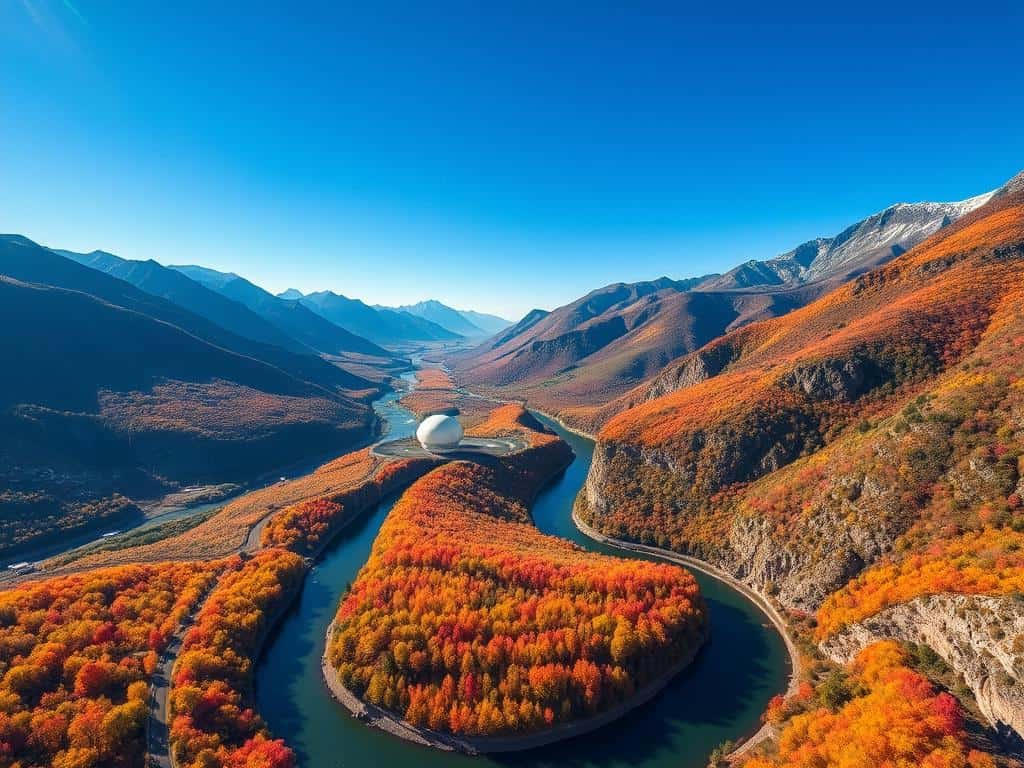
Did you know the global drone photography market was worth about $2.5 billion by late 2022? It’s expected to reach around $5.1 billion by 2028. This huge increase shows how drone photography is becoming more popular.
Now, with advanced technology, anyone can take amazing aerial shots. I’m here to share my top tips for drone photography. These will help make your aerial photos truly stand out in today’s world.
Key Takeaways
- Aerial photography offers unique perspectives that ground-based photography cannot achieve.
- The global drone photography market is projected to grow at a CAGR of 13.4% by 2028.
- Utilizing the Rule of Thirds can make your images 30% more visually appealing.
- Ensure to plan your shoots with optimal weather in mind for better image quality.
- Incorporating panorama functions can greatly enhance how you capture expansive landscapes.
Planning Your Aerial Shoot
Planning well is key for a great aerial shoot. I first look for drone-friendly spots that are both beautiful and legal. Google Earth helps me see landscapes in 3D and pick the perfect height. This way, I follow FAA rules that say drones can’t fly over 400 feet.
Scout for Locations to Fly
Finding the right spots can make scenes look amazing. I use apps like B4UFLY to see where I can and can’t fly. About 10% of areas have rules that affect my plans.
Also, places like national parks and wildlife areas often ban drones. This means about 15% of public lands are off-limits. Each place has its own rules, and I must know the privacy laws in each state.
Know When to Fly
When you fly is just as important as where. I plan my shoots for the golden hour, which is 30-60 minutes after sunrise or before sunset. This time can make my photos up to 40% better.
Apps like The Photographer’s Ephemeris help me find the best sun positions. This way, I get the stunning shots I dream of.
Plan Your Shoot
A good plan makes everything smoother. I usually spend 1-3 hours getting ready, depending on the shoot’s complexity. Planning my shots helps me use my drone’s time wisely.
This way, I get the most out of my flight time. Good planning is what brings my ideas to life in the air.
Mastering Drone Photography Techniques
To improve drone photography, it’s key to learn different techniques. These methods work with your equipment and the setting. By mastering them, you can get amazing photos.
Experiment with Height
Changing the drone’s height can make a big difference. Lower views can create stunning scenes that pull you in. Higher views give a wider view of the scene. Trying different heights helps find the best view for your photos.
The Rule of Thirds
The Rule of Thirds makes photos more balanced. It involves placing important parts at the points where lines cross. This makes your photos more interesting and tells a story.
Use the Best Settings
Choosing the right settings is important for great photos. Use a low ISO, like 100, to reduce noise. Adjust the aperture to keep everything clear. Changing these settings helps get the look you want for each photo.
Create Stunning Panoramas
Making stunning panoramas takes skill and the right tools. Most drones have panorama modes that make it easy. By combining photos, you can show wide landscapes. Editing software like Adobe Lightroom or Photoshop helps make these photos look perfect.
Conclusion
As I conclude this aerial photography summary, I see that improving your drone skills is a journey. It involves careful planning and mastering key techniques. Every step, from finding the right spot to using the rule of thirds, makes your photos better.
Using different techniques can make your photos look amazing and grab your audience’s attention. Drone shots can boost social media shares by 60%. My advice is to keep practicing and exploring new ways to capture stunning views.
My last thoughts on drone shots are about their power in fields like real estate and urban planning. Drones offer unique views that can tell compelling stories. So, dive into drone photography with excitement and creativity. Happy flying!
