
Did you know that 80% of consumers believe brand identity is more important now than ever? In today’s fast world, a strong brand identity is essential. Great design is key to creating that identity, showing values and connecting with people.
Look at brands like Nike, McDonald’s, and Apple. They show how a unified design makes them stand out. By focusing on logos, colors, fonts, and style, we can help businesses create an identity that shines in a crowded market. Let’s dive into the must-haves of brand identity and how design can make a lasting impact.
Key Takeaways
- 80% of consumers recognize the significance of brand identity today.
- Great design plays a critical role in communicating core values.
- A strong brand identity can lead to increased customer loyalty.
- Visual identity consistency across channels boosts revenue by up to 23%.
- Effective branding improves brand recognition and engagement.
Understanding Brand Identity
Brand identity is about the visual and communication parts of a company. It shows what the company stands for, its personality, and what it promises to customers. Building a strong brand identity is key to standing out in the market.
What Is Brand Identity?
Brand identity has eight main parts: company name, logo, tagline, colors, fonts, graphics, images, and voice. Each part helps shape how people see the company. A good logo, for example, can make a brand more memorable.
People often remember a brand’s name and logo. This can shape their opinions and loyalty towards the brand.
Why Brand Identity Matters
For any business, understanding brand identity is essential. A unified brand identity can build trust and positive feelings among people. Studies show that a unique brand identity can make customers more confident in choosing it over others.
Choices like colors and logos can influence up to 90% of a person’s opinion about a product. This shows how important visuals are in making a brand stand out.
Components of Brand Identity
To create a strong brand identity, a company must think about its parts carefully. The company name should be easy to remember and say. Logos should be consistent and recognizable, like IKEA and Coca-Cola.
Taglines should clearly say what the company does and connect with its audience. All these parts work together to make the brand more visible and build loyalty over time.
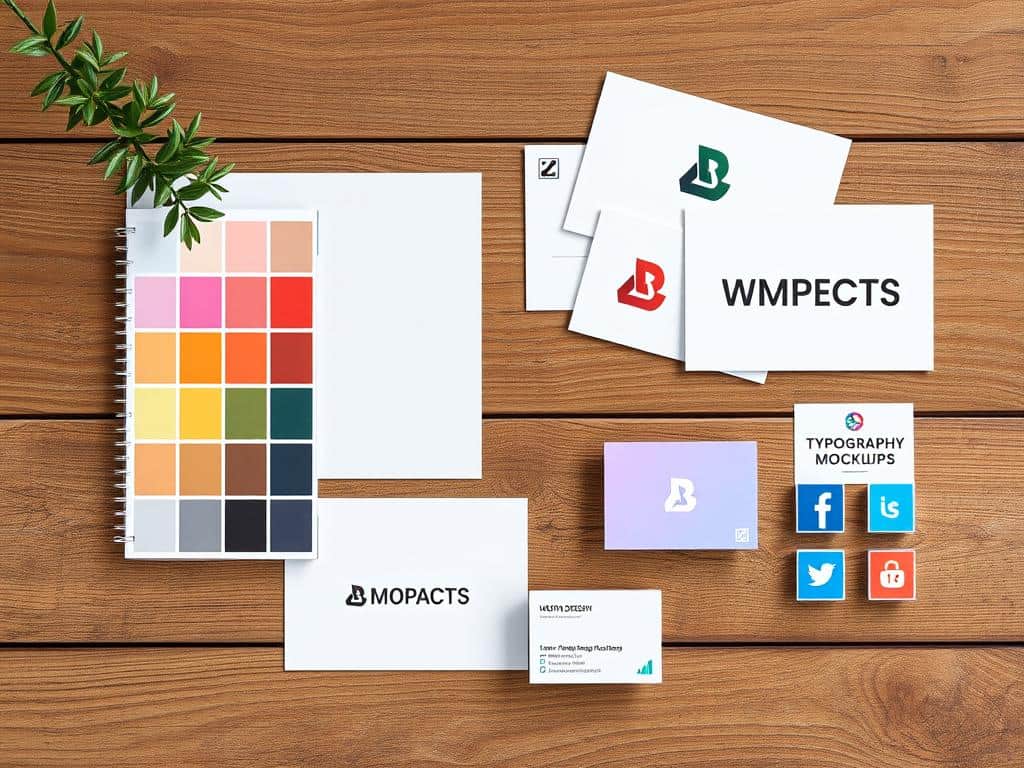
Design for Branding
Creating a unique visual identity is key for any brand to stand out. Good logos are simple and easy to remember. A strong visual identity includes colors and typography that show the brand’s values.
I make sure all design elements work together. This way, they send a clear message to the audience.
Creating a Distinct Visual Identity
Using the same colors boosts brand recognition by 80%. I choose colors for the brand based on the logo. Then, I add more colors to show the brand’s personality.
Neutral colors like black and white help the brand colors pop. This makes the brand’s look stronger and more memorable.
The Role of Color in Brand Identity
Color shapes how people see a brand. Red means energy, and blue means trust. When I design, I pick colors that match the brand’s mission.
Research shows 92% of people are influenced by what they see. This shows how important color is in making a good impression and guiding choices.
Choosing Typography
Typography is also key in branding. Brands use two to three fonts, often inspired by their logo. Using high-quality fonts helps build a connection with the audience.
In my work, I pick fonts that fit the brand’s look and work well in different places. This makes it easier for people to connect with the brand.
Conclusion
Creating a strong brand identity is key for businesses to stand out today. Design elements like logos, colors, and fonts are vital. They help a company share its values and connect with people.
Design’s role in branding is huge. Studies show that consistent branding can boost sales by up to 23%. It also makes customers remember a brand 75% more, building trust.
In short, focusing on brand identity is critical. By valuing design, companies can grow and build strong customer ties. Branding’s evolution shows its power in shaping how people see a brand and achieving success.
