
Did you know that about 70% of successful night shots come from the right gear? Night photography is not just about dealing with low light. It’s a world full of creative chances. With patience and planning, anyone can take amazing night photos.
This art lets us capture the beauty of light and the secrets of the dark. Techniques like long exposures and using available light are key. A sturdy tripod is also vital. In the next parts, I’ll share tips to improve your night photography skills.
Key Takeaways
- Understanding your camera’s low-light capabilities is essential for capturing clear night shots.
- Utilizing a lower f-stop and higher ISO settings can significantly improve image quality.
- Longer shutter speeds are critical, but they require stable equipment to prevent blurriness.
- Planning your shooting location and time can greatly enhance your night photography experience.
- Post-processing with tools like Adobe Lightroom can help minimize unwanted noise in your images.
- Including interesting subjects in your compositions can add dynamism to your night shots.
- Remote shutter releases can help reduce camera shake during long exposure shots.
Understanding the Basics of Night Photography
Night photography is a way to see the world in a new light. It’s different from daytime photography because of the lack of natural light. I use artificial light to create stunning images that show a different side of things.
The lack of sunlight lets me get creative. I try new things to get unique results. This makes night photography exciting and rewarding.
Why Night Photography Is Unique
Night photography is special because of its challenges. Getting the right exposure in the dark takes practice. I often try different settings to get it right.
I use shutter speeds up to 30 seconds and wide apertures to let in more light. ISO settings from 400 to 6400 also play a big role. Adjusting these settings helps me capture beautiful night scenes.
Essential Equipment for Stunning Night Shots
Having the right gear is important for night photography. A sturdy tripod is essential for long exposures. It keeps the camera steady and prevents blur.
I prefer a tripod that’s not too heavy but stable. A camera with manual settings is also key. It lets me adjust the shutter speed and aperture as needed.
Fast prime lenses, like a 24mm f/1.4, help capture more light. Modern smartphones also have Night Mode, making it easier for everyone to try night photography.
Techniques for Capturing Great Night Shots
Mastering night photography takes special techniques. Knowing how to use manual mode is key. It lets you control ISO, aperture, and shutter speed perfectly.
Mastering Manual Mode
To get amazing night shots, I use manual mode. I set the ISO between 1600 and 3200 to cut down on noise. This makes my photos clearer.
I also use a wide aperture, like f/2.8, to let more light in. This boosts image quality. My shutter speed is between 15 to 30 seconds to capture more light without blurring stars.
For those with full-frame or mirrorless cameras, higher ISOs work well without losing clarity.
Long Exposure Techniques
Long exposure is essential in night photography. I adjust my shutter speed to let in more light. This is key in dark places.
I use a tripod to keep my camera steady. This helps keep my photos sharp. I avoid camera shake by using a remote shutter release or timer.
By saving images in RAW format, I keep more detail for later editing. With the right settings, I can capture stunning starry skies and vivid night scenes.
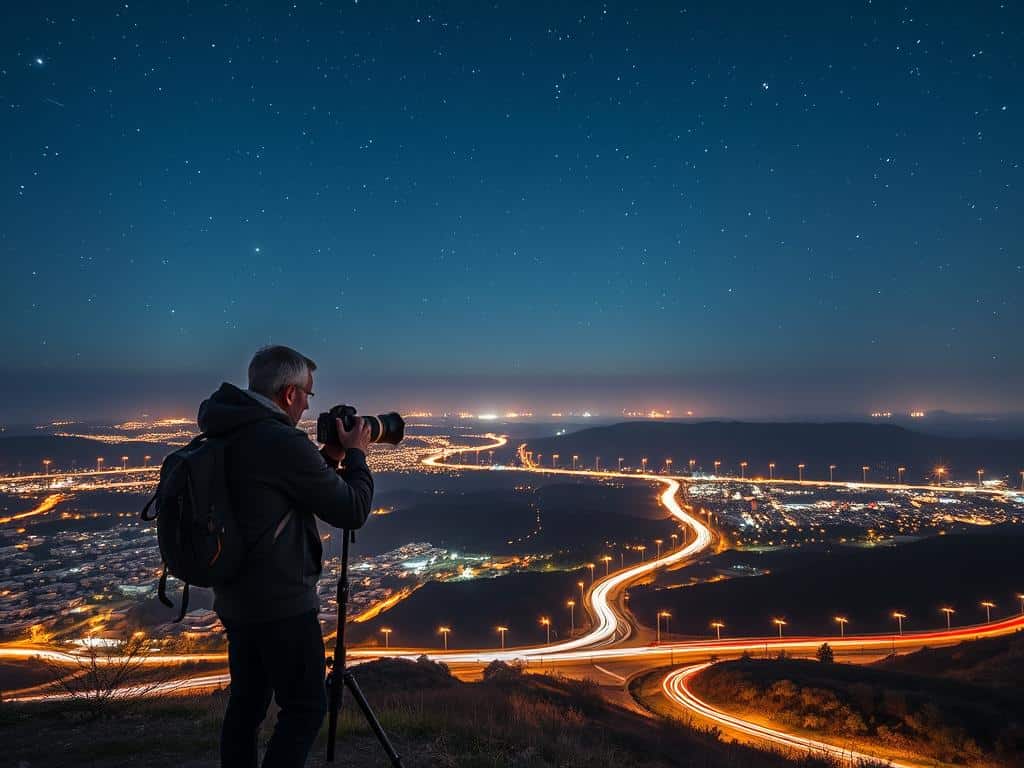
Tips for Successful Night Photography
To get amazing night photos, you need to plan well and know your technique. Knowing when and where to shoot is key. Also, mastering composition and lighting is important.
Planning Your Location and Time
Scouting locations before shooting is a must. Look for places with interesting lighting. This can make your photos stand out.
I get to my spot early to set up. Knowing when the sun sets and the moon is full helps a lot. Apps help me get the timing right.
Composition and Lighting Considerations
Composition is everything for great photos. I try different angles to find the best view. Using streetlights or moonlight adds depth to my photos.
For scenes with lots of contrast, I use HDR. This keeps both shadows and highlights clear. Managing light is key, and stacking exposures helps reduce noise. This makes my photos cleaner and brighter.
Conclusion
Getting good at night photography is a journey. It mixes knowing the technical stuff with being creative. We’ve looked at many techniques and tools you need for amazing night photos. From learning how to use your Canon EOS R6 Mark II to mastering long exposure, each step helps make your photos better.
Remember, practice and patience are essential. Try different settings like aperture and ISO. Also, explore different places and times to find what suits your style. Night photography is all about facing challenges and finding new ways to grow.
Don’t forget to show off your night photos. You could print them on glass for a unique look or share them online. Sharing your work can inspire others and celebrate your journey. With regular practice and a sense of adventure, you’ll make your night photography truly special.
