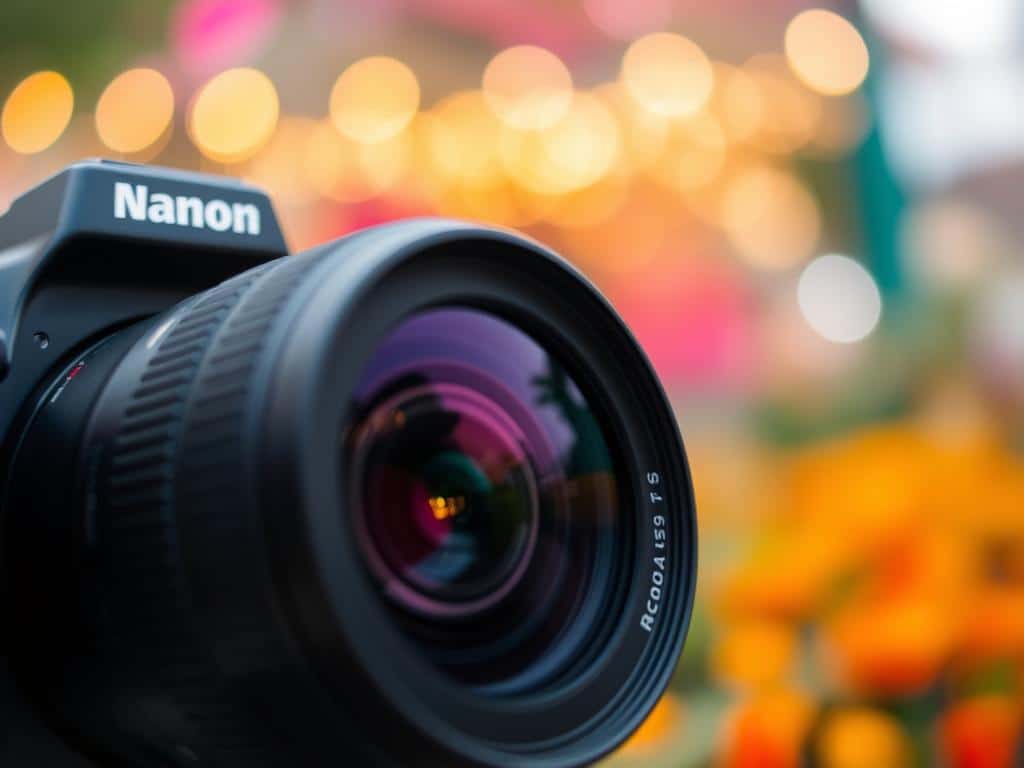
Did you know a shallow aperture of f/2.8 is key for amazing bokeh in photos? This shows how vital aperture settings are for this creative technique. It turns simple images into stunning works of art. Bokeh photography makes the subject stand out by blurring the background, adding depth and beauty to portraits and more.
In this article, I’ll share tips and lens advice to boost your bokeh skills. Whether you’re new or experienced, knowing the basics is essential. From aperture settings to lens choice, it’s all about creating those dreamy blurred backgrounds. Get ready to explore the world of bokeh photography and unlock your creative side!
Key Takeaways
- Using a wide aperture (f/2.8 or lower) greatly improves bokeh effects.
- Longer lenses, like a 200mm, create more pronounced bokeh than shorter ones.
- The distance between your subject and background is key for bigger bokeh effects.
- Good lighting, like near sunset, can make bokeh look even better.
- Reflective surfaces can add depth and interest to your bokeh photos.
Understanding Bokeh Photography
In photography, bokeh is special. It’s not just about the blur in images. It also lets photographers express their creativity.
What is Bokeh?
The word “bokeh” comes from Japanese, meaning “blur” or “haze.” It happens in parts of the image that aren’t in focus. This creates a beautiful effect that can change simple scenes into something amazing.
By using a smooth background blur, photographers can make their subjects pop. They use certain lenses and aperture settings to get this effect. It’s all about creating art with light and shadow.
The Importance of Bokeh in Photography
Bokeh is key in many types of photography, like portraits and landscapes. It makes images feel deeper and more real. The background blur helps focus the viewer’s attention on the main subject.
This technique also improves the image’s composition. It can even tell a story, evoking emotions in the viewer. Many photographers use bokeh to create stunning images that connect with their audience.
Essential Tips for Creating Stunning Bokeh
To make beautiful bokeh, you need to focus on a few key techniques. With the right steps, anyone can make their photos look amazing. Here are some tips to help you improve your bokeh skills.
Using a Wide Aperture
Using wide apertures like f/1.4 to f/2.8 lets more light in and makes the background blur. This creates a “creamy bokeh” effect. It makes your subject stand out by contrasting what’s sharp and what’s not, perfect for portraits.
Managing Subject to Background Distance
How far your subject is from the background is key for great bokeh. Moving the subject away from the background makes the blur better. This way, the background stays soft and your subject pops, even with detailed backgrounds.
Utilizing Lens Choice
The lens you choose affects the bokeh. Lenses over 85 mm make bigger, nicer bokeh. The lens design also shapes the bokeh, making it smooth or geometric. Picking the right lens is vital for stunning bokeh.
Finding Good Lighting Situations
Lighting greatly impacts bokeh. The best light makes it stand out. Shooting during the golden hour adds a warm glow. Even light from reflections or shaded areas makes highlights pop.
Incorporating Light Sources
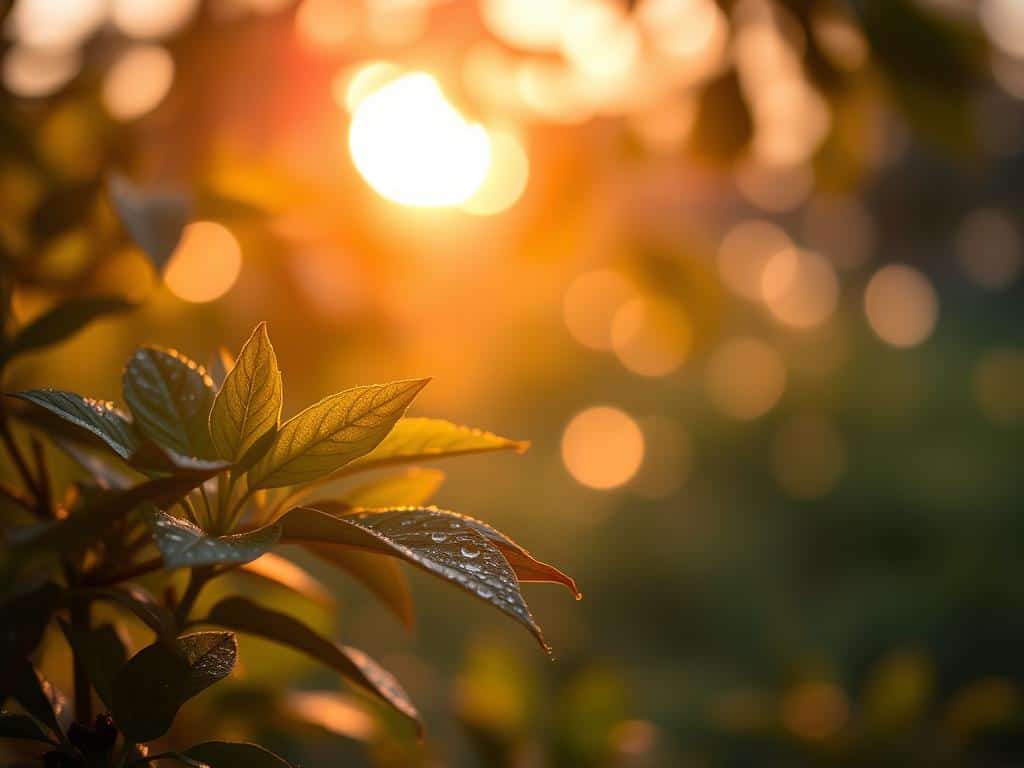
Adding different light sources in the background makes bokeh more interesting. City lights or sunlight through trees create vibrant highlights. These add depth and creativity to your photos, making them tell a story.
Conclusion
Mastering bokeh photography is all about learning many techniques. These tips help create stunning images with deep focus. By using wide apertures and adjusting the distance between subjects and backgrounds, I’ve made breathtaking photos.
Choosing the right lens is also key. Each step is important for creating beautiful blurs. These blurs make my photos tell a story in a unique way.
Using advanced techniques like the Brenizer method or editing software like Adobe Photoshop and Lightroom has helped me. These tools let me fine-tune the bokeh effect. This makes my photos even more artistic.
Learning to control blur has made my close-up shots more appealing. This is true for both macro photography and portraits. It’s all about how you use blur to enhance your photos.
As I keep exploring bokeh photography, I see how important it is to experiment. I suggest trying different settings, apertures, and focal distances. This can really change how your photos look.
Embracing this creative approach opens up new ways to express visually. It encourages us to try new things in photography. This leads to more innovative and exciting photos.
