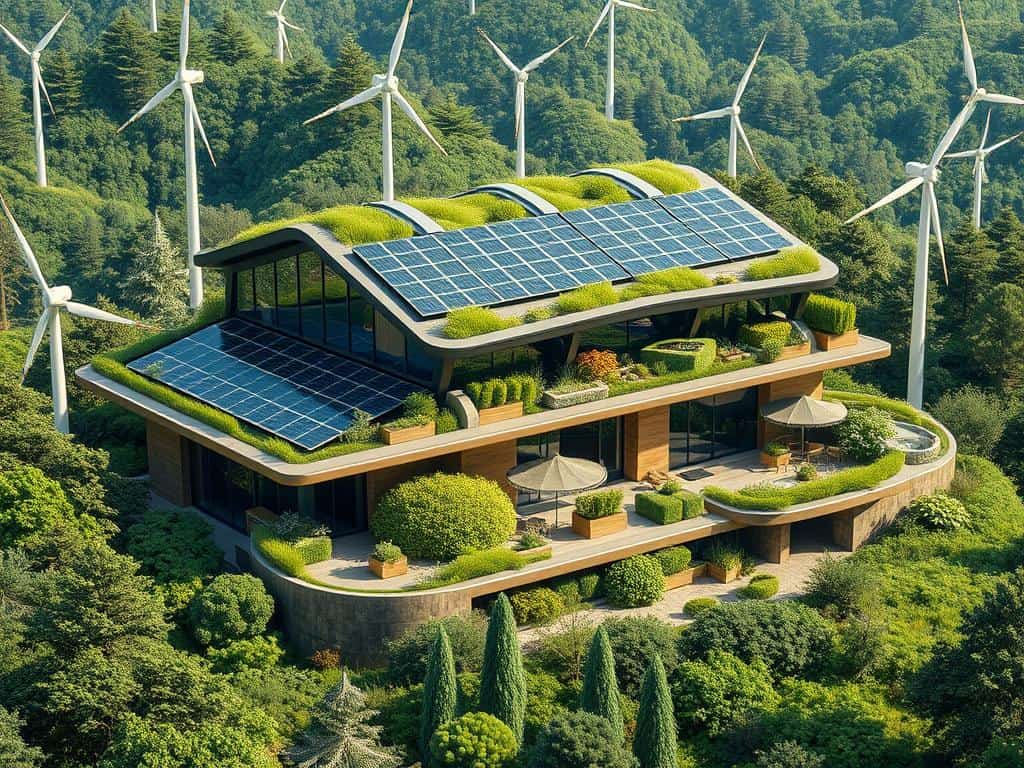
Did you know buildings cause nearly 40% of global carbon emissions? As we face more climate challenges, we need new design ideas. These ideas should help us build in a way that’s good for both people and the planet.
This article will look at sustainable architecture. We’ll talk about what it is, why it’s important, and how to design eco-friendly buildings. We’ll also see examples of successful projects. Let’s learn how we can help make our future healthier and more sustainable.
Key Takeaways
- Sustainable architecture cuts down carbon emissions by using green building practices.
- Innovative ideas, like reusing buildings, save materials and help the environment.
- Using solar panels and energy recovery systems makes buildings more energy-efficient.
- Adding natural light and green roofs makes spaces look better and helps the planet.
- Getting the community involved is key to creating sustainable projects that meet local needs.
Understanding Sustainable Architecture
Sustainable architecture is a new way to design buildings that helps the environment. It looks at the site, energy use, and materials. This is important because of climate change and its harm to our planet.
Definition and Importance of Sustainable Architecture
Sustainable architecture creates spaces that are good for people and the planet. The building industry is a big source of CO2 emissions. So, making green buildings is not just good for the environment, but also for property values.
Impact of Climate Change on Architectural Practices
Climate change has made architects focus more on eco-friendly designs. Green buildings can save money and last longer. This shows that sustainable architecture is important for our future.
Social Sustainability and Community Engagement
Social sustainability is key in sustainable architecture. It’s about working with the community to make buildings that improve lives. Buildings that are good for the air and community well-being are successful. For example, the Friendship Hospital in Bangladesh shows how architecture can help people.
Key Strategies for Eco-Friendly Design
In sustainable architecture, using different strategies is key. This helps create buildings that save energy and are good for the environment. Mixing passive and active design elements is very effective in saving energy and reducing harm to nature.
Passive Sustainable Design Techniques
Passive design uses nature to its advantage. It involves smart placement of windows and walls to let in natural light and air. For example, walls that absorb heat can cut down on heating costs.
These methods make buildings more energy-efficient. They also make indoor spaces more comfortable. Plus, they help reduce harm to the environment.
Active Sustainable Design Solutions
Active design uses advanced systems for heating, cooling, and air. It includes smart technology to lower environmental impact. Features like smart thermostats and energy recovery systems help save energy.
Utilizing Renewable Energy Systems
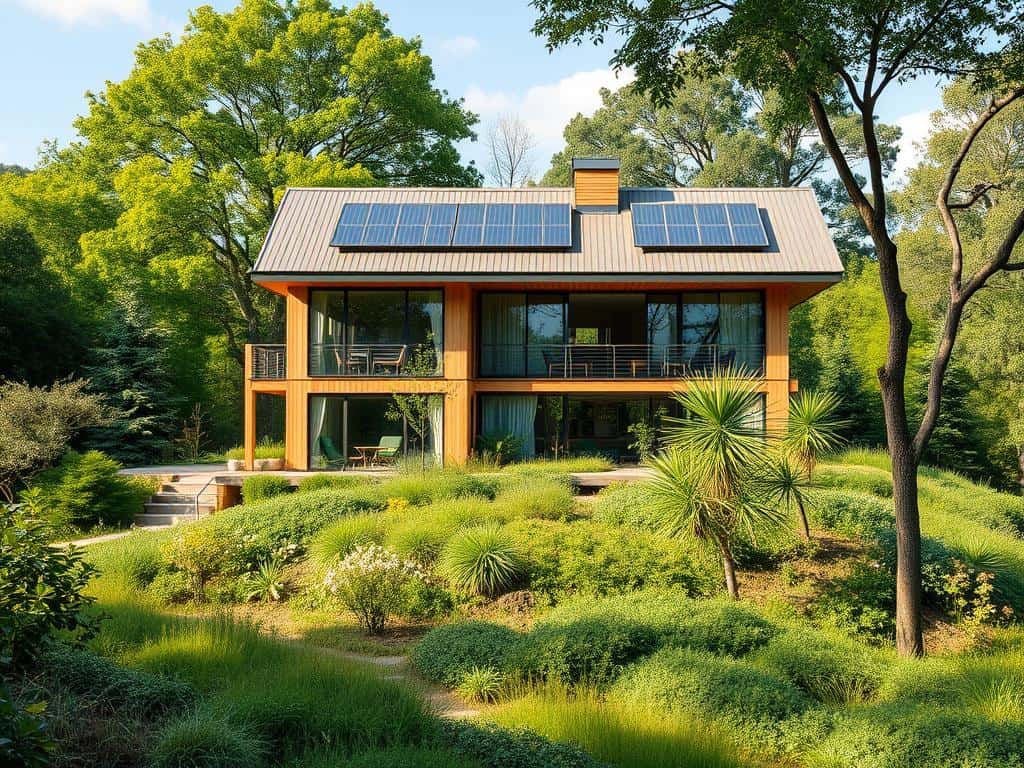
Adding renewable energy systems like solar panels boosts a building’s green credentials. These systems provide clean energy and cut down on fossil fuel use. As more buildings aim for green certifications, using these systems becomes more critical.
Choosing Green Building Materials
Choosing the right materials is essential for eco-friendly buildings. Using materials from eco-friendly sources and with high recycled content helps reduce waste. Native plants in landscapes also help save water and support biodiversity.
Sustainable Architecture: Innovative Projects and Inspirations
Looking at the latest in eco-friendly architecture, we see many new ideas. These projects use smart technology and focus on being green. They make cities look better and help the environment, meeting community needs.
Case Study: The Cube Berlin’s Smart Technology
The Cube Berlin shows how smart tech can change building design. It’s full of energy-saving features, setting a high standard for green buildings. Its design is smart and green, making cities better places to live.
Exploring Green Roofs and Urban Landscapes
Green roofs are key in today’s cities. They improve air quality and add green spaces. For example, CopenHill in Copenhagen has a green roof that helps with the city’s climate, showing how green buildings can help cities.
Examples of Successful Eco-Friendly Buildings Globally
Across the world, eco-friendly buildings show different ways to be green. Bosco Verticale in Milan is a great example. It combines nature and homes, adding to the city’s green spaces. These buildings aim to use less energy while looking good.
Community-Centric Sustainable Projects
Projects that focus on the community are important. Spain is leading with affordable homes that are high quality. By involving locals in design, these projects meet community needs and show what people want.
Conclusion
Sustainable architecture is key to a greener future. It combines caring for the environment with looking out for people. As we face big ecological problems, we need new building ways to help.
Buildings use a lot of energy and harm the planet. They must change to meet today’s needs. Using natural light and air can cut energy use and make people healthier.
Using less water and collecting rainwater helps too. Choosing the right materials also cuts down waste and makes air cleaner. This is good for everyone and the planet.
Changing how we build is a chance to involve communities and teach about the environment. Making buildings that encourage activity boosts health and fights climate change. By choosing wisely, we can build a better, fairer world.
