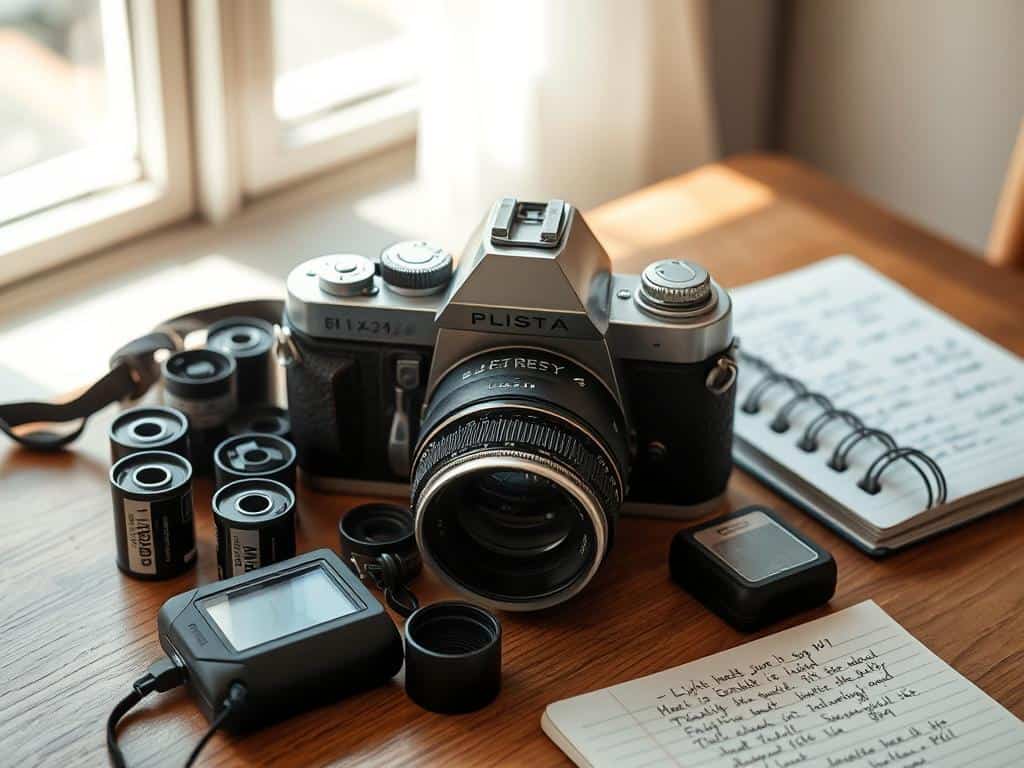
Did you know a good 35mm camera can cost under $100? This low price has made film photography popular again. It attracts both new and experienced photographers. With over ten years of experience, I’m here to share tips to help you take amazing photos.
Film photography is special because it’s real and has a wide range of colors. Knowing the basics helps you express your creativity and take beautiful pictures. Let’s explore the world of film photography together and learn how to make your photos stand out.
Key Takeaways
- Film photography offers an affordable gateway to creative expression.
- Understanding camera settings is key to taking stunning shots.
- Trying different film stocks can improve your photos.
- Each roll of 35mm film has about 36 shots, so feel free to experiment.
- Using resources like the Butkus Camera Manual Library can help you learn more.
- Keeping film in cold storage and checking expiration dates is important for quality.
Getting Started with Film Photography
Starting film photography is exciting and full of creativity. The first step is to pick a camera that meets your needs and budget. The Pentax K1000 is a good choice for its simplicity and effectiveness.
Exploring used 35mm SLRs or point-and-shoot models is also a good idea. These cameras are great for learning manual skills and automatic shooting.
Choosing the Right Camera
The Olympus Stylus series is a popular choice. These cameras cost around $100 and are great for point-and-shoot photography. The Canon AE-1 is another good option, priced at about $150.
Many brands like Nikon, Pentax, and Minolta offer models under $200. This makes it easy to start with film photography without spending a lot.
Selecting Film Stock
Choosing the right film stock is key. Color negative film like Kodak Ektar 100 is forgiving for beginners and costs about $10 per roll. Kodak Portra 160, priced around $9 per roll, is known for its subtle colors and versatility.
For a vintage look, try black and white films like Kodak Tri-X 400 or Ilford HP5 Plus. Each costs about $9 per roll and adds depth and character to your photos.
Essential Accessories
Accessories are important to improve your photography experience. A sturdy tripod is essential for stability, making a big difference in low light. A reliable flash is also important for nighttime shots.
A neck strap makes handling your camera more comfortable. Try different lenses to explore your creativity. Investing in these accessories will help you take better photos.
Mastering Camera Settings for Film Photography
Knowing your camera settings is key to taking amazing photos in film photography. The exposure triangle, made up of ISO, aperture, and shutter speed, is vital. It controls how light hits the film. Learning these settings helps you express your art better and get precise results.
Understanding the Exposure Triangle
The exposure triangle is the base for managing light and getting the right exposure. ISO shows how sensitive the film is to light. A low ISO, like 100, works best in bright light, giving sharp images with less grain.
On the other hand, a high ISO, like 800 or Ilford Delta 3200, is good for dark places. But it makes images grainy. Aperture controls the depth of field. A wide aperture (like f/2.8) focuses on a subject, while a narrow one (like f/16) captures more of the scene.
Shutter speed, in fractions of a second, affects how motion is caught. For stopping action, 1/500 sec is often the best. Mixing these settings right can create unique effects and proper exposure.
Using a Light Meter
Light metering is a big plus in film photography. A light meter, in the camera or handheld, helps measure exposure. It lets you set the right settings for any light situation.
Keeping a record of your settings in an exposure notebook helps improve your skills. Understanding light metering boosts your ability to take beautiful photos in different settings.
Techniques for Capturing Stunning Shots
Capturing beautiful shots is more than just pressing the shutter button. It’s about understanding different techniques to improve your photos. Choosing between manual and autofocus lenses is a big part of this.
Manual lenses give you control over focus, but they take practice. Autofocus lenses are easy to use but might struggle with moving subjects in low light.
Manual vs. Autofocus Lenses
Manual lenses let you fine-tune focus exactly where you want. This hands-on approach helps you use unique techniques to improve your photos. Autofocus lenses are simpler but have their limits, like with fast-moving subjects.
Manual focus is better for these situations, encouraging creativity. It’s more reliable, making it a go-to choice.
Experimenting with Different Compositions
Composition is key in photography. I use the Golden Ratio or rule of thirds for balanced shots. Adding leading lines or interesting frames can make a big difference.
Photography is all about trying new things. Each angle or arrangement can tell a unique story.
Leveraging Natural Light
Natural light photography adds magic to your images. Shooting during the golden hour gives scenes warm colors and textures. Learning to work with shadows and highlights can make a photo stand out.
Practicing with light and composition lets your creativity grow. It’s all about experimenting and finding what works best for you.
Conclusion
In this film photography recap, I’ve discovered a world of wonder for those who explore film. Choosing the right camera and film stock opens up endless creative possibilities. Learning the exposure triangle is key to turning ordinary scenes into stunning photos.
Practice and persistence are vital for improving my skills and eye for detail. Even with digital photography’s rise, film’s charm remains strong. Younger photographers are now drawn to vintage film cameras, making film photography cool again.
This journey is about more than just taking pictures. It’s about enjoying the process of trying new things and growing. Every photo click is a chance to create something special. As I continue to explore this world, I’m inspired by the stories each photo tells, fueling my passion to keep exploring and sharing.
