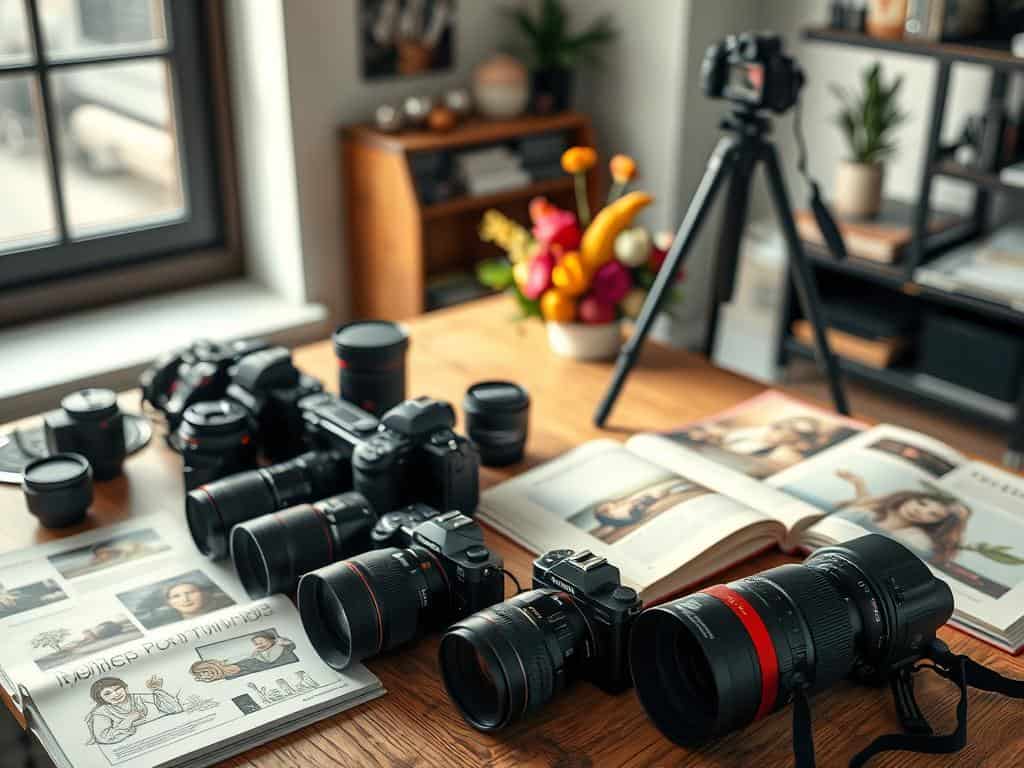
Did you know about 70% of new photographers start with point-and-shoot cameras? They like how easy and portable they are. But, as I’ve learned from Photography Life, knowing the basics is key to getting better. Whether you’re taking pictures of beautiful landscapes or people, having a strong foundation is important.
My aim is to help beginners by providing clear, step-by-step lessons. I’ll cover important topics like camera settings. This includes focal length, shutter speed, aperture, and ISO. This way, you’ll start your photography journey with confidence and knowledge.
Key Takeaways
- Photography tutorials provide structured learning for beginners.
- Understanding camera settings is essential for capturing great images.
- Practice regularly to improve photography skills significantly.
- Online feedback dramatically enhances engagement and growth.
- Mastering composition techniques can elevate photo quality.
- Accessible tutorials cater to diverse photography interests and styles.
Choosing the Right Camera for Beginners
Choosing the right camera is key for new photographers. Knowing the different types helps beginners pick the best one for their needs and budget. Cameras range from DSLRs to mirrorless and point-and-shoot models. Each has special features for different photography styles.
Understanding Different Types of Cameras
DSLR cameras, like the Nikon D3500 and Canon EOS Rebel T7, are great for beginners. They have interchangeable lenses and top-notch autofocus. Mirrorless cameras, such as the Fujifilm X-T30 II and Olympus OM-D E-M10 Mark IV, are light but capture amazing images. They’re also great for video.
Point-and-shoot cameras, like the Fujifilm Instax Mini 12, are small and easy to use. They might lack some features, but are perfect for beginners. The Sony ZV-E10 is great for vlogging, with features that make it easy to use.
Essential Gear and Accessories
Choosing the right camera is just the start. You also need essential gear for a smooth shoot. Good lenses, like standard zoom or prime, open up more shooting options. Fast-write memory cards are key for storing photos without delay.
Tripods are a must for beginners. They help with long exposures and sharper images. Don’t forget cleaning supplies to keep your camera in top shape. Starter kits often include everything you need, making them a great choice for beginners.
Photography Tutorials: Mastering the Basics
Learning the basics of photography is key for anyone wanting to improve. Understanding the exposure triangle is a good start. It includes shutter speed, aperture, and ISO. These elements help photographers control their images.
The Exposure Triangle
The exposure triangle shows how aperture, shutter speed, and ISO work together. For example, a big aperture lets in more light. This means you can use faster shutter speeds or lower ISOs.
A small aperture, like f/16, makes more of the scene sharp. Fast shutter speeds, like 1/1000 sec, freeze action. Slower speeds, like 1/30 sec, create motion blur.
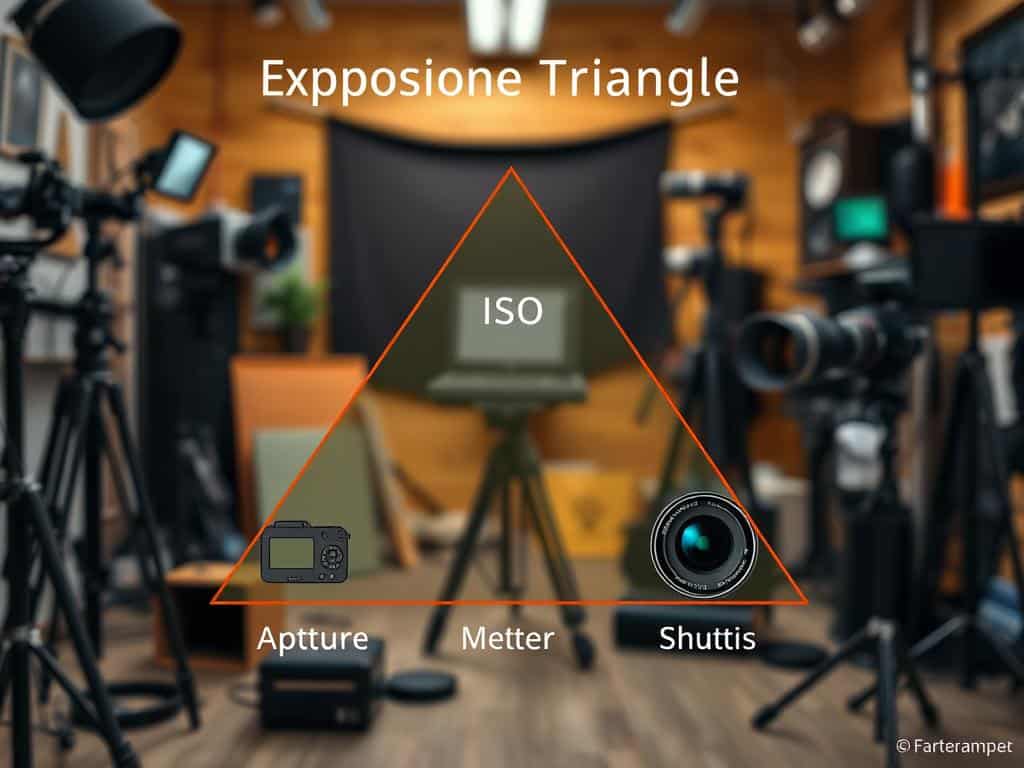
ISO sensitivity is also important. Low ISOs, like 100, are best in bright light. High ISOs, like 3200, work well in dark places. Knowing these basics helps you take better photos in any situation.
Composition Techniques
Learning composition is also key for great photos. The rule of thirds is a popular technique. It divides the frame into a grid and places elements on lines or intersections.
This method makes photos balanced and interesting. It guides the viewer’s eye. I suggest practicing often to get better and find your style.
Mastering these basics is important in my photography journey. Whether it’s the exposure triangle or composition, focusing on these basics has made a big difference. These skills help anyone create photos that stand out and show their unique style.
Conclusion
Looking back, I’ve shared key photography tutorials for beginners. Knowing the right camera and gear is essential. Learning the basics, like the exposure triangle, and composition techniques, can really help.
Photography is more than just technical skills. It’s about practicing and trying new things. Many photographers find their style after years of shooting, even without knowing all the rules.
It’s important to focus on what feels right and to be creative. Share your photos online and join photography communities. Use social media to connect with others and get inspired.
Don’t be afraid to show your work. Your photography journey shows your unique view of the world. Keep taking pictures and improving your skills with every shot.
