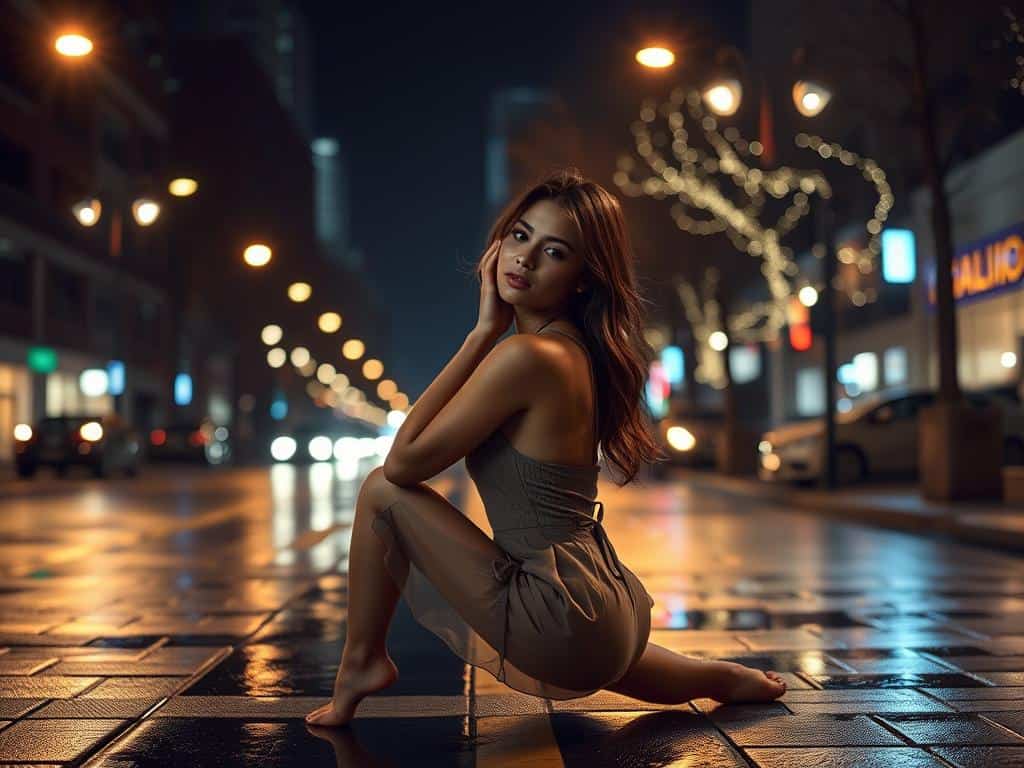
Did you know over 100,000 photography fans get tips every week? Night portrait photography is a big hit, thanks to its unique light and shadow. It lets us capture emotions and settings in amazing detail.
Exploring the night offers creative chances and challenges. These can turn simple scenes into beautiful art.
In low light, the right gear and techniques are key for stunning portraits. You’ll need a camera that handles high ISOs well and a prime lens for wide apertures. This lets in lots of light and keeps noise down. With the right tools, I can make night portraits that move viewers.
To master night photography, you need to know your gear and settings. Using a tripod for steady shots and trying out different lights are important. Let’s explore more about capturing the beauty of the night.
Key Takeaways
- Night portrait photography captures unique emotions with low light that adds depth.
- Proper equipment is essential: prime lenses and cameras with high ISO performance are recommended.
- Using a tripod helps prevent camera shake for clearer images during slower shutter speeds.
- Understanding manual settings allows better control of lighting in low light environments.
- Experimenting with various lighting sources enhances the quality of your portraits.
Understanding Low Light Conditions
The world changes a lot at night, making it perfect for capturing night portraits. These photos can feel full of emotion and atmosphere. City lights, starry skies, and shadows add beauty and a warm glow to portraits.
Mastering low light is key to capturing these moments well.
The Beauty of Nighttime
Nighttime is both beautiful and challenging for photography. The colors change from sunset to twilight, creating a magical scene. Using street lamps and moonlight can make textures and contrast stand out.
With careful planning, I can turn a simple scene into something amazing. Nighttime offers endless beauty to capture.
Challenges of Night Photography
While nighttime is inspiring, it also brings challenges. It’s hard to focus subjects because of less light. This can cause blurry photos or noise from high ISOs.
To overcome these, I need to know my camera settings well. The right gear is also essential.
Essential Equipment for Low Light Photography
Having the right tools is key for great night portraits. Full-frame cameras gather more light, improving image quality at high ISOs. Fast lenses let in more light, helping to get sharp photos in the dark.
Using tripods helps keep the camera steady during long exposures. This reduces blur. Flash units and LED panels help light subjects well, making my photos shine.
Camera Settings for Night Portrait Photography
Capturing stunning night portraits needs careful camera settings. The right ISO, aperture, shutter speed, and focusing techniques improve image quality in low light.
Choosing the Right ISO
I start with ISO 1000 for night portraits. This makes the camera more light-sensitive, key in dim places. For very dark scenes, I might go up to ISO 3200 for better light capture. Modern cameras like the Canon EOS 5D Mark III handle high ISOs well, giving great results with minimal grain.
Adjusting Aperture and Shutter Speed
A wider aperture, like f/2.4, lets more light in, improving detail and exposure. Adjusting shutter speed in low light is also key. I aim for 1/50 to 1/160 seconds to capture light well without blur.
Utilizing Manual Focus for Night Portraits
In low light, autofocus can fail, making manual focus essential. Switching to manual focus lets me focus on key features, like the subject’s eyes. This ensures sharp, detailed portraits, even in darkness.
Techniques for Stunning Night Portraits
Mastering night portrait photography is all about understanding key techniques. These techniques improve both the subject and the background. Lighting, background choice, and composition are vital for capturing stunning images in low light.
Creative Lighting Options
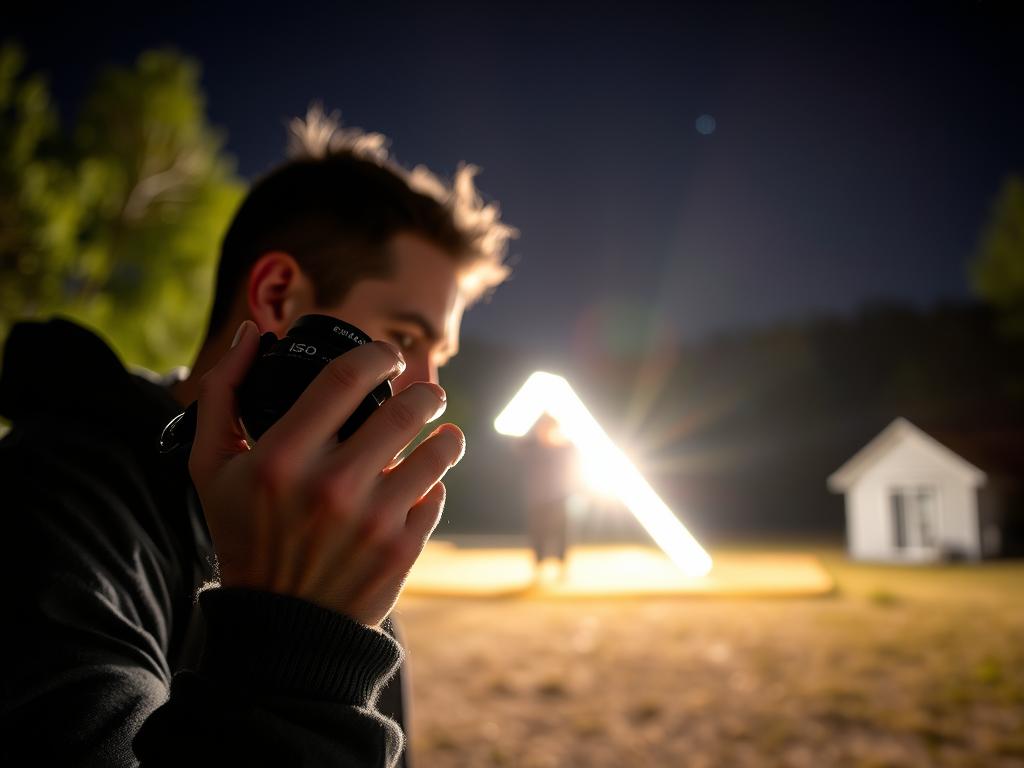
Choosing the right lighting is key to great night portraits. I often use off-camera flash for balanced light, avoiding harsh camera flash. Creative lighting from street lamps or neon signs adds a unique touch. Backlighting creates striking silhouettes and adds depth to the subject. *Reflectors* can also modify this light, with silver for cool tones and gold for warmth.
Importance of Background and Composition
The background of night portraits is important for both mood and subject enhancement. I look for locations with dynamic elements, like city lights or natural views. This choice highlights the subject while blending well with the scene. Using the rule of thirds and leading lines keeps the focus on the subject and tells a story.
Experimenting with Long Exposures
Long exposures in night photography add artistry to portraits. They capture movement and light trails, making images more engaging. A tripod is essential to avoid camera shake during long exposures. Adjusting exposures with moving lights like traffic or sparklers can turn a simple portrait into a stunning visual story.
Conclusion
Mastering night portrait photography is more than just taking pictures. It’s about seeing the beauty in low light and facing its challenges. Most portraits are taken during the day, but night photography lets you create unique and emotional images.
My experience has shown me the importance of light and the right equipment. Full-frame cameras and low aperture lenses are key for capturing the night’s essence. These tools help me bring out the beauty in every shot.
Choosing the right camera settings is critical. A shutter speed of 1/100, ISO 1600, and F/2.0 can produce amazing results. Playing with light, whether it’s flash or continuous, lets me create different moods in my photos.
Knowing how to use light colors adds depth to my portraits. It helps me set the mood, from cozy to introspective. This skill is essential for capturing the right atmosphere in my photos.
Practicing these techniques has made me better at night portrait photography. It’s a rewarding part of my photography journey. It shows my love for telling stories through images, giving a unique and personal view.
