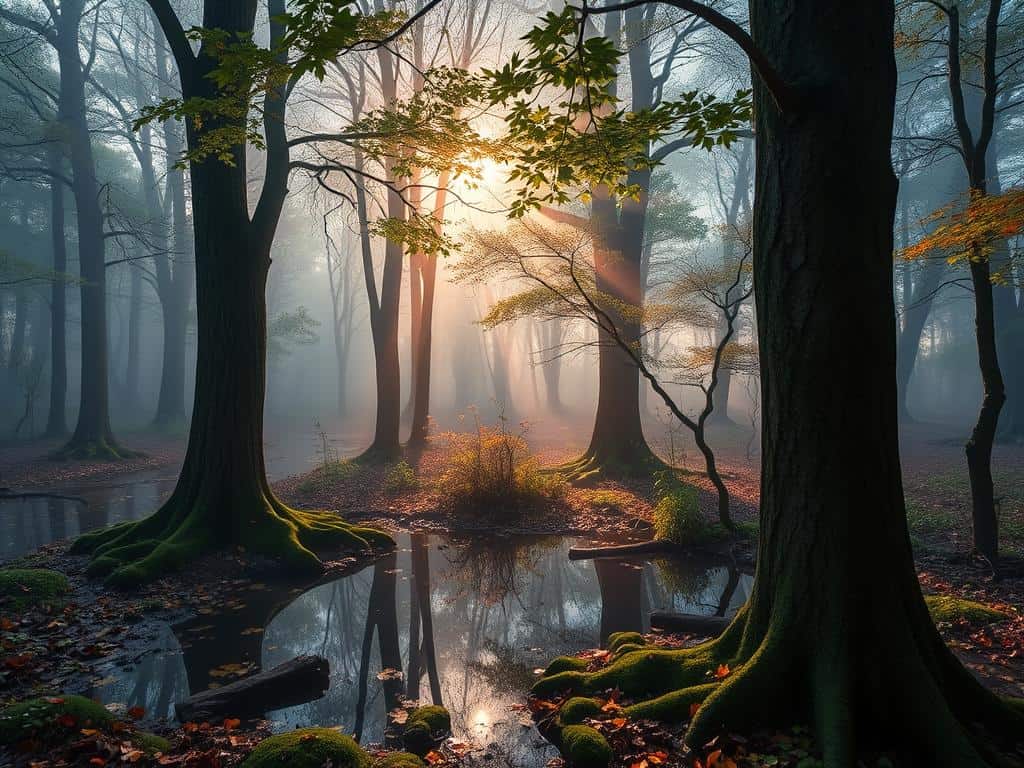
Did you know fine art photography is more than just taking pictures? It’s a form of art that can stir deep emotions and make us think. The Pictorialist movement in the early 20th century, led by Alfred Stieglitz and Edward Steichen, aimed to make photography a fine art. This change has shaped how we see artistic photos today.
As we explore the secrets of fine art photography, we’ll look at key techniques. Understanding these elements is essential for any photographer. We’ll cover composition, light, and shadow, and share tips to help you create stunning works. Join me on this journey, and subscribe for more articles and tutorials to improve your photography skills.
Key Takeaways
- Fine art photography emphasizes artistic expression beyond mere documentation.
- Famous movements and practitioners have significantly influenced the genre.
- Composition and lighting are foundational elements in creating impactful images.
- Specializing in a specific subject can enhance your uniqueness and marketability.
- Experimentation with perspective can lead to innovative artistic outcomes.
Understanding Fine Art Photography
Fine art photography is where art meets expression. It’s all about the photographer’s vision. We’ll explore what it means, its history, and the photographer’s role in this field.
Definition of Fine Art Photography
The fine art photography definition is about more than just taking pictures. It’s about expressing feelings and views through the lens. Photographers can tell their own stories without worrying about what others want.
They use the camera like a painter uses a brush. This lets them dive deep into their own themes. It’s all about telling stories in a unique way.
History and Evolution of Fine Art Photography
The history of fine art photography started in the 19th century. Pioneers like Julia Margaret Cameron and Oscar Gustave Rejlander pushed the boundaries. They showed photography could be more than just documenting.
The Pictorialist movement, led by Alfred Stieglitz, brought softer focuses and new printing methods. This made photography a true art form. Later, artists like Ansel Adams showed photography’s artistic side with precise images.
The Role of the Photographer
The role of the photographer is key in fine art photography. They create emotional scenes with their photos. It’s not just about capturing what’s there; it’s about adding layers of meaning.
Photographers need to know about aesthetics and how to use light and composition. Their vision guides their work, making it powerful. This connection between artist and subject often leads to amazing results.
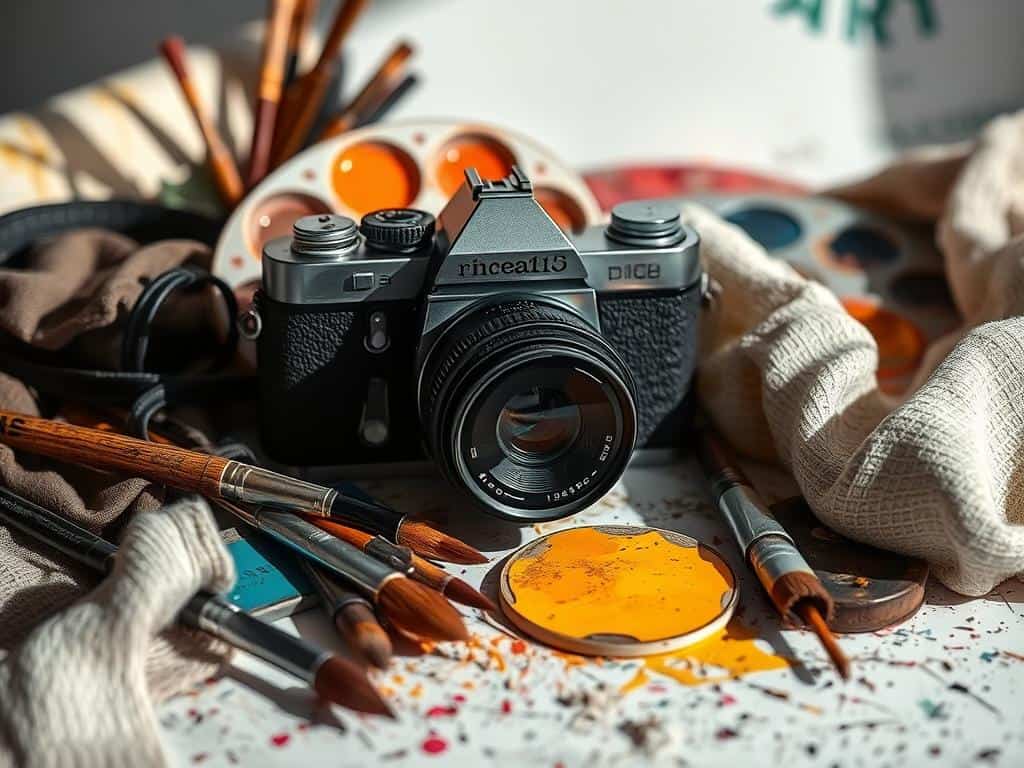
The Key Elements of Fine Art Photography
Creating compelling fine art photography involves several key elements. Composition is a vital foundation. I aim to make every photo tell a story through careful arrangement of visual elements. The art of composition is essential for this.
It’s about arranging subjects to capture the viewer’s attention and create harmony. Simple techniques like the rule of thirds can turn ordinary scenes into art. Exploring unique angles helps me find fresh perspectives that connect with viewers.
The Importance of Composition
In fine art photography, composition is a powerful tool. It’s the backbone of my visual storytelling. Each photo reflects my artistic vision and intention.
I use composition to guide the viewer’s gaze and evoke emotions. Mastering these techniques helps me convey deeper meanings. Sometimes, breaking traditional rules can lead to surprising and impactful results, connecting with my audience on a deeper level.
Mastering Light and Shadow
Light in photography is transformative, affecting mood, perception, and depth. I aim to understand and control light, using natural light to enhance my art. Techniques like backlighting or shadows add complexity to my images.
Mastering shadows allows me to add depth, inviting viewers to explore my work’s nuances. This skill is key to evoking emotions. The balance of light and shadow enriches the visual experience and intertwines with the story I tell through each photo.
Conclusion
Creating fine art photography is more than just technical skills. It’s about how it touches our emotions and experiences. By learning the basics and key techniques, I can make my photos stand out. This art lets me tell stories and stir feelings, making my photos impactful.
Photography’s emotional power is huge; 85% of people say it boosts their mood. Using composition and light changes how we see the world. When I share my photos, people connect deeply, thanks to the stories behind them.
My passion for fine art photography is strong. The market is growing fast, showing its value. I aim to share my unique view with others, inviting them to see the beauty in this art.
