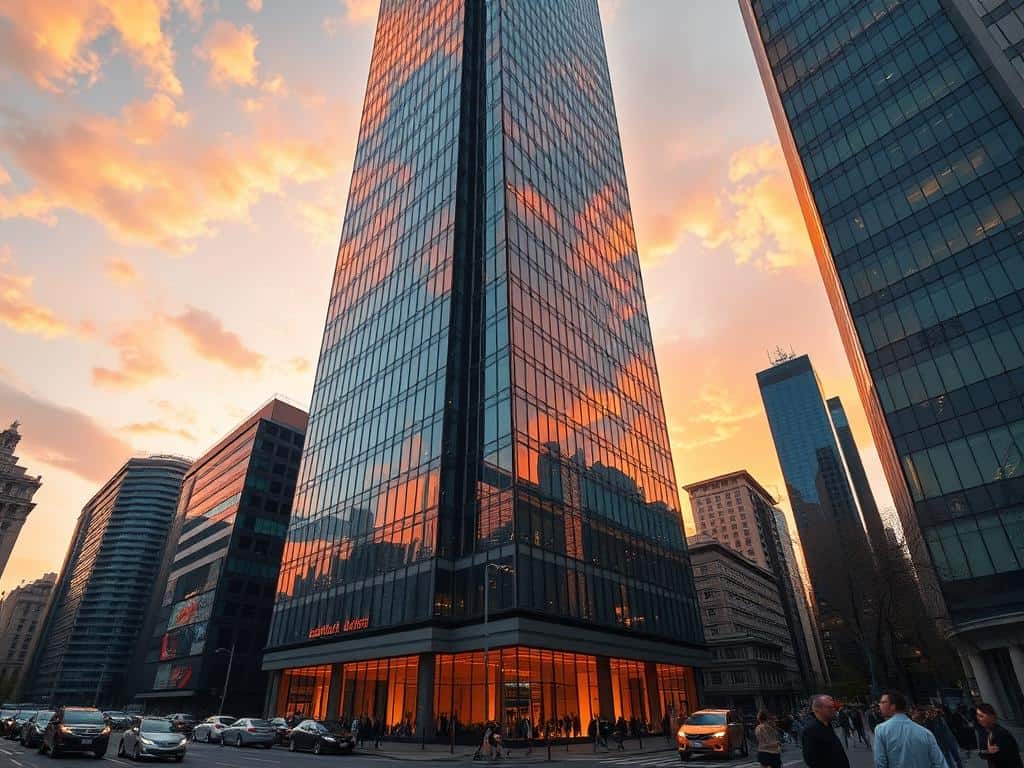
Did you know that about 70% of professional architectural photographers don’t have formal degrees? This shows how easy it is to get into architectural photography. It’s all about finding buildings to photograph everywhere you go. I’ve learned that it’s not just about the technical skills, but also about seeing the beauty in buildings.
In this guide, I’ll share tips on how to take great architectural photos. We’ll cover the basics, like understanding light and using the right equipment. I’ll also share practical tips to make your photos stand out. Let’s learn how to turn ordinary images into stunning works of art.
Key Takeaways
- Architectural photography is accessible, with many successful photographers lacking formal education.
- Lighting and timing significantly affect the quality and mood of architectural images.
- Utilizing tripods is key for sharp photos, even in low light.
- Planning ahead is important, with scouting locations being a big part of it.
- Techniques like HDR and long exposures help with lighting contrasts.
Understanding Architectural Photography
Architectural photography is all about capturing buildings in a way that shows their design, size, and setting. It covers both outside and inside shots, highlighting details and telling a story. It’s not just about taking pictures; it’s about understanding how light affects surfaces to make images pop.
Defining Architectural Photography
In architectural photography, I aim to create images that are both artistic and useful. My goal is to make portfolio pieces that show off the building and its purpose. Most shots are for information, but they’re key to showing the design accurately. Using the right equipment, like a 24mm TSE lens, helps get clear, factual images.
The Role of Light in Architecture Photography
Natural light is very important in photography. It changes how a building looks, making a simple shot into a stunning story. The golden hour is perfect for capturing a building’s essence, with its warm tones and shadows adding depth.
Light quality decides when I take my shots. Whether it’s the bright outside or the soft inside, managing light is key to amazing results. It makes the images stand out and connect with viewers.
Tips for Photographing Architecture
Getting great shots of buildings starts with good planning and the right tools. Planning helps me see what I want to capture before I take the photo. Knowing the building’s history makes my photos more interesting and meaningful.
Planning and Pre-visualization
I do lots of research before I start shooting. I learn about the building and its surroundings. Tools like Google Street View help me find the best angles.
The Suncalc app shows me the best times for light. This is key for taking amazing photos.
Equipment Essentials for Success
Choosing the right camera and lenses is vital. I use wide-angle lenses for showing space and tilt-shift lenses for straight lines. Filters can also make my photos better, depending on the light.
Importance of Tripods and Stabilization
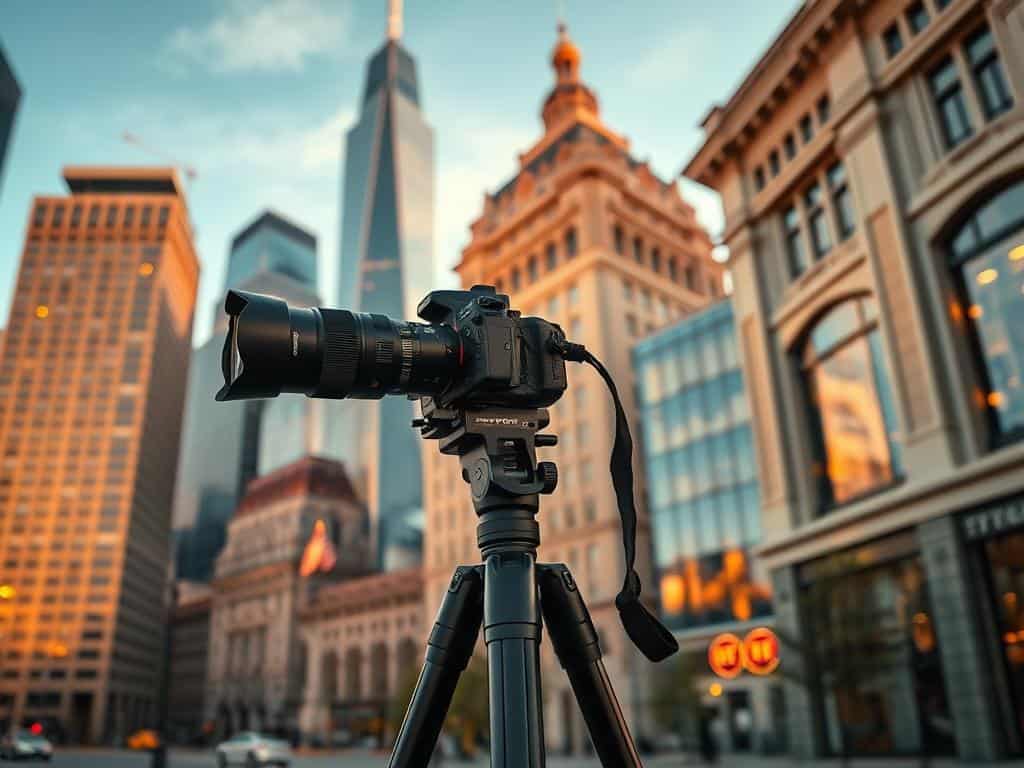
A tripod is a must for steady shots in dim light. It keeps my camera sharp. I make sure my camera is level to avoid distorted lines in tall buildings.
Techniques for Photographing Architecture
Mastering architectural photography requires knowing various architectural photography techniques. These techniques improve image quality. Composition is key to showing a building’s true nature. I align my camera with the building to avoid perspective issues.
This is important with wide-angle lenses. They show a building’s full view while keeping proportions right.
Shooting Straight: Composition Tips
Good composition in photography needs careful planning. I visit places at different times and weather to see how light and shadow change. This shows the building’s true beauty.
Golden hour shoots are great. The sun’s low position adds warmth and depth to the image.
Using Lenses Effectively
Choosing the right lens is key for different architectural shots. Wide-angle lenses are perfect for big views. Telephoto lenses highlight small details.
Tilt-shift lenses fix converging lines, but they’re pricey. Post-processing can also correct perspective without spending much. Using filters in photography adds more to my work. Polarizing filters reduce glare and make the sky more vibrant.
Utilizing Filters for Enhanced Images
Filters are vital in my architectural photography. Neutral density filters let me take long exposures for unique shots. Using tripods keeps my camera steady in low light.
Dark settings need a strong tripod to avoid blur. These techniques have changed my photography for the better.
Conclusion
Looking back, I see that capturing buildings is more than just the final photo. It’s the whole journey leading up to it. This journey shows how important planning and choosing the right equipment are. For example, using a Nikon 19mm tilt-shift lens makes a big difference. It lets me fix distortions right in the camera.
Knowing how to handle light and exposure is key. It helps me get the look I want, no matter the time of day. This skill is essential for capturing the beauty of buildings.
Improving my craft means using the best tools, like a strong tripod and different lenses. Techniques like bracketing exposure help me capture the full range of light. This is super useful, even in tricky lighting, like during twilight with a Nikon D7000.
My photos tell stories that change how people see buildings. As I grow in this field, I aim to blend technical skill with true architectural beauty. Every photo is a chance to share a story that connects the building to its surroundings.
