Did you know 85% of shoppers choose based on color? This shows how vital color psychology is in design. As a designer, I explore how colors can stir emotions and shape what people do. In this article, I’ll show how color psychology can make my designs powerful and connect with people.
From the meanings of colors to how they’re used in design, knowing this helps me reach out to consumers. Let’s explore the world of color psychology and see how it can change design.
Key Takeaways
- Color greatly influences consumer behavior, affecting purchasing decisions and brand perception.
- Understanding the specific emotional triggers associated with colors enhances design effectiveness.
- Different colors can significantly impact brand recognition and trust levels among consumers.
- Warm colors can provoke specific responses, such as increased appetite, making them ideal for food-related advertisements.
- Using color strategically on websites can boost conversion rates and improve user experience.
Understanding Color Psychology
Color psychology looks into how colors affect our feelings and actions. It shows how colors can change how we see things in different areas, like marketing and home design. Our personal experiences and culture shape how we see and connect with colors.
What is Color Psychology?
This field studies the emotional and psychological effects of colors. For example, research shows red and blue can make us feel strong emotions. A study found 68% of people link red with love, and 35% see blue as a relief.
These findings highlight how color choices can really impact our feelings and actions.
The Influence of Color on Emotions
Knowing how colors make us feel can help us communicate better through design. Yellow is often seen as joyful, with 52% of people agreeing in a 2020 study. On the other hand, black makes 51% of people feel sad.
These feelings are not just personal; they can also affect real situations. For instance, students might do worse on exams if they see red first. As I explore color psychology, I see how understanding these feelings can make design and marketing better.
The Meaning of Colors
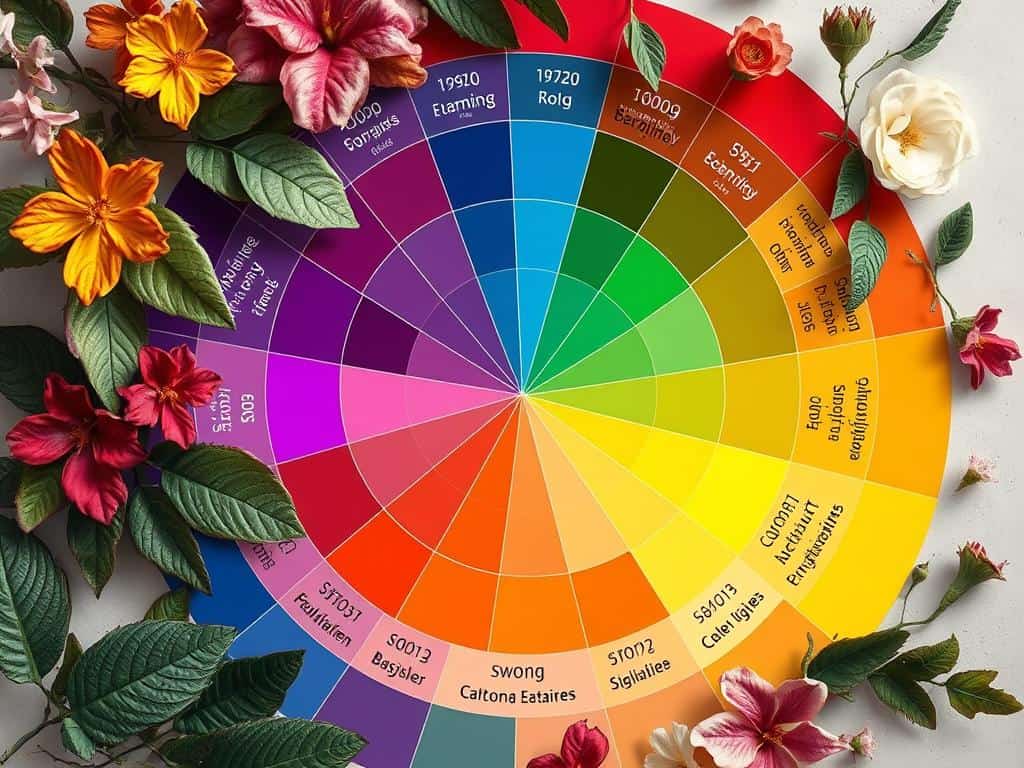
Colors have deep meanings and can stir many emotions. Each color group—warm, cool, and neutral—has its own role in design and communication. Knowing these meanings helps create visuals that connect with people on a deeper level.
Warm Colors and Their Effects
Warm colors like red, orange, and yellow stir strong feelings. Red shows passion and excitement but can also mean danger. It’s interesting how red can mean different things in different cultures.
In China, red is a symbol of happiness. But in South Africa, it’s the color of mourning. Orange is less intense but grabs attention. It’s often used in food branding to show enthusiasm. Yellow brings joy and hope, but can also mean deceit in some places.
Cool Colors and Their Impact
Cool colors include greens, blues, and purples. They often bring calmness and professionalism. Green means renewal and abundance, but can also mean envy.
Blue is calming but darker blues show reliability and strength. Cultural views of blue vary, with some seeing it as sad. In design, these colors make the viewer feel calm and at ease.
Neutral Colors in Design
Neutral colors like white, black, gray, brown, and beige are the base of design. They can show elegance or purity but can feel dull if used too much. Balancing these colors with warm and cool tones creates harmony.
Understanding color meanings in design shapes both looks and feelings. It’s not just about how something looks, but how it makes people feel.
Applying Color Psychology in Your Designs
Understanding my target audience is key when using color psychology in design. I look at their age, gender, and cultural background. This helps me choose colors that they will like.
For example, young people often like bright and bold colors. Older folks might prefer softer colors. Also, colors can mean different things in different cultures.
Identifying Your Target Audience
Knowing who I’m designing for helps me use color wisely. A big 90% of customers choose products based on color. Different colors make people feel different ways.
Warm colors like red and orange make people feel excited. Cool colors like blue and green make them feel calm. It’s important to pick colors that match what my audience likes.
Creating Emotional Connections Through Colors
I use colors to make people feel certain ways. The 60-30-10 color theory helps me mix colors well. Brands with the same colors are recognized more, up to 80% more.
Choosing colors that match my brand’s message helps me connect with people. For instance, red is great for buttons because it makes people want to act. Using colors thoughtfully makes my design better and strengthens my brand.
Conclusion
Color psychology is key in making designs that touch people’s hearts. By knowing how colors make us feel, designers can choose colors that work best. For instance, warm colors like red and orange make us feel more alive and social. Cool colors like blue and green help us relax and focus.
These color choices make spaces more than just pretty. They create deep connections with us.
Color also affects how we act, with up to 90% of our first impressions based on color. About 85% of shoppers choose products based on color. This shows how vital color psychology is in design.
Using color wisely can make people more loyal to a brand. Design choices are more than looks; they’re powerful ways to connect and persuade. A careful use of color can make a project not just beautiful but also more engaging and influential.
