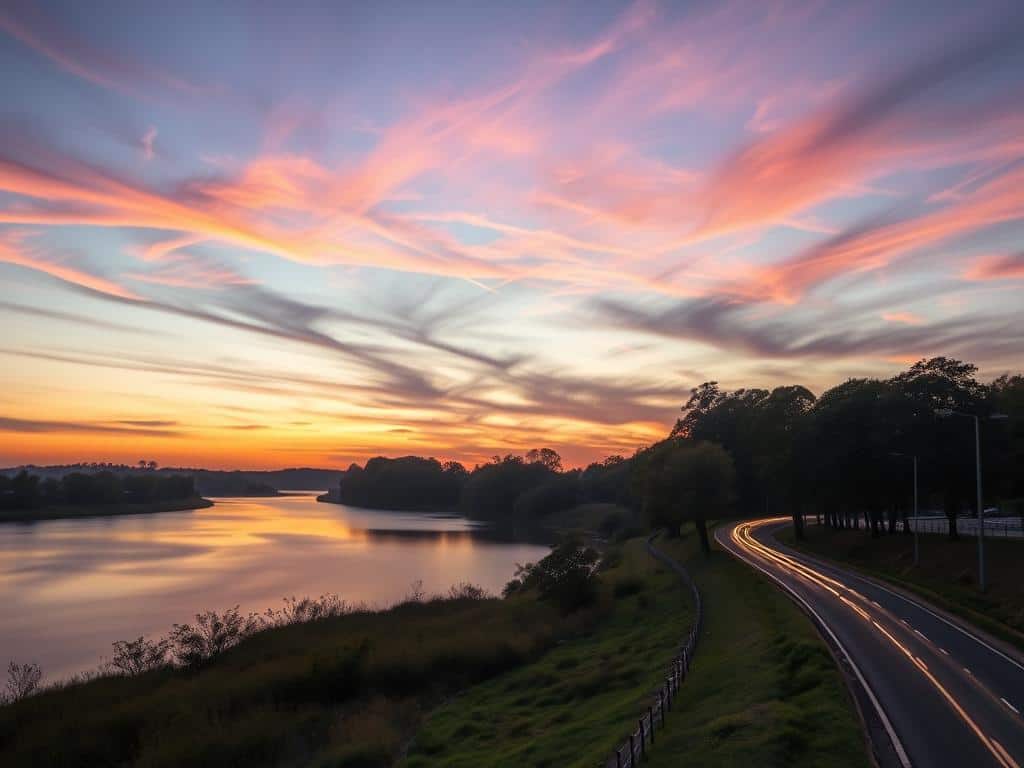
Did you know long exposure photography can stretch moments up to an hour? This technique mixes movement and calm, making images seem otherworldly. It turns fast subjects, like waves, into a soft, misty look, capturing a scene’s essence like never before.
In this guide, I’ll show you the basics of long exposure photography. We’ll cover the key concepts, the gear you need, and step-by-step techniques. Whether you’re new or experienced, I want to make this art form easy to understand. We’ll explore techniques to improve your skills and add to your portfolio.
Key Takeaways
- Long exposure photography uses shutter speeds from 1/30s to several minutes.
- A sturdy tripod is key to avoid camera shake during long exposures.
- Neutral density filters let you take longer exposures without overexposing the image.
- Landscape photographers often use long exposure to blend movement and calm.
- Knowing the light, like partly cloudy skies, can make your shots better.
What is Long Exposure Photography?
Long exposure photography turns everyday scenes into stunning art. It lets me capture moments over time, creating effects that regular photos can’t. By changing shutter speeds, I make shots that show the beauty of movement and calm.
Understanding the Technique
Exposure times in long exposure photography can be very long. Some shots might only last a few seconds, while others, like star trails, can take hours. For example, a 45-minute shot at Paranal Observatory is truly amazing.
For night scenes, longer times—like 30 seconds or more—are best. They let cameras gather enough light for bright, detailed images.
The Art Behind the Photos
The ethereal quality of long exposure shots is what I love most. It makes moving things like water or clouds look misty, adding to the beauty of a scene. Cars in cities become beautiful light trails, thanks to this technique.
Long exposure photography is not just about tech. It’s also an art form that lets me express myself. It combines planning, environment, and timing in a unique way.
Essential Gear for Long Exposure Photography
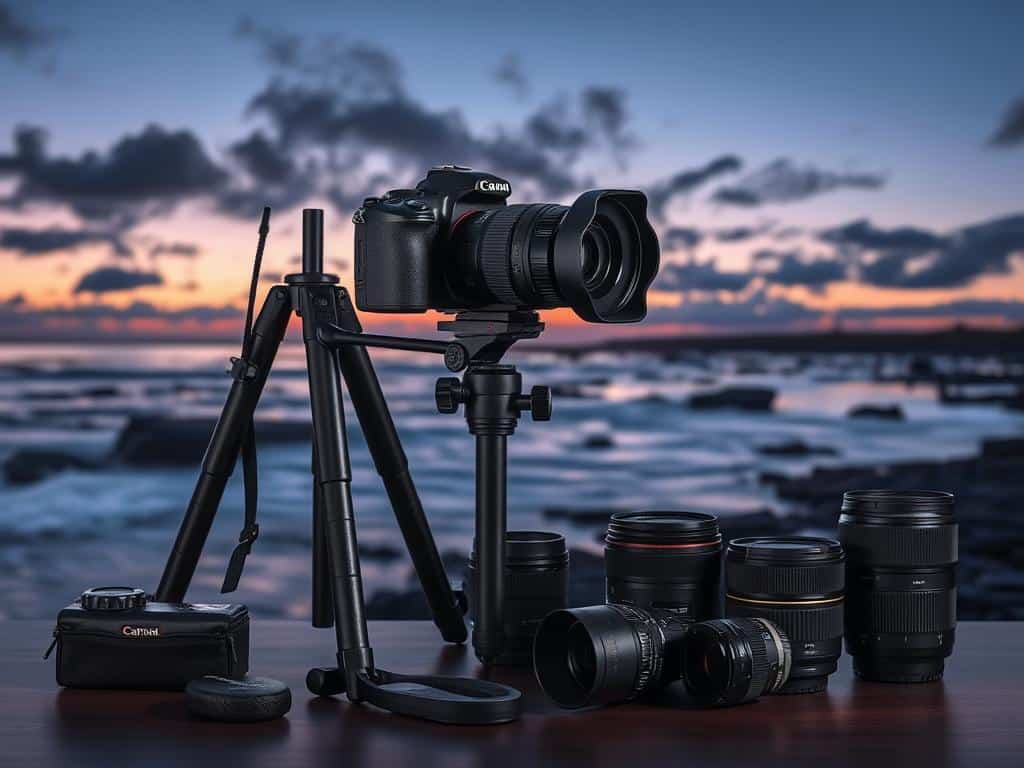
When you start long exposure photography, the right gear is key. It helps capture stunning images that show off this art’s beauty. Here are the main pieces of long exposure photography equipment you’ll need.
Camera and Lenses
A good digital camera is essential. I like using DSLRs and mirrorless cameras because they let you adjust settings for long exposure. High-quality lenses, like wide-angle ones, are great for capturing big scenes with lots of detail.
My favorite lens is the Canon EF 16-35mm f/2.8 II USM. It’s versatile and makes amazing long exposure photos.
Importance of a Tripod
A strong tripod is a must for long exposure shots. It keeps the camera steady, making sure your photos are sharp. Tripods like the Manfrotto MT190CXPRO3 support many cameras.
Mini tripods, like the Joby Gorillapod Focus, are great for tight spots. Make sure your tripod is set up right to avoid any movement that could mess up your photo.
Neutral Density Filters
Neutral density filters are a must for bright light. They let less light in, so you can take longer exposures without overexposing. Filters come in different strengths, like 3-stop, 6-stop, and 10-stop.
A 6-stop filter can turn a 2-second exposure into 128 seconds. They’re key for great long exposure photos in the daytime.
How to Capture Stunning Long Exposure Photos
Capturing stunning long exposure photos needs careful planning and execution. The location is key; moving elements like water or clouds add life to your image. The right conditions, like sunset or overcast days, create dramatic scenes. Knowing your exposure settings is essential for a successful photo shoot.
Setting Up Your Shot
Before you start, check the weather and light. A sturdy tripod is a must for stable long exposures. I use the MeFOTO tripod for its strength and lightness. Start with an aperture of f/10 and adjust based on the scene’s light. Keep your ISO low, around 100, to avoid noise.
Step-by-Step Process
Switch to manual mode when you’re ready. Use a self-timer or remote shutter release to avoid camera shake. Focus carefully to ensure sharpness. With a 10-stop ND filter, exposure times can reach up to 1 minute and 42 seconds. Adjust your settings as needed, like for light trails that require 10 to 15 seconds.
Troubleshooting Common Issues
Challenges like too short shutter speed or glare can happen. A neutral density filter helps with longer exposures in bright light. For times over 30 seconds, use a cable release to avoid camera shake. Turn off image stabilization (IS) on the tripod to keep your images sharp.
Conclusion
Long exposure photography is a captivating technique that brings new worlds to artists and enthusiasts. It uses exposure times from seconds to 30 minutes. This method creates stunning images that capture time’s essence, not just the scene.
This technique goes beyond regular photography. It tells a story, making viewers pause and think about movement’s beauty. Whether it’s water flowing or clouds moving, it’s all about capturing the moment.
Starting my photography journey, I learned it’s not just about the gear. You need patience and a willingness to try new things. Even small setbacks can lead to amazing photos. It’s all about embracing the process and learning from each shot.
So, I encourage you to try long exposure photography. It adds a new layer to photography, showing its endless possibilities. Grab your gear, go outside, and let your creativity shine. Capture images that tell your unique story.
