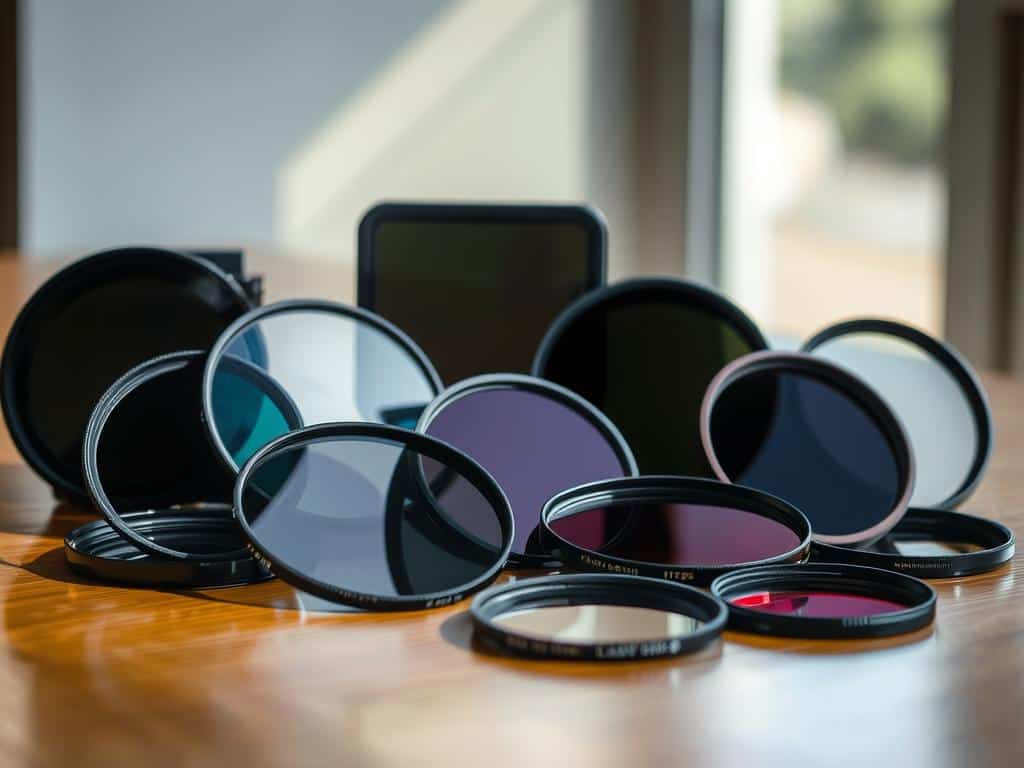
Did you know over 70% of photographers say camera filters make images better in tough light? This fact shows how important lens filters are in photography. Learning to use them right can make a big difference in your photos. It helps with tricky light, protects your camera, and adds cool effects.
In this article, we’ll look at different camera filters, their benefits, and how to use them. By using the right filters, you can make your photos look better without needing to edit them a lot. Let’s discover how filters can change your photos for the better!
Key Takeaways
- Camera filters enhance image quality and manage lighting effectively.
- Protective UV filters are affordable and maintain lens integrity.
- Polarizing filters significantly boost color saturation and reduce glare.
- Neutral Density filters allow for longer exposure times and control over light.
- Graduated ND filters are essential for balancing exposure between dark and bright areas.
Understanding Camera Filters and Their Benefits
As I explored photography, I found out that camera filters are key to my photography equipment. These devices fit over the lens and do many things, like making colors pop or blocking certain lights. Knowing about different filters is important for any photographer wanting to get better.
What Are Camera Filters?
Camera filters are made from glass or resin and come in many shapes. They help me take better pictures by doing specific jobs. You’ll find UV filters, polarizing filters, and neutral density (ND) filters.
A UV filter protects the lens from dust and water. Polarizing filters make colors more vivid and reduce glare, which is great for landscapes. ND filters let me take longer photos, creating cool blur effects in bright lighting conditions.
Common Benefits of Using Filters
The benefits of camera filters are many and big. For example, UV filters can prevent lens damage, saving it from scratches and other harm. Many photographers have seen their filters protect their lenses.
Polarizing filters can make skies darker and reduce glare, making photos clearer and more colorful. A lot of landscape photographers use these filters to make their photos stand out. ND filters help by letting less light in, allowing for creative shots in different lighting.
Shooting with Filters: Types and Their Applications
Filters can change my photos in big ways. They help me get the look I want and make my images better. Each filter has its own special uses, making them key for my photography.
UV and Skylight Filters
UV filters protect my lenses from scratches and dust. They also block ultraviolet light, which used to cause haze in film photos. Now, I value them for their toughness and for improving photo quality by fighting off pollution and moisture.
Skylight filters are great for outdoor shots. They cut down on glare and remove the blue cast from bright skies. This makes skin tones look natural and colors accurate. Both types of filters make my photos sharper and keep my lenses safe.
Polarizing Filters
Polarizing filters are a must for landscape photos. They reduce glare from water or glass. The circular polarizing filter (CPL) is popular because it works well with many lenses. By adjusting the CPL, I can enhance contrast and color in my photos.
When the sun is at the right angle, these filters work best. They darken skies and make things clearer. But, using them too much can make photos look unnatural, so I have to be careful.
Neutral Density (ND) Filters
ND filters are key for controlling light in bright scenes. They let me take photos with slow shutter speeds. This is perfect for capturing moving water or other fast-moving subjects.
ND filters come in different strengths, measured in stops. A 10-stop filter lets me take very long exposures. I also have a variable ND filter, which I can adjust to change how much light gets in.
Graduated Neutral Density Filters
Graduated ND filters (GND) are great for balancing light in landscape photos. They have a dark-to-clear gradient. This lets me darken bright skies while keeping the foregrounds light.
They work best for photos with flat horizons. But, uneven terrains can be tricky. GND filters help me avoid overexposed skies and bring out details in the foreground.
Conclusion
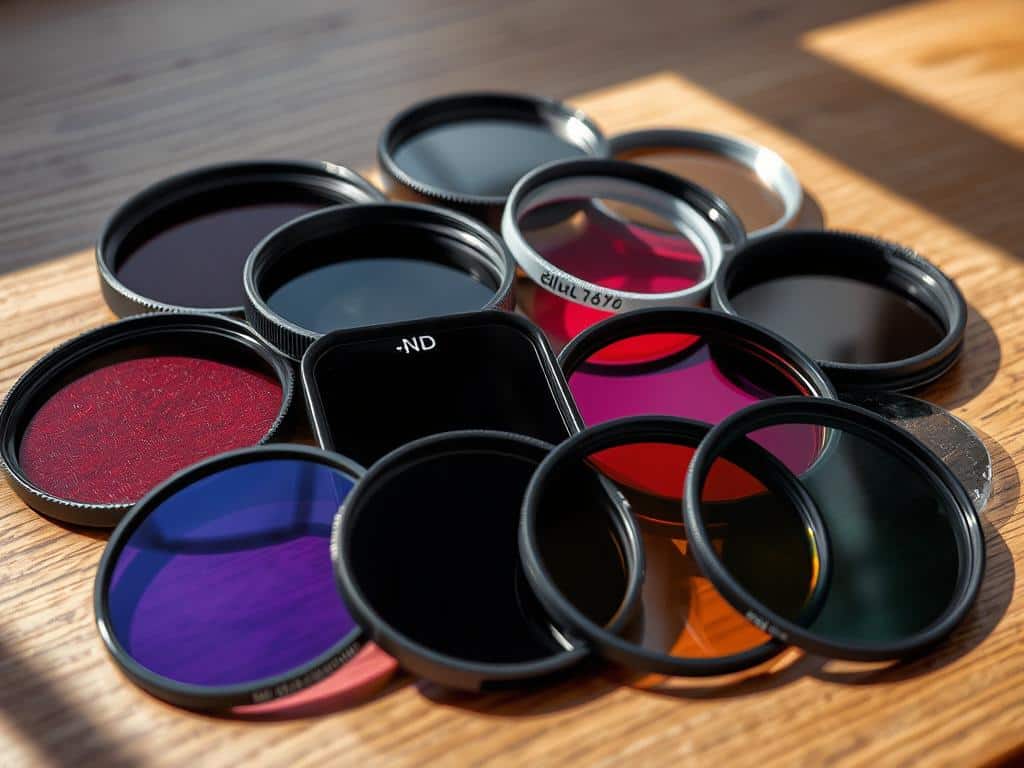
Learning to use camera filters is key for better photography. Filters like polarizing, ND, and graduated neutral density help me handle different lighting. Each filter changes how I see the world.
For example, a ND filter lets me take longer shots, perfect for motion blur in landscapes. Polarizing filters make colors pop and reduce reflections, adding depth to my photos. Using these filters boosts my creativity and improves my images.
The right filter at the right time can make my photos stand out. It’s a game changer for serious photographers. I highly recommend trying out different filters to see their amazing effects.
