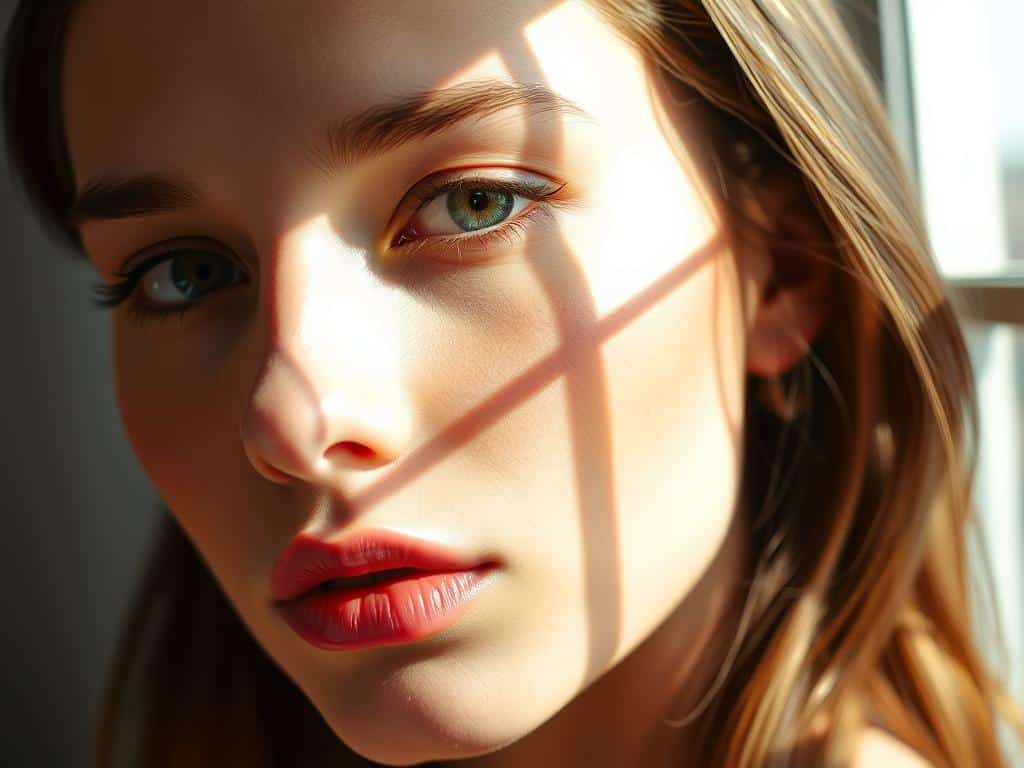
Did you know that about 80% of a photo’s impact comes from its lighting? This shows how important it is to understand lighting in portrait photography. Whether it’s a happy graduation photo or a serious athlete shot, the right lighting can turn a good photo into a great one. Learning about key and fill light is not just about looks; it’s about telling a story.
This guide will teach you how to use different portrait photography techniques. You’ll learn how to make your photos more engaging and captivating.
Key Takeaways
- Effective lighting is essential for creating powerful portraits.
- The angle and placement of light significantly affect shadows and the overall mood.
- Mastering key light and fill light techniques can enhance image depth.
- Different lighting patterns can drastically change the appearance and feeling of a portrait.
- Using natural light and DIY methods can help produce professional-looking results.
Understanding the Importance of Lighting for Portraits
Lighting is key in portrait photography. It turns simple shots into stunning images that tell a story. When I explore how lighting affects portraits, I see it’s not just technical. It also touches the viewer’s heart and eyes.
Transforming Ordinary Shots
Using different lighting can make portraits much better. Moving from hard to soft light changes how the subject looks and feels. It adds mood to the photo. Shadows and light can make simple pictures into stories.
Techniques like split lighting add intensity. This makes the photo more interesting and complete.
The Role of Light and Shadow in Mood Creation
Light and shadow are vital for mood in photos. Soft, warm light feels cozy, while cold, harsh light creates tension. By playing with these, I can make portraits that touch people’s feelings deeply.
Creating Depth and Dimension in Images
Creating depth in photos depends on light. Using loop lighting at 45 degrees adds depth and shadows. This makes the photo feel real, connecting the viewer to the subject.
Reflectors can also make the model look better by up to 50%. They increase the photo’s appeal and depth.
Essential Lighting Techniques for Portrait Photography
In portrait photography, mastering lighting techniques is key for compelling images. Using a key light effectively adds texture and defines features. The fill light softens shadows, adding depth and dimension.
A classic setup is the three-point lighting, combining key and fill lights for balance.
Key Light and Fill Light Explained
The key light is the main light source. I place it at an angle to highlight features and add depth. The fill light reduces harsh shadows, fine-tuning the portrait’s look.
Understanding Lighting Patterns
Exploring lighting patterns changes the style and feel of portraits. Patterns like butterfly, loop, and Rembrandt create unique shadows and highlights. Loop lighting is flattering for many subjects, while Rembrandt adds drama with a triangle of light on the cheek.
Using Hard and Soft Light Effectively
Choosing between hard and soft light is important. Soft light hides imperfections and is great for beauty shots. Hard light creates dramatic contrasts, striking visual effects. The right light depends on the subject and artistic vision.
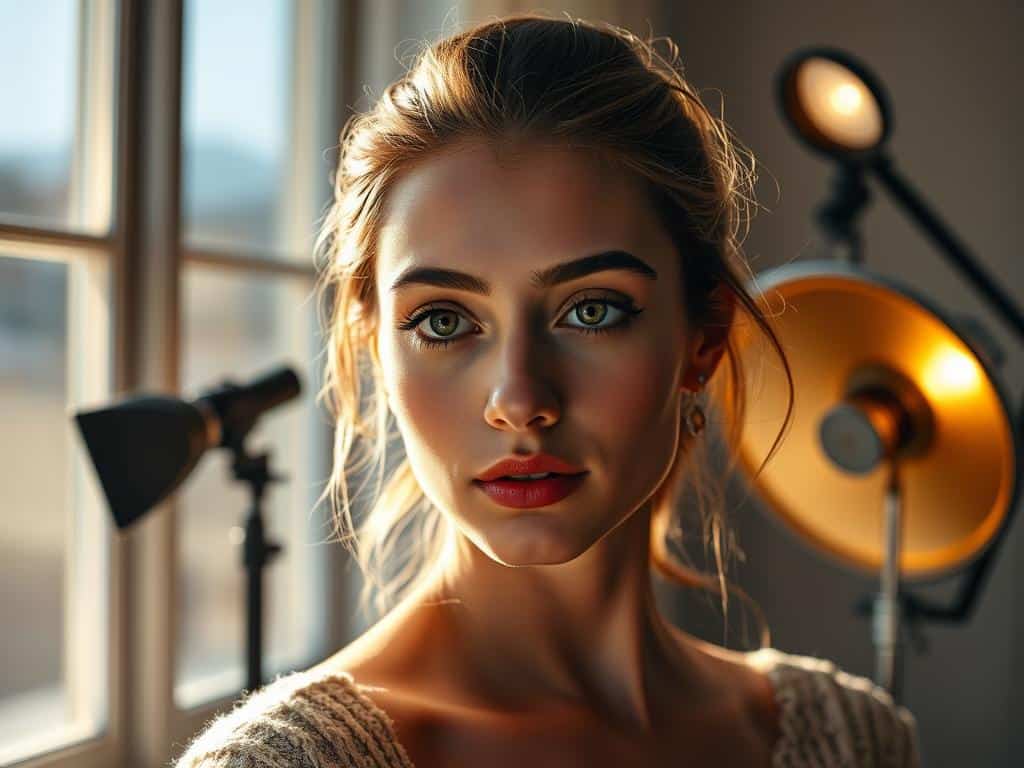
Lighting for Portraits: Practical Setups and Equipment
Getting the lighting right is key for stunning portraits. I’ve found that simple setups can improve my work without costing much. The right gear helps me get professional-looking photos.
Setting Up Studio Lighting on a Budget
Creating a good studio lighting setup doesn’t need to be expensive. Tools like softboxes can make a big difference. DIY reflectors from white sheets or cardboard are also cheap and work well.
Many beginners prefer continuous lighting, with 65% choosing it. It gives steady light, which is important for great photos.
Outdoor Lighting Techniques
Natural light is a top choice for 80% of pros, giving a soft and flattering look. The golden hour, with its warm light, is often preferred. It’s rated 90% higher than midday light.
To improve outdoor photos, I use reflectors. They help manage light and soften shadows, balancing exposure in different places.
Modifiers and Tools for Better Lighting Control
Modifiers like diffusers and snoots improve light control and quality. Diffusers can cut harsh shadows by up to 70%. This makes subjects look better.
Light meters can cut overexposure errors by about 60%. Adjusting aperture and ISO helps get the right look in my portraits.
Conclusion
Mastering portrait lighting is key to taking amazing photos that grab attention. Understanding light and shadow helps me use essential techniques. This way, my portraits connect with people.
Choosing the right equipment and setups boosts my portrait quality. This lets me be creative without spending too much. It’s all about making the most of what I have.
Many amateur photographers look for affordable gear. I find great deals on secondhand items and cost-effective solutions. For example, a good manual focus lens can save me half the price of autofocus ones.
Using crop-sensor cameras and budget-friendly lighting kits also helps me save money. Yet, I can keep my photos looking great.
My journey to master portrait lighting never ends. By making smart lighting choices, like using side lighting, I can make photos tell stories. I keep trying new techniques to connect with my audience and share meaningful stories through my photos.
