I still remember the day I naively tried to explain the difference between Bitcoin and Ethereum to my neighbor over a cup of mediocre coffee. Picture this: me, armed with the latest crypto buzzwords, thinking I sounded like the oracle of all things digital currency. Meanwhile, my neighbor, bless her heart, looked at me like I was trying to sell her a timeshare on Mars. That’s when it hit me—most people don’t understand these so-called “digital unicorns,” and frankly, I was just as confused, hiding behind jargon I barely grasped. Bitcoin was the crusty old relic, Ethereum the flashy newcomer, and I was stuck somewhere in the middle, trying to make sense of the chaos.

But here’s the deal: you deserve more than the usual recycled nonsense. So, I’m cutting through the drivel to give you the raw truth. Forget the mind-numbing technical manuals and the overhyped promises of digital utopia. We’ll dissect the nitty-gritty of blockchain, unravel the mysteries of proof-of-work, and explore why smart contracts are the new frontier. By the end, you’ll not only understand the difference between these two crypto titans but also why it matters in the real world, beyond just the buzz. Ready to dive in? Let’s do this, minus the empty fluff.
Table of Contents
- The Blockchain Tango: Bitcoin and Ethereum’s Dance-Off
- Bitcoin’s Proof-of-Work: The Original Grind
- Ethereum’s Smart Contracts: More Than Just Fancy Footwork
- Bitcoin vs. Ethereum: Unpacking the Real Tech Drama
- Bitcoin vs. Ethereum: Who’s Really Running the Crypto Circus?
- The Crypto Conundrum Unveiled
- Untangling the Crypto Web: Bitcoin vs. Ethereum
- Peering Behind the Crypto Curtain
The Blockchain Tango: Bitcoin and Ethereum’s Dance-Off
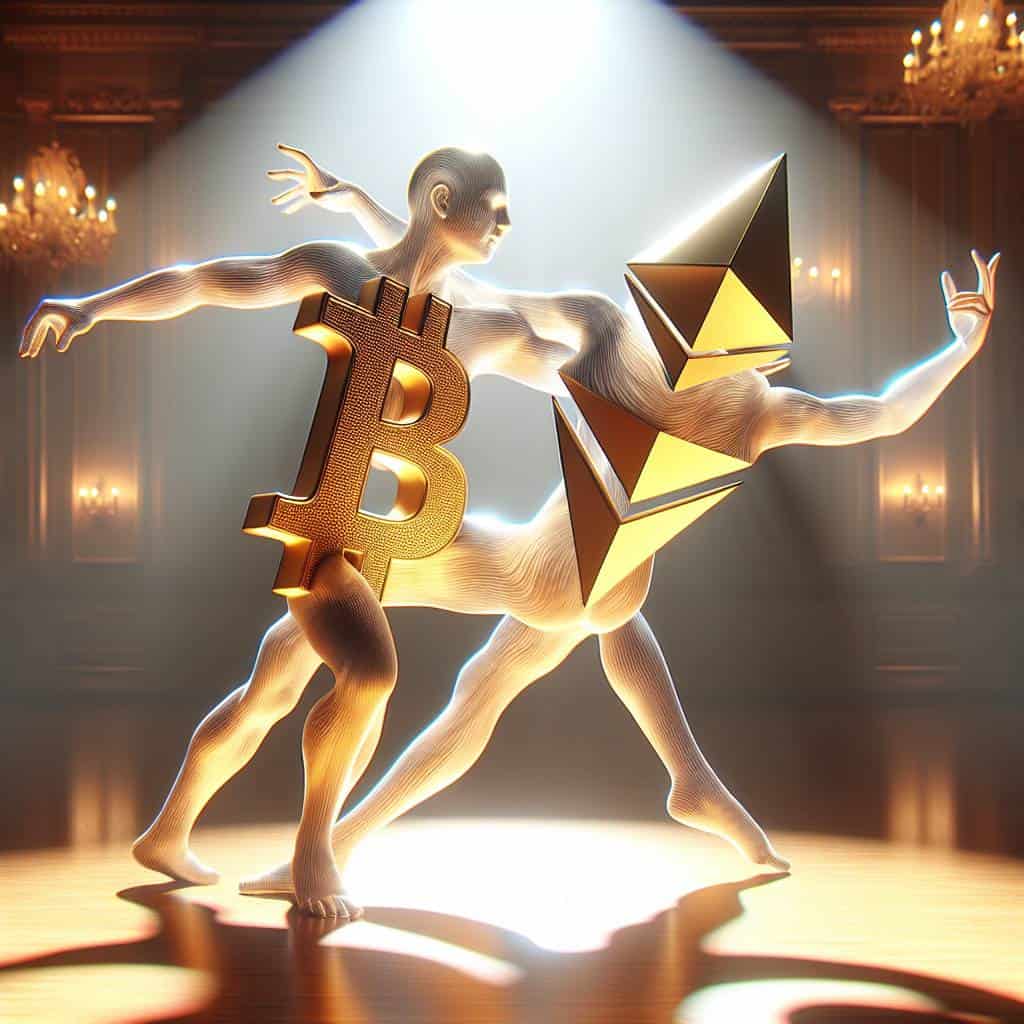
Imagine Bitcoin and Ethereum locked in a swirling, competitive dance. Each step they take is a promise of revolution, yet they’re as different as a waltz is to a salsa. Bitcoin, the conservative partner, moves with the rhythmic certainty of a metronome. It’s the original blockchain bad boy, obsessed with proof-of-work, a system that’s as energy-hungry as a teenager with an unlimited data plan. Bitcoin is the digital equivalent of gold—a store of value that doesn’t care if you find it too slow or inflexible. It’s stubborn, predictable, and in its own way, comforting.
Now, enter Ethereum, sashaying onto the dance floor with all the bravado of a start-up CEO. Ethereum doesn’t just want to dance to the beat; it wants to change the music entirely. With its smart contracts, Ethereum opens the door to decentralized applications, or dApps, that promise to disrupt everything from finance to social media. It’s not just a cryptocurrency—it’s an entire ecosystem. Ethereum is constantly evolving, shifting from proof-of-work to proof-of-stake, a more energy-efficient way of keeping its blockchain secure. It’s ambitious, versatile, and a little chaotic—a far cry from Bitcoin’s unwavering steadiness.
This dance-off isn’t just a spectacle; it’s a reflection of two competing visions for the future of digital currencies. Bitcoin, with its unyielding focus, aims to be the digital answer to gold. Meanwhile, Ethereum is the tech-savvy visionary, itching to reinvent our digital lives with smart contracts and blockchain applications. Both have their merits and their pitfalls, and choosing between them is like choosing between a trusty old sedan and a flashy electric car. Each has its audience and its purpose, but only time will tell which dance will ultimately win the hearts—and wallets—of the world.
Bitcoin’s Proof-of-Work: The Original Grind
Bitcoin’s proof-of-work is like watching a relentless marathon runner who just won’t quit, even when everyone else has moved on to electric scooters. It’s the original grind—an energy-guzzling, time-consuming beast that demands miners solve complex puzzles just to validate a single block. And let’s be honest, it’s not exactly winning any popularity contests in the sustainability department. This process, while undeniably secure, is often criticized for being as efficient as a hamster wheel powering a city. Yet, here we are, with Bitcoin still clinging to this OG method like it’s a badge of honor.
Now, don’t get me wrong—there’s something to be said for sticking to your guns. Proof-of-work has proven to be a fortress against bad actors. It’s a sturdy, albeit archaic, gatekeeper ensuring that Bitcoin remains decentralized and resistant to attacks. But here’s the rub: in a world that’s rapidly evolving, clinging to proof-of-work feels like insisting on using a typewriter in the age of cloud computing. Sure, it’s nostalgic, but at what cost? The grind may be original, but it’s also a stubborn reminder that sometimes, even the best innovations need to evolve.
Ethereum’s Smart Contracts: More Than Just Fancy Footwork
Smart contracts on Ethereum are like your reliable but slightly unpredictable best friend: they do what you ask, but they might take you on a wild ride getting there. While Bitcoin is busy being the digital gold no one can touch, Ethereum is out here revolutionizing how we think about agreements, minus the middlemen. These aren’t just lines of code; they’re promises etched into the blockchain, ready to execute in a world where trust is scarce and everyone’s got an angle.
Now, let’s not get too starry-eyed. Smart contracts aren’t magic wands waving away all our problems. They’re more like a double-edged sword. Sure, they automate and secure transactions with the elegance of a ballerina, but they also require meticulous choreography to avoid pitfalls. One misplaced step, and you’re facing an exploit that leaves you empty-handed and teary-eyed. It’s a world where code is law, and the law, as we all know, doesn’t care about your feelings. But for those who master this dance, the rewards can be groundbreaking. The future of decentralized everything is being written in these contracts, and ignoring them is like refusing to learn the steps to the most important dance of the century.
Bitcoin vs. Ethereum: Unpacking the Real Tech Drama
- Bitcoin, the OG of cryptocurrencies, is like that old-school tech that’s all about proof-of-work, grinding away with brute force.
- Ethereum, on the other hand, is the slick, modern cousin that flaunts smart contracts—bits of code doing everything from running apps to managing complex financial derivatives.
- While Bitcoin revels in its role as ‘digital gold’, Ethereum constantly reinvents itself, trying to be the jack-of-all-trades in this blockchain circus.
- The use cases of Bitcoin are pretty straightforward—store value, maybe buy a Tesla if you’re feeling fancy—whereas Ethereum’s playground is vast, from DeFi to NFTs and beyond.
- In the end, Bitcoin is the tortoise, slow and steady, while Ethereum is the hare, quick and ambitious, but sometimes crashes into hurdles.
Bitcoin vs. Ethereum: Who’s Really Running the Crypto Circus?
Bitcoin is like that old-school rocker who refuses to trade in his denim jacket for a suit, sticking to proof-of-work like it’s the only dance move he knows. Ethereum, meanwhile, is the tech-savvy hipster, constantly evolving with its smart contracts and a vision to be the world’s decentralized app playground.
The blockchain game isn’t just about who came first or who’s got the shiniest toys. It’s about real-world use cases. Bitcoin is laser-focused on being the digital gold, a store of value. Ethereum, on the other hand, is the Swiss Army knife of crypto, aiming to revolutionize everything from finance to gaming with its versatile platform.
While Bitcoin chest-thumps about its security and simplicity, Ethereum’s all about showing off its flexibility and potential for innovation. Yet, both have their skeletons—Bitcoin’s energy consumption issues and Ethereum’s struggle with scalability are the dirty laundry no one wants aired.
The Crypto Conundrum Unveiled
Bitcoin is the unyielding fortress of digital gold, standing firm on its proof-of-work foundation, while Ethereum is the nimble pioneer, reshaping blockchain with smart contracts and endless possibilities.
Untangling the Crypto Web: Bitcoin vs. Ethereum
Is Bitcoin just digital gold while Ethereum is a tech playground?
In a sense, yes. Bitcoin is the digital equivalent of hoarding gold bars in your basement because it relies on the old-school proof-of-work model, making it slow but a store of value. Ethereum, on the other hand, is like a bustling tech campus where smart contracts and decentralized apps are born, aiming to revolutionize how we interact with the digital world.
How does blockchain technology differ between Bitcoin and Ethereum?
Bitcoin’s blockchain is a one-trick pony focused on secure, decentralized transactions. Ethereum’s blockchain, however, is the Swiss army knife of the crypto world, supporting a multitude of applications thanks to its ability to execute smart contracts. It’s not just about moving digital coins; it’s about creating a whole new digital ecosystem.
Are Ethereum’s use cases really that different from Bitcoin?
Absolutely. Bitcoin is like the old guard, sticking to its roots as a decentralized currency. Ethereum is the ambitious upstart, enabling decentralized finance (DeFi), non-fungible tokens (NFTs), and even decentralized autonomous organizations (DAOs). It’s the difference between a classic car and a self-driving electric vehicle.
Peering Behind the Crypto Curtain
Reflecting on this wild ride through the world of Bitcoin and Ethereum, I’ve come to appreciate the gritty underbelly of promises and pitfalls that lie beneath their glossy facades. Bitcoin, with its no-nonsense proof-of-work ethos, is the grizzled veteran of the digital currency wars. It’s the old guard, holding onto its decentralized ideals like a dog with a bone. Meanwhile, Ethereum is the ambitious upstart, dazzling us with smart contracts and a vision of a decentralized utopia. But let’s not kid ourselves—both are still figuring out how to move from promise to everyday practicality.
In this tangled web of blockchain dreams and reality, one thing remains clear: we’re all spectators in a grand experiment to redefine money and trust. The drama between Bitcoin and Ethereum isn’t just a tech duel; it’s a reflection of our own digital evolution. And as we navigate this brave new world, I’ll keep slicing through the hype with my trusty scalpel of skepticism. Because at the end of the day, it’s not about picking a side—it’s about seeing through the noise to find the truths that matter.
Now, if you’re wondering what the cryptic dance between Bitcoin and Ethereum has to do with anything outside the digital realm, think of it as a parallel to finding your way through the dynamic landscape of adult connections. Just as these cryptocurrencies offer distinct features—Bitcoin being the steady, predictable stalwart and Ethereum the adaptable, innovative contender—the world of adult chatting apps in Hessen presents its own variety of options. If you’re seeking a place where genuine connections and intriguing encounters aren’t just buzzwords, dive into the vibrant world of sex hessen. Much like choosing the right crypto for your investment style, picking the right platform can make all the difference in your personal escapades.
