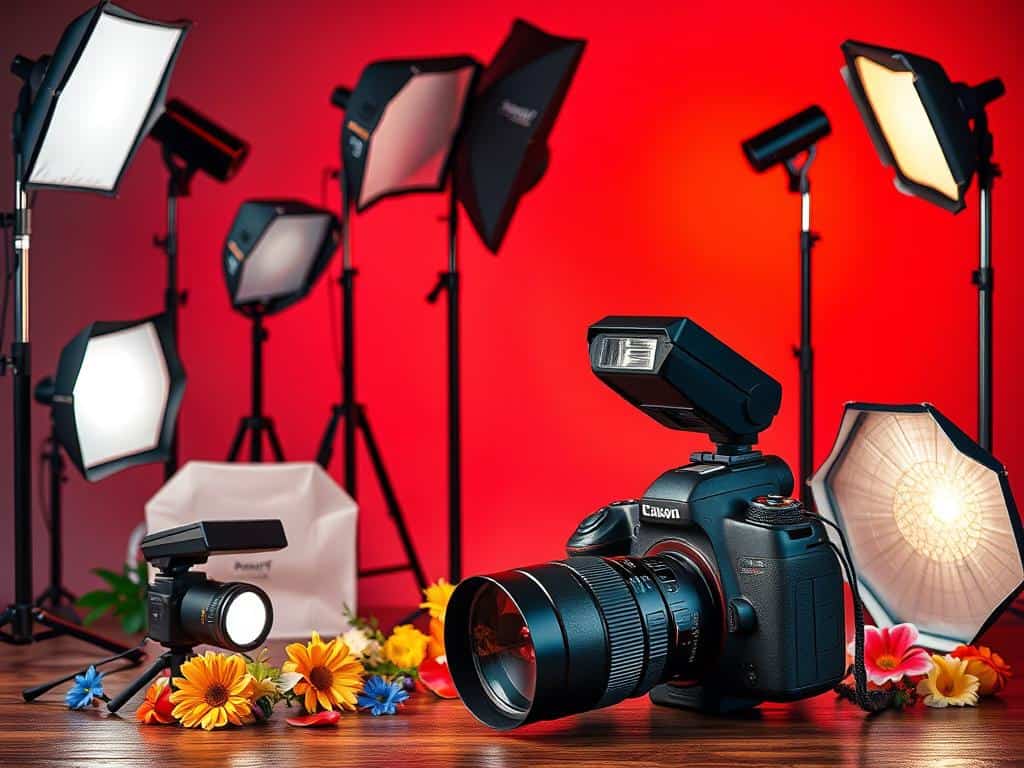
Did you know camera flashes have Guide Numbers (GN) from 36 to 60? This shows how powerful flashes are. It also highlights the importance of knowing how to use them for amazing photos. I learned that using flash can be easy with the right techniques.
I improved my photography skills, even in low light. This guide will teach you how to light up your photos. You’ll learn to take great pictures at any event, from big parties to small gatherings. We’ll cover the basics and how to master different flash modes.
By the end of this article, you’ll know how to take great photos in any situation. Every photo you take will be a success.
Key Takeaways
- Understanding flash output can enhance your photography by utilizing basics like Guide Numbers.
- Choosing the right flash and settings can dramatically improve low-light photography.
- Flash Exposure Compensation is key for natural results in different settings.
- Through-The-Lens (TTL) mode makes flash photography easy for beginners.
- Bounced flash gives softer light, making your subjects look better and shadows less harsh.
- Using both ambient light and flash adds depth to your photos.
Understanding the Basics of Flash Photography
Flash photography is key for taking great photos in different lighting. Many beginners start with natural light, using it for over 70% of their shots. But, learning the basics of flash can really change how you work with light, making your photos pop in tough spots.
What is Flash Photography?
Flash photography uses artificial light to brighten photos, mainly in dark places. It makes your images clearer and more colorful. Knowing how to use flash can make your photos really stand out.
Types of Flash
There are two main types of flash: built-in and external. Built-in flashes are easy to use but not as powerful. External flashes, like those from Godox or Yongnuo, offer more control and better results.
How Flash Affects Your Photos
Flash has a big impact on photography. It fills in shadows and brings out certain parts of a scene. When used right with natural light, it can make photos look balanced and beautiful. I’ve seen how knowing about light patterns can add depth to photos. Using flash well has really improved my photos, making them better in places where natural light isn’t enough.
Essential Tips for Effective Flash Usage
Using flash well can really boost your photos. It’s key to know how to use different flash modes and adjust settings. This helps get the best results and improve your photos.
Mastering Flash Modes
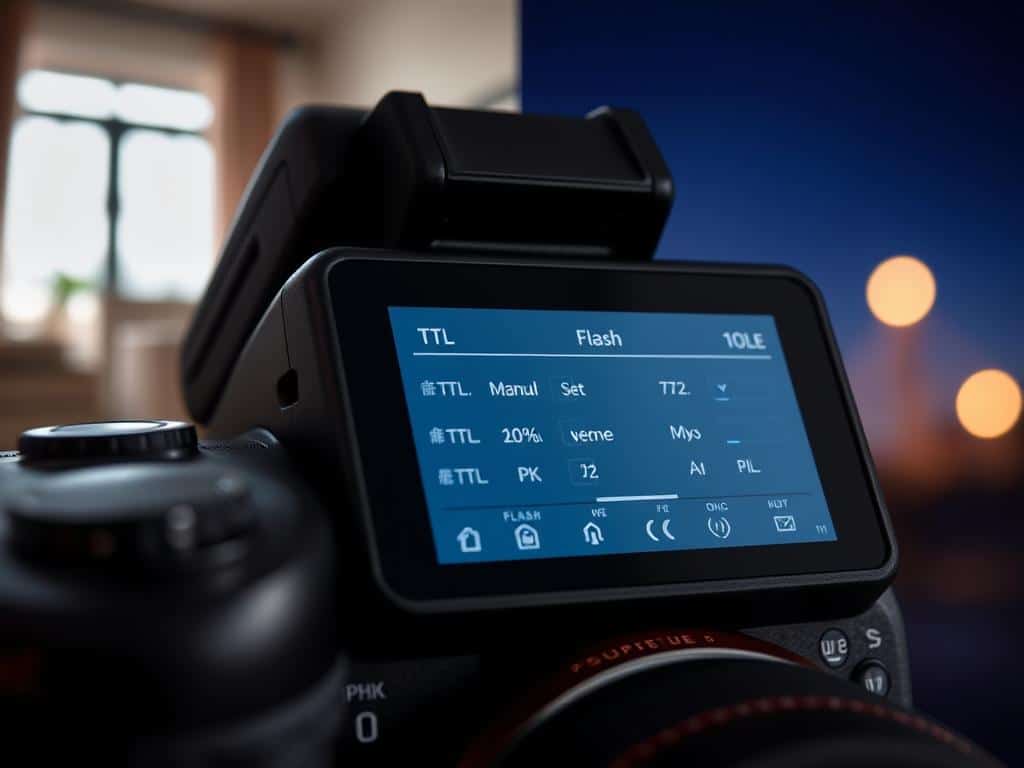
Speedlights come with various flash modes like Manual, Multi, and TTL. Beginners should start with TTL mode. It makes adjustments automatically based on distance and light.
As you get better, try manual settings. They let you control the light more. Knowing how to use these modes can really help you express your creativity in photography.
Flash Exposure Compensation
Flash Exposure Compensation (FEC) is vital for adjusting flash brightness. Tweaking FEC helps keep subjects well-lit without harsh shadows. I usually keep FEC at zero for balanced light.
But, I adjust it based on the scene. This flexibility is key for better exposure in photos, no matter the setting.
Choosing the Right Flash for Your Camera
It’s important to pick a flash that works with your camera. Godox flashes, like the TT350 or V860II, are great and affordable. Canon and Nikon also have top-notch flashes, but they cost more.
Knowing about guide numbers and how to move the flash head is also important. This makes your flash more versatile. Choosing wisely ensures you’re ready for any photo challenge.
Conclusion
Improving flash photography is key to better capturing images in different lighting. I’ve learned the basics and effective techniques. This knowledge helps me handle tough lighting and create stunning photos.
Experimenting is essential to get great results. Tips like using bounce flash and fill flash are very helpful. They help me mix artificial and natural light beautifully, improving my photos.
My journey in mastering flash photography has made me appreciate light and shadow more. With these strategies, I’m excited to explore new creative possibilities in every photo.
