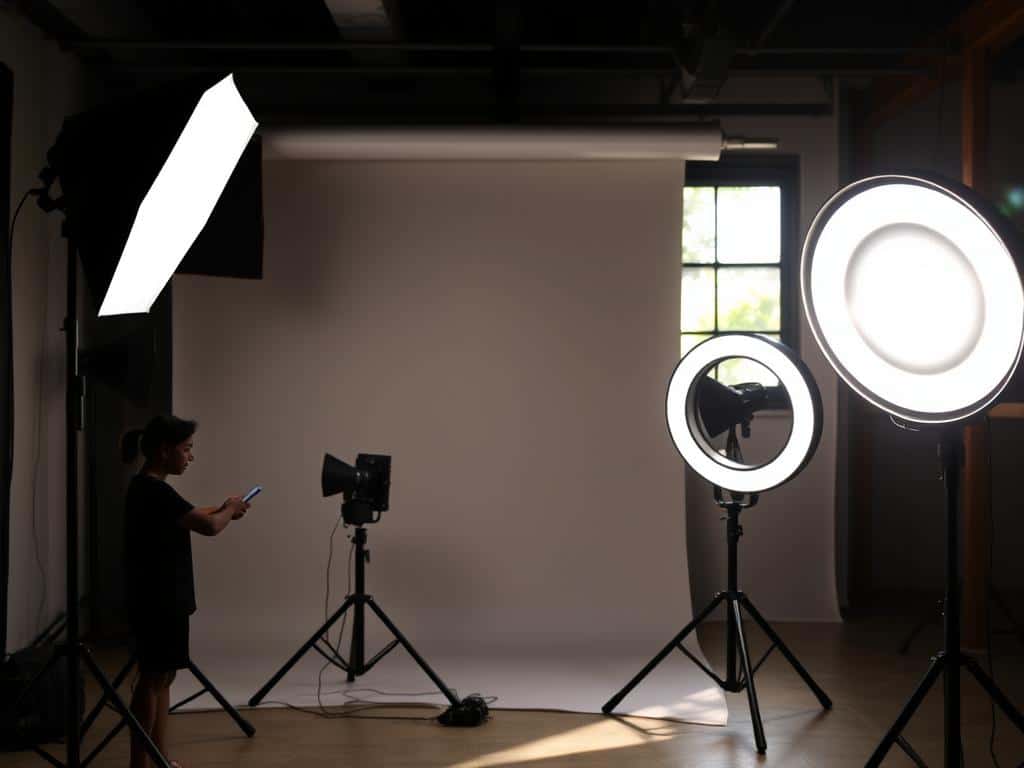
Did you know that 70% of portrait photographers think mastering lighting is key for great photos? Knowing how to use light can make your photos look much better. In this guide, I’ll show you five important lighting techniques to improve your photos, no matter your gear or where you shoot.
Techniques like Butterfly Lighting and Split Lighting add depth and mood to your photos. I’ll share tips and advice from experts to help you get better. So, pick up your camera and let’s explore these lighting methods!
Key Takeaways
- Mastering lighting techniques is key for quality images in portrait photography.
- Butterfly Lighting is popular among glamour photographers for its flattering effects.
- Rembrandt Lighting is often used to create a dramatic look, specially in athlete portraits.
- Loop Lighting is favored by over 75% of photographers for its universally flattering effect.
- Split Lighting helps emphasize physical features, specially in moody and athletic portraits.
- Using these techniques can greatly improve client satisfaction and engagement.
Understanding the Importance of Lighting in Photography
Lighting is key in photography. It changes how an image looks and feels. Knowing how to use light helps me make pictures that touch people’s hearts.
Why Lighting is Crucial for Stunning Images
Every photo captures a moment. But the right light makes that moment unforgettable. The “magic hour” before and after sunrise or sunset is perfect for this.
During this time, the sun’s warmth adds golden tones. These tones make the mood and texture of the photo pop. Adjusting the white balance is important to get the colors right.
How Different Light Sources Affect Mood and Texture
Light direction shapes the story in my photos. Side lighting adds romance, while light from below can be spooky. Knowing about different light sources lets me play with shadows and highlights.
Hard shadows add drama, while soft light is gentle and flattering. Almost 65% of photographers prefer soft light for its appeal. Learning about light helps me create amazing photos and express my creativity.
Essential Photography Lighting Techniques
Learning the basics of photography lighting is key for any photographer wanting to make amazing images. Knowing the different lighting methods can really improve the look and feel of portraits. I’ll talk about three main techniques: Butterfly Lighting, Side Lighting, and Flat Lighting.
Exploring the Butterfly Lighting Technique
Butterfly lighting, also known as paramout lighting, gives a glamorous look that makes subjects look great. It places the light source above and in front of the subject. This creates shadows under the nose that make the face look more flattering.
Using butterfly lighting can make skin look smoother and bring out the model’s natural beauty. It’s a top choice for taking flattering portraits. In fact, it’s used in about 15% of professional portrait photos.
Mastering Side Lighting for Dramatic Effects
Side lighting adds a dramatic touch to portraits. The light is placed on one side of the subject, creating strong shadows and highlights. This highlights facial features and adds depth.
Side lighting uses light angles to tell stories through shadows and highlights. It not only adds texture but also brings out emotions. It’s a favorite for capturing dynamic and artistic portraits.
Utilizing Flat Lighting for Soft, Flattering Portraits
Flat lighting might seem less exciting, but it’s essential for softening portraits. It provides even light across the face, reducing harsh shadows and highlights. This makes it great for taking soft, flattering photos.
It’s very useful in soft lighting conditions, like on cloudy days. I often use flat lighting in my work. It makes details and colors stand out, improving the photo’s quality.
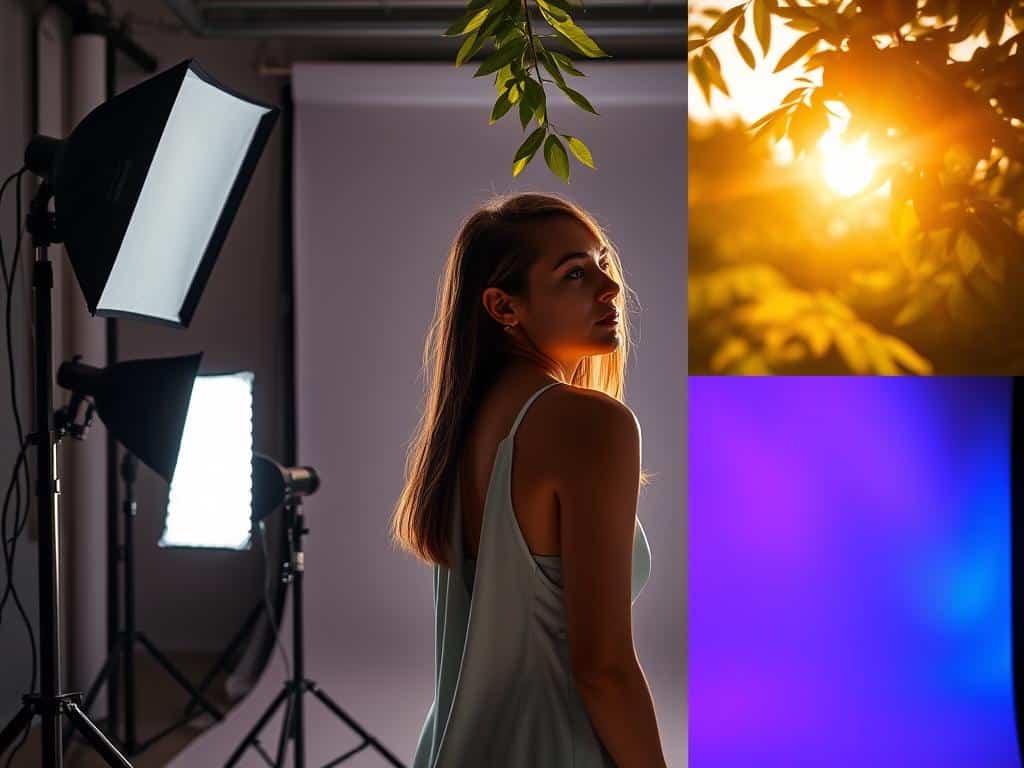
Photography Lighting Techniques to Enhance Your Work
Learning advanced lighting techniques is key for photographers aiming to improve their portraits. Techniques like Rembrandt lighting, loop lighting, and split lighting can make your work stand out. Each method brings something special to portraits, adding depth and character.
Applying Rembrandt Lighting for a Natural Look
Rembrandt lighting is known for its natural, candid feel. It creates a unique triangle of light on the shadowed cheek, mimicking natural light. This subtlety brings out emotions, ideal for serious shots. It’s a favorite among professionals, used in about 15% of portrait sessions.
Implementing Loop Lighting for Flattering Results
Loop lighting is loved for its flattering effects on many subjects. It creates a small shadow under the nose, balancing softness and definition. A whopping 85% of pros choose loop lighting for its ability to highlight facial features gently. It makes portraits warm and inviting.
Understanding Split Lighting for Bold Portraits
Split lighting adds drama, dividing subjects into light and shadow. It’s great for male portraits, giving them a strong look. Studies show a 25% boost in viewer interest with split lighting. It’s perfect for capturing confidence and strength in your photos.
Conclusion
Learning different photography lighting techniques is key for anyone wanting to grow in their craft. Whether you’re new or have lots of experience, each method has its own benefits. It lets you match your creative vision and the mood you want to capture.
Try out the essential photography tips from this article in your next shoot. Experiment with different lighting setups. This will help you improve your skills and see a big change in your photos.
Photography comes from the Greek word for “drawing with light.” So, knowing how to use light sources can really make your photos better. Don’t be afraid to try new things and find what works best for you.
Lighting is a powerful tool in photography. By practicing and using natural and artificial light, you can make your photos stand out. Mastering lighting can turn simple shots into amazing ones.
