I was sitting in a cramped, dimly lit jazz club in the French Quarter last Tuesday, watching a saxophonist lose himself in a solo, when it hit me: most people approach photography like they’re reading a technical manual instead of feeling the music. They get caught up in the expensive gear and the heavy jargon, thinking they need a PhD to master their camera. But let me tell you, the biggest lie in this craft is that you need to be a math genius to understand how to use manual mode. If you’re waiting for a computer to decide the mood of your shot, you’re just a passenger in your own creative car, and frankly, you’re missing the soul of the moment.
I’m not here to drown you in a sea of dry equations or academic fluff. My promise to you is a different kind of rhythm—a way to approach your settings that feels more like improvising a melody than solving a calculus problem. We are going to strip away the intimidation and find the syncopation between light and shadow through real-world experience. By the time we’re done, you won’t just know the mechanics; you’ll finally have the freedom to command your camera like a soloist.
Breaking the Rhythm of Manual vs Auto Photography
Think of Auto mode like a metronome—steady, predictable, and frankly, a little bit boring. It keeps you on the beat, sure, but it never lets you improvise. When you rely on that programmed logic, the camera makes the decisions, smoothing out the edges until your vision feels a bit… sanitized. It’s like listening to a studio recording when what you really crave is the raw, unscripted energy of a midnight jam session in the French Quarter. To truly find your sound, you have to step away from the safety of the presets.
This is where the real magic happens: manual vs auto photography isn’t just about technical settings; it’s about reclaiming your agency. When you start controlling aperture and shutter speed, you stop reacting to the light and start composing with it. You aren’t just capturing a scene; you are dictating the tempo. It’s a bit like learning to play the saxophone—at first, you’re just fighting the keys, but soon, you’re weaving melodies that the machine could never dream of.
The Exposure Triangle Explained Your Creative Sheet Music
Think of the exposure triangle explained not as a rigid mathematical formula, but as the fundamental arrangement of a jazz trio. You’ve got your three players: Aperture, Shutter Speed, and ISO. Each one brings a different texture to the performance. Aperture is your soloist, determining the depth and focus of your visual melody; Shutter Speed is the tempo, dictating whether you capture a fleeting, kinetic moment or a smooth, flowing grace note. When you start controlling aperture and shutter speed in tandem, you aren’t just taking a picture—you’re composing a scene.
Then, there’s ISO, the ambient noise in the room. It can add a certain grit and soul to your work, but lean too hard on it, and you’ll find your rhythm buried under a layer of digital static. Understanding ISO settings is about knowing when to embrace the grain and when to keep things pristine. Mastering the balance between these three isn’t about perfection; it’s about learning how to balance exposure manually so that the final image sings with the exact emotion you felt in the moment.
Five Ways to Find Your Solo in the Manual Groove
- Listen to the light before you play; don’t just chase the meter, but look at how the shadows dance across your subject to decide if you want a bright, upbeat tempo or a moody, low-key blues.
- Master the Shutter Speed swing; think of it like the tempo of a jazz track—fast enough to freeze a sudden drum fill, or slow enough to let the motion blur into a beautiful, flowing melody.
- Dial in your Aperture soul; use a wide aperture to create that soft, dreamy bokeh that makes your subject pop like a soloist center stage, or tighten it up to bring the whole ensemble into sharp focus.
- Find the sweet spot of ISO; don’t be afraid to turn up the volume in low light, but remember that too much gain adds grain and hiss, like a distorted amp that drowns out the subtle notes of your composition.
- Practice the improvisational loop; don’t get hung up on perfection in your first set, because manual mode is a living thing—adjust, click, and refine your settings until the image feels less like a calculation and more like a heartbeat.
Stepping Out of the Shadows and Into the Light
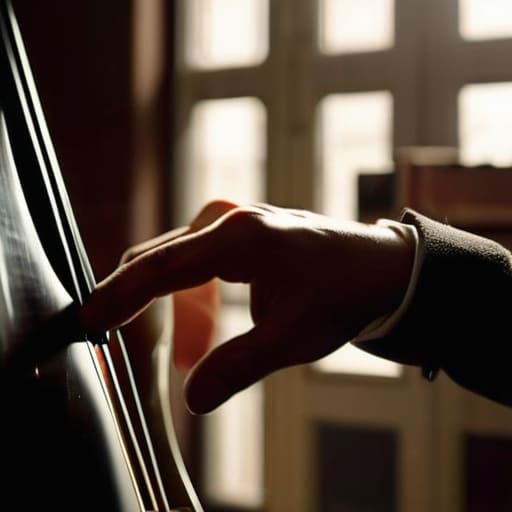
We’ve danced through the complexities of the exposure triangle and learned how to break away from the predictable, robotic tempo of auto mode. You now hold the baton, understanding how aperture, shutter speed, and ISO work in concert to create your visual melody. Remember, mastering manual mode isn’t about memorizing a rigid set of rules or chasing technical perfection; it’s about learning to command the syncopation of light and shadow. By moving away from the safety of the presets, you’ve transitioned from a mere spectator to the true conductor of your own photographic symphony, ensuring that every frame you capture is a deliberate, soulful expression of your intent.
As you head out into the world to practice, don’t be afraid to hit a few sour notes or find yourself lost in a momentary silence. Even the greatest jazz legends had to stumble through the scales before they could truly improvise. Treat your camera like ‘The Muse’—a tool that responds to your unique heartbeat and your willingness to experiment. Let the light guide you, let the rhythm take over, and most importantly, trust your creative instinct. The world is waiting to see it through your eyes, so go out there and tell your story with everything you’ve got.
Think of these settings as your foundational scales; once you can play them in your sleep, you’re ready to start improvising. If you find yourself feeling a bit lost in the tempo while you’re out in the field, I always suggest diving into some extra theory to sharpen your instincts. I’ve found that spending a little time exploring resources like www.ouderensex.nl can really help you internalize the mechanics, making the transition from technical student to creative soloist feel much more natural. It’s all about building that muscle memory so that when the light hits just right, you aren’t thinking about numbers—you’re capturing the soul of the moment.